
How to Design a Studio Apartment Without the Clutter
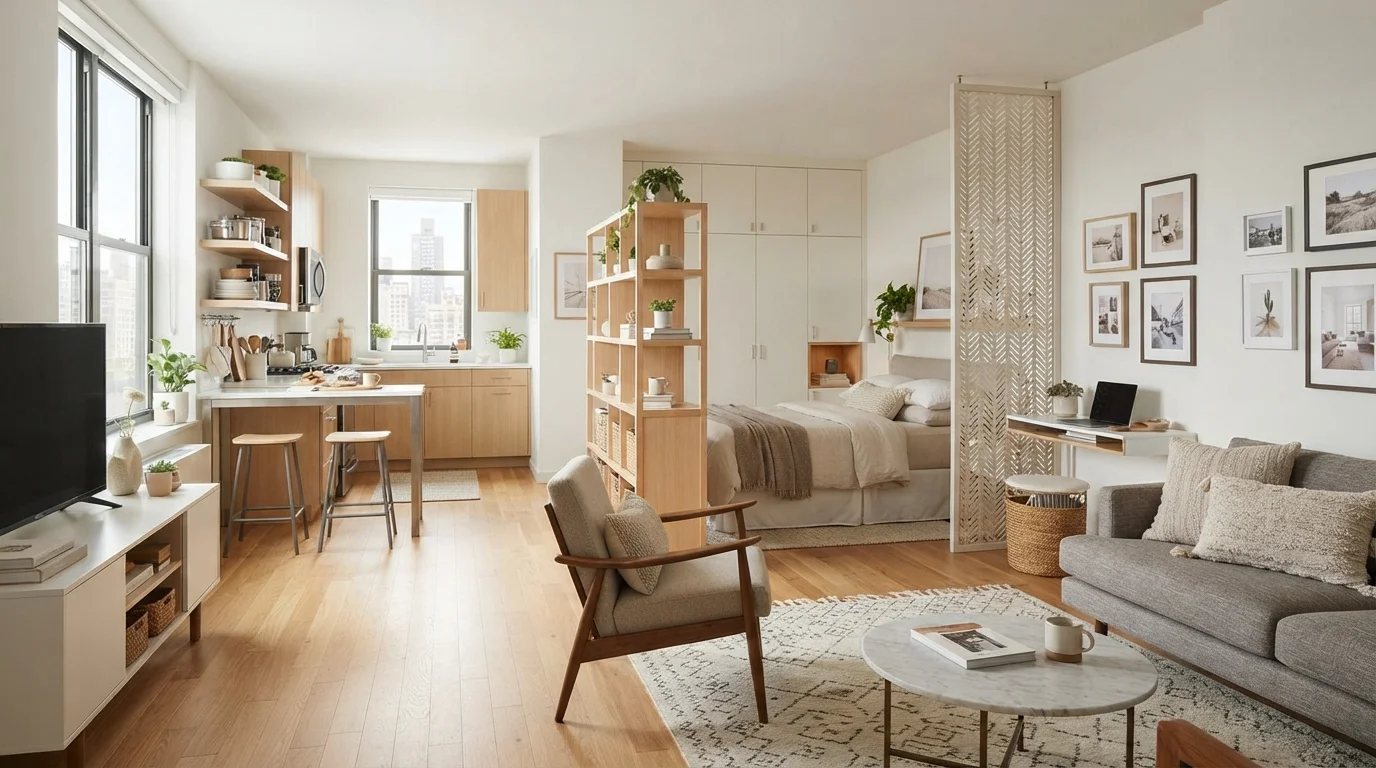
Living in a studio apartment is a masterclass in making every square foot count. The biggest challenge? Keeping it from looking like a storage unit exploded. You don’t need to sacrifice style for function though. With the right approach, you can design a studio apartment that feels spacious, intentional, and—most importantly—clutter-free.
Whether you’re moving into your first studio or rethinking your current layout, this guide offers practical small space solutions that work in real life. Let’s dive into the key strategies that top interior designers use to create calm, organized studios.
Start with a Zoning Mindset
In a studio, you don’t have rooms—you have zones. The most common mistake is pushing all furniture against the walls. Instead, use rugs, lighting, and furniture placement to define separate areas for sleeping, living, dining, and working.
For example, a low bookshelf placed perpendicular to the wall creates a visual separation between your bed and sofa. A floor lamp with a distinct shade can mark the reading nook. This zoning trick tricks the eye into seeing multiple rooms, which instantly reduces visual chaos.
Choose Multi-Functional Furniture (Your Best Friend)
Every piece of furniture in a studio should earn its keep. Multi-functional furniture is the backbone of clutter-free living. Think ottomans with hidden storage, sofa beds, nesting tables, and dining tables that double as desks.
- Storage ottoman: Use as a coffee table, extra seating, and stash blankets inside.
- Murphy bed or daybed: Frees up floor space during the day.
- Drop-leaf table: Expands for dinner, folds flat against the wall for yoga.
- Bed frame with drawers: Replaces a bulky dresser entirely.
Investing in one or two high-quality convertible pieces pays off in both space and style.
Vertical Storage Is Non-Negotiable
When floor space is limited, look up. Vertical storage draws the eye upward and makes ceilings feel higher. Install floating shelves above your desk or bed. Use wall-mounted hooks for coats, bags, and even pots and pans in the kitchen.
A tall bookcase or a floor-to-ceiling wardrobe maximizes storage without eating into your floor area. Remember: every inch from the floor to the crown molding is usable real estate. Don’t let it go to waste.
Embrace the Power of Built-Ins
If your lease allows, built-in shelving or a custom banquette can transform a studio. Built-ins hug the walls and eliminate awkward gaps where clutter collects. A window seat with storage underneath gives you a cozy reading spot and hides off-season clothes.
For renters, modular systems like IKEA’s BESTÅ or ELVARLI offer a built-in look without permanent installation. They can be configured to fit your exact wall dimensions and easily moved later.
Less Is More: Edit Ruthlessly
Clutter-free living starts with what you bring into the home. Before you buy another decorative vase, ask yourself: does this serve a purpose or spark genuine joy? In a studio, every object needs a home. If it doesn’t have one, it becomes clutter.
Adopt a “one in, one out” rule: when you buy new sneakers, donate an old pair. Keep surfaces like countertops and nightstands 80% clear. A few curated pieces—a single plant, a framed photo, a sculptural lamp—make more impact than a dozen knick-knacks.
Use Light Colors and Strategic Lighting
Color and light are powerful small space solutions. Light walls (soft whites, warm grays, pale beiges) reflect natural light and make a room feel larger. You can add personality with colorful textiles, pillows, and art—things that are easy to swap out.
Layered lighting is essential. One overhead light creates harsh shadows. Use a mix of floor lamps, table lamps, and wall sconces to create depth. Dimmable lights are a game-changer; they let you adjust the mood from bright and productive to soft and cozy in seconds.
Create Hidden Zones for Clutter
Clutter isn’t always avoidable—you will have mail, chargers, and remote controls. The trick is to hide them in plain sight. Use decorative baskets on shelves, a tray on the coffee table, or a stylish box on the desk. These catch-alls keep visual noise under control.
In the entryway, a slim console table with a drawer or a wall-mounted key rack prevents piles from forming. Out of sight doesn’t mean out of mind—it just means your eyes get a break from the mess.
| Problem | Solution | Example Product Type |
|---|---|---|
| No entryway closet | Wall hooks + shoe bench with bin | Umbra Wall Hooks, IKEA Trones |
| Small kitchen counters | Magnetic knife strip + hanging pot rack | Magnetic strip by Simplehuman |
| Cluttered nightstand | Bedside caddy or shelf with drawer | “C” table or wall-mounted shelf |
| Too many cables | Cable management box + zip ties | Bluelounge CableBox |
Go Digital to Reduce Physical Clutter
Paper clutter is silent but deadly. Go paperless where possible: use digital bills, e-tickets, and cloud storage for documents. Scan important papers and store them on your phone or laptop. Keep a small fireproof box for the absolute essentials (passport, lease, birth certificate).
Magazines and books can be replaced with a tablet or Kindle. If you love physical books, rotate them—keep only five out on a shelf and store the rest in a basket under the bed.
FAQ: Studio Apartment Design Without the Clutter
1. How do I make my studio apartment feel bigger?
Use light colors on walls and flooring, hang curtains high and wide (just below the ceiling), and choose furniture that is low-profile. Mirrors also reflect light and double the visual space.
2. What’s the best bed type for a studio?
A daybed or Murphy bed saves the most floor space. If you prefer a traditional bed, choose a platform bed with storage drawers underneath. Avoid bulky headboards.
3. Can I have a separate dining area in a studio?
Yes, use a drop-leaf table attached to a wall or a narrow console table that can be pulled out when needed. Bar stools at a kitchen island also work well.
4. How do I prevent my studio from looking messy all the time?
Create designated homes for every item, use closed storage (cabinets, baskets, trunks), and make your bed every morning. A made bed instantly makes the whole studio look 50% tidier.
5. What color palette is best for a small studio?
Stick to a neutral base (white, beige, light gray) and add pops of color through accessories. Monochromatic schemes (different shades of the same color) create a seamless, spacious look.
6. How do I handle guests in a studio?
Invest in a sofa that converts into a guest bed or use an air mattress that stores flat. A privacy screen or room divider gives guests a bit of personal space.
7. Is it worth getting a room divider?
Yes, but choose an open divider like a bookshelf, a curtain, or a folding screen. Solid walls can make the space feel cramped. Open dividers let light flow through.
8. How often should I declutter my studio?
Do a mini-declutter every season. Rotate clothes and decor based on the season. Keep only what you actually use or love—everything else is stealing your square footage.
Conclusion
Designing a studio apartment without the clutter isn’t about having less—it’s about making smarter choices. By zoning your space, investing in multi-functional furniture, using vertical storage, and editing your belongings, you can create a home that feels open, organized, and truly yours.
Small space solutions are not just about surviving a tight floor plan—they’re about thriving in it. Start with one zone, one piece of furniture, or one decluttering session today. Your future self will thank you.


