
How to Choose the Best Curtains for Your Bedroom
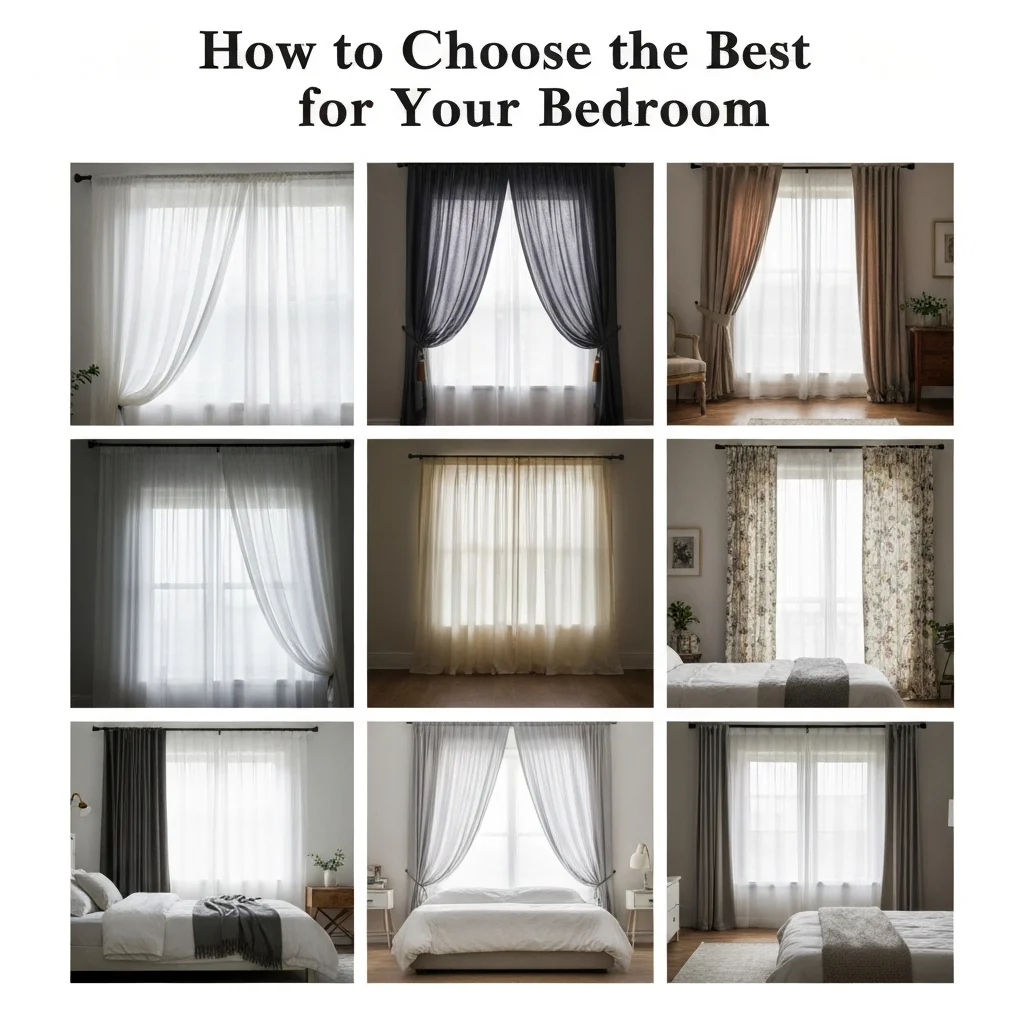
Your bedroom is your sanctuary—a place built for rest. But even the best mattress can’t fix a room flooded with early morning light or street lamp glare at night. That’s why choosing the best curtains for your bedroom isn’t just about style; it’s about function.
In this guide, I’ll walk you through everything you need to know: from fabric and lining choices to rod styles and hanging heights. Let’s turn your sleep space into a five-star retreat.
Why Curtains Matter More Than You Think
Curtains are often an afterthought. We pick them based on color and call it a day. But bedroom curtains do a heavy lift. They control light, offer privacy, and even insulate your room.
Think about it: a room with sheer linen curtains feels radically different from one with dense velvet. The first is airy and bright; the second is cozy and dark. So when you’re hunting for the best curtains for bedroom use, start with your priorities: sleep quality or morning vibes?
Fabric Matters: Choosing the Right Material
Fabric is the heart of any curtain. It dictates how light passes through, how heavy the drape is, and even how often you need to wash them.
Here are the most popular bedroom curtain fabrics:
- Velvet: Heavy, plush, and luxurious. Perfect for blackout curtains bedroom setups. They also trap sound and heat.
- Cotton: Natural and breathable. Light to medium weight. Great for a relaxed look, but needs a liner if you want total darkness.
- Linen: Relaxed, textured, and timeless. Allows light in while offering privacy. Best for rooms that don’t need pitch-black sleep.
- Polyester Blends: Budget-friendly, wrinkle-resistant, and often pre-lined with blackout coating. A solid choice for guest rooms.
- Silk: Elegant and fluid. Sensitive to sunlight and heat. Mostly for decorative effects, not heavy use.
For a practical tip: I often tell clients to use velvet or lined cotton for north-facing rooms (which get less natural light and need warmth), and linen or unlined cotton for south-facing rooms (which get harsh brightness).
Light Control: Blackout vs. Light-Filtering
If you’re a light sleeper who wakes at the crack of dawn, blackout curtains bedroom options are non-negotiable. They block nearly 100% of external light using dense fabric and a special foam or acrylic backing.
But blackout isn’t always the answer. Maybe you love natural sunlight to wake you up. In that case, look for room-darkening or light-filtering curtains. Room-darkening blocks most light but lets a warm glow through. Light-filtering softens harsh rays while keeping privacy.
My rule of thumb: if your bedroom faces east, go blackout. If it faces west, a light-filtering layer with a blackout liner behind is ideal.
Length and Hanging Height: The Secret to a High-End Look
Nothing screams “rental apartment” like curtains that hover awkwardly two inches above the floor. For a polished, custom look, hang your curtains as close to the ceiling as possible, and let them touch the floor.
Three standard curtain lengths:
- Floor-length: The fabric just skims the floor. Clean and modern.
- Puddle: Fabric pools 1–3 inches on the floor. Romantic and dramatic. Avoid if you have pets or allergies.
- Sill-length: Ends at the window sill. Rarely recommended for bedrooms; it can make ceilings look shorter.
Consider using bedroom window treatments that extend 6–10 inches beyond the window frame on each side. This lets in maximum light when open and blocks drafts when closed.
Liner or No Liner?
This is one of the most underestimated decisions. A liner is a separate fabric attached to the back of your curtain. It can be blackout, thermal, or sheer.
Should you get one? Here’s a simple breakdown:
| Situation | Liner Recommendation |
|---|---|
| Main bedroom, east window | Blackout liner (double thickness) |
| Guest bedroom, north window | Thermal liner (adds insulation) |
| Child’s room, west window | Blackout liner (blocks evening sun) |
| Decorative silk curtains | Sheer liner (protects silk from fading) |
If you want energy efficient curtains that lower your heating and cooling bills, choose a thermal-insulated lining. After switching, I noticed my bedroom stays about 3°F warmer in winter.
Privacy vs. Natural Light: Finding the Balance
Bedrooms need privacy, especially on lower floors. But that doesn’t mean you have to live in a cave. The solution is layering. Yes, the double curtain rod trend is actually useful.
Here’s how I do it: mount a sheer curtain closest to the glass and a heavier opaque curtain on the outer rod. During the day, close just the sheers. At night, draw both. You get light and privacy control.
This layered approach is a favorite among bedroom privacy curtains solutions. You can buy separate panels or ready-made sets with both panels attached.
Color and Pattern: Mood Matters
Color psychology is real in bedroom design. Darker hues like navy, charcoal, and deep green create a cocooning effect. Lighter shades like beige, blush, and cream expand the room visually and feel airy.
Patterns add personality. Think stripes, subtle geometric prints, or even floral motifs if you like a romantic vibe. Just keep the rest of your decor minimal if you choose a bold pattern.
For the best curtains for bedroom color schemes, align them with your wall and bedspread. A general tip: curtains one or two shades darker than your walls bring depth without clashing.
Hardware and Rods: Don’t Forget the Bones
Good curtain hardware is the backbone of a solid setup. You can buy the most gorgeous velvet curtains, but if your rod is flimsy and your brackets are cheap, they’ll sag.
For bedrooms with heavy blackout curtains, use rods that are at least 1 inch in diameter and go with metal finishes (matte black, brass, or nickel). Use brackets every 30–36 inches to prevent sagging in the middle.
And please, don’t forget rings. Back tab, grommet, or pinch pleat rings all create different drape effects. Grommet is modern and slides easily. Pinch pleat feels formal and elegant.
Frequently Asked Questions
1. What is the best curtain length for a bedroom?
Floor-length is the standard for bedrooms. It creates a clean, elegant line and works with almost any style. Avoid sill-length unless you have a window seat.
2. Should bedroom curtains be light or dark?
It depends on your goal. Dark curtains improve sleep quality and make a room feel cozy. Light curtains brighten the space and make it look larger.
3. Are blackout curtains worth it?
Absolutely. If you work night shifts, live near streetlights, or wake up with the sun, blackout curtains bedroom panels are life-changing. They also reduce noise.
4. Can I use sheer curtains alone in a bedroom?
On upper floors with no neighbors facing you, yes. On ground floors or urban settings, use sheer as a base layer behind heavier curtains for privacy.
5. How many curtain panels do I need per window?
As a rule of thumb, each panel should be at least 2x the window’s width. So for a 60-inch window, you need approximately 120 inches of total panel width.
6. Do thermal curtains really save energy?
Yes. Thermal-backed curtains act as insulators, keeping heat in during winter and blocking UV rays in summer. They are a smart choice for energy efficient curtains.
7. What is the easiest curtain style to install?
Rod-pocket and grommet curtains are the most DIY-friendly. No hooks or pins needed. Just slide them onto the rod.
8. How often should I wash bedroom curtains?
Every 3 to 6 months. Dust and allergens build up. Always check the care label—some fabrics like velvet require dry cleaning.
Final Thoughts: Your Curtains, Your Sanctuary
Finding the best curtains for your bedroom doesn’t have to be overwhelming. Start with your core need: sleep quality, light control, or style. Then work outward to fabric, lining, and hardware.
Great curtains do two things: they make you sleep better and they make your room feel finished. Don’t settle for off-the-rack options that don’t fit your lifestyle. Take your time, measure correctly, and invest in quality.
Pull those drapes closed, sink into your pillow, and enjoy the room you’ve created. Sweet dreams.


