
Bedroom Design Rules That Are Worth Breaking
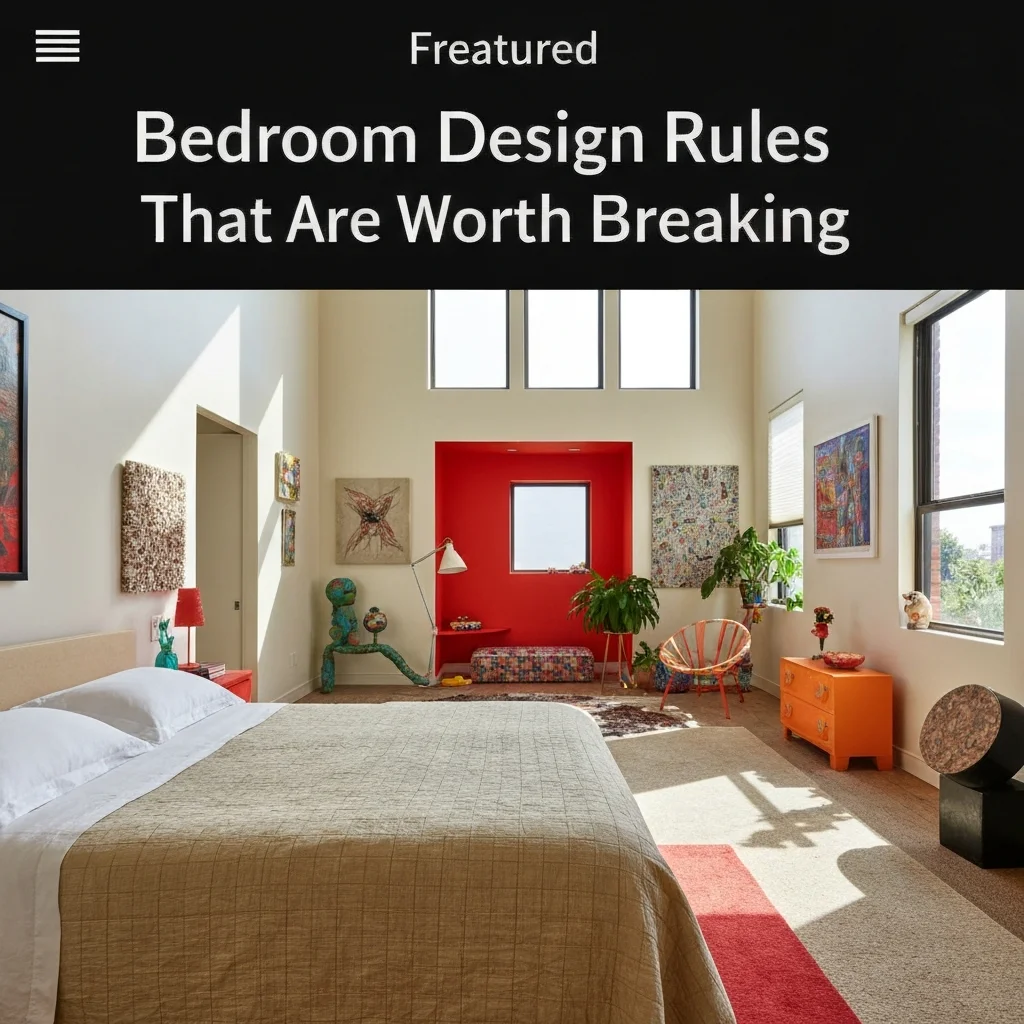
We’ve all heard the classic bedroom design rules: “Always center your bed on the main wall,” “Keep the room matchy-matchy,” or “Never use dark paint in a small space.” These guidelines have been passed around for decades, often without question. But here’s the truth: great design is about personal expression, not rigid checklists.
Sometimes, breaking the so-called rules is exactly what your bedroom needs. Whether you’re working with a tiny apartment or a sprawling master suite, challenging conventional wisdom can unlock fresh bedroom layout ideas and unexpected charm. In this article, we’ll walk through seven outdated rules that deserve to be ignored—backed by practical interior design tips and real-world examples.
Ready to ditch the design dogma? Let’s get started.
Rule #1: The Bed Always Goes Against the Longest Wall
This is probably the most repeated bedroom design rules out there. And yes, placing the bed on the longest wall often makes sense in a rectangular room. But in oddly shaped rooms or small bedrooms, it can create awkward dead zones.
Why break it: Floating your bed in the center of the room, angling it in a corner, or placing it against a shorter wall can make the space feel more dynamic. For small bedrooms, this trick can open up floor space and allow for better circulation.
Example: In a narrow attic bedroom, I once placed a queen bed diagonally across the room. The result? A cozy, sculptural look that left room for a reading nook and a small desk.
Rule #2: Matching Furniture Sets Are a Must
Many people assume a cohesive bedroom needs a matching dresser, nightstand, and headboard from the same collection. This “uniform” look often feels sterile and impersonal.
Why break it: Mix-and-match furniture adds character. A vintage wooden nightstand next to a modern metal bed frame tells a story. Plus, it’s budget-friendly—you can slowly curate pieces over time.
- Tip: Tie disparate pieces together with a consistent color palette or hardware finish.
- Tip: Use a unifying rug or throw blanket to anchor the look.
- Tip: Aim for contrast: pair a heavy dresser with a light, airy bed frame.
Rule #3: Never Use Dark Paint in a Small Bedroom
The old rule says dark colors shrink a room. That’s only true if you paint every surface without natural light. In reality, deep navy, charcoal, or forest green can make a small bedroom feel intimate and cocoon-like—not smaller.
Why break it: Dark walls recede when paired with good lighting and lighter textiles. This is a top small bedroom hack for creating a luxurious, moody atmosphere.
Example: A 10×10 guest bedroom I designed used matte black paint on three walls, with the accent wall in white. White linens and a brass floor lamp kept the space feeling open and chic.
Rule #4: Every Bedroom Needs a Nightstand
Nightstands are traditional, but they aren’t always practical—especially in tight quarters or minimalist homes.
Why break it: Try a small floating shelf, a stack of books, a petite console table, or even a wall-mounted lamp with a built-in ledge. These alternatives keep your phone and book within reach without the footprint of a clunky nightstand.
This is one of the most clever bedroom layout ideas for those working with an 8×8 foot space. It also makes cleaning easier.
Rule #5: Artwork Must Hang at Eye Level
Eye-level is a good starting point, but it’s not a law. In bedrooms, you often view art from a reclining position or from the doorway.
Why break it: Hanging a piece slightly higher above the headboard creates a dramatic backdrop. Alternatively, leaning a large canvas against the floor gives a casual, gallery-like vibe.
Quick guide:
| Viewing Position | Ideal Art Height |
|---|---|
| Sitting up in bed | 3-6 inches above headboard |
| Lying down | Just above pillow line |
| Standing near the foot of the bed | Slightly above eye level (65-68 inches) |
Rule #6: Rugs Must Be Placed Under the Bed
Conventional wisdom says a rug should be large enough to go under at least two-thirds of the bed. But this often forces you into buying an expensive 8×10 or larger.
Why break it: Placing a rug at the foot of the bed, or using two smaller runners on each side, can be equally effective. It saves money and adds visual interest through asymmetry.
Small bedroom hacks: In a tight room, use a 3×5 runner along the side of the bed instead of a full rug. This avoids the “floating island” look and makes the room feel larger.
Rule #7: All Lamps Should Match
Identical bedside lamps are a classic symmetry move. But symmetry isn’t the only path to calm.
Why break it: Mismatched lamps—one tall and sculptural, one short and round—can create a layered, collected look. The key is to keep the scale and light output similar for balance.
This is especially liberating for bedroom color schemes: a brass lamp on one side and a ceramic black one on the other can tie together warm and cool tones.
Frequently Asked Questions
1. Can I break the bedroom design rules if I’m selling my home?
Yes, but be mindful. While personal expression is great, too much quirkiness can turn off buyers. Stick to breaking one or two rules, like the rug placement or lamp matching.
2. What is the most important rule to keep?
Functionality. No matter how creative you get, your bedroom must support sleep, storage, and daily comfort. The rest is negotiable.
3. Are there any rules for small bedrooms that I shouldn’t break?
Don’t block natural light. Even if you’re using dark paint, keep windows clear from heavy drapes or bulky furniture. Light is key to small bedroom hacks.
4. How do I know if a broken rule looks good?
Take a photo from the doorway. If the room feels balanced and intentional, you’re on the right track. Trust your eye over the internet’s advice.
5. Should I always hire a designer to break the rules?
Not at all. Many of these tweaks are DIY-friendly. Start with one small change—like mismatched lamps or a new rug position—and build confidence from there.
6. Can I mix multiple broken rules in one room?
Absolutely. The best bedrooms often break three or four rules at once. Just keep a consistent bedroom color scheme or material palette to avoid chaos.
7. What if my partner disagrees with my design choices?
Compromise. Let each person choose one rule they want to break. This makes the space feel like a shared creation, not a battleground.
Conclusion
Bedroom design rules exist to guide, not to govern. The most memorable, comfortable bedrooms are often the ones that break the rules with confidence. By challenging ideas like bed placement, matching furniture, or dark paint, you unlock possibilities that make your bedroom truly yours.
Your bedroom should feel like home—not a showroom. So go ahead: break a rule today. Use these interior design tips, test one of the bedroom layout ideas above, and see how small changes can transform your space. The only rule that really matters? Love where you sleep.


