
Bedroom Organization Tips for Beginners
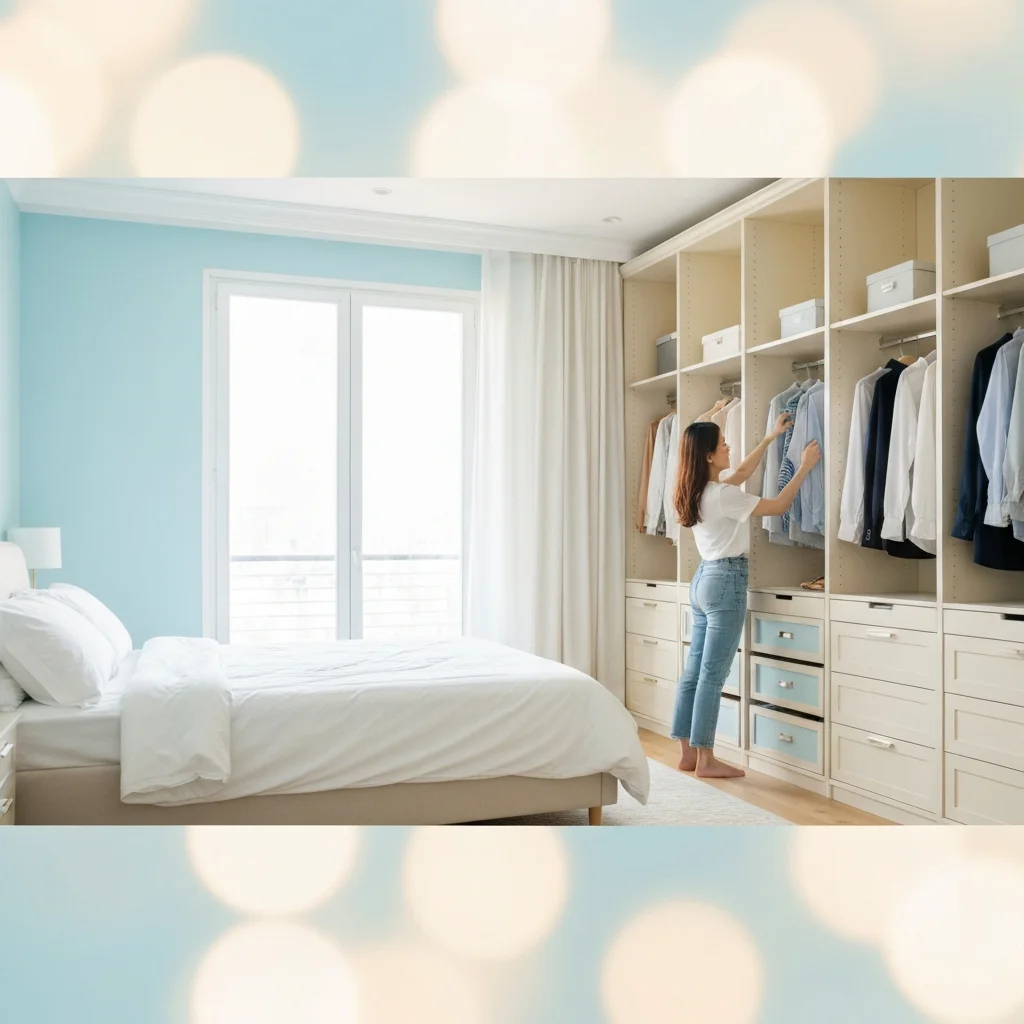
Opening your bedroom door should feel like a breath of fresh air, not a confrontation with a mountain of clutter. If you’re just starting your home organizing journey, the process can feel overwhelming. You might stare at piles of clothes, an overflowing nightstand, and a closet that seems to have a life of its own.
The good news? You don’t need a massive renovation or a professional organizer to get your space under control. These bedroom organization tips for beginners are designed to be simple, actionable, and effective. We will walk through the entire process, from clearing the chaos to maintaining calm, helping you create a space that feels both functional and peaceful.
Start with a Clean Slate: The Bedroom Decluttering Guide
Before you buy a single storage bin or shelf, you need to face the beast: the clutter. Trying to organize things you don’t use is like trying to fit a square peg in a round hole. It never truly works. The first step in any bedroom organization tips for beginners guide is to edit your belongings.
Set aside 30 minutes and grab three boxes or bags: one for Keep, one for Donate/Sell, and one for Trash. Work through one category at a time—clothes first, then books, then accessories. Be ruthless. If you haven’t worn it in a year, it’s probably time to let it go.
For clothes, a good rule of thumb is the “hanger trick.” Turn all your hangers backward. When you wear something, put it back facing the right way. After six months, anything still facing backward is a candidate for donation. This bedroom decluttering guide is your foundation.
Master Your Closet: Smart Storage and Folding Techniques
Your closet is the heart of your bedroom organization. Once you’ve decluttered, it’s time to optimize the layout. Start by grouping similar items together: all work shirts, all jeans, all dresses. This visual grouping makes getting dressed infinitely faster.
Invest in slim, non-slip hangers. They save space, keep clothes from slipping off, and create a uniform look. For folded items like sweaters or t-shirts, use the “file fold” method. Fold them so they stand upright like files in a drawer. This lets you see everything at a glance without digging.
Here are some must-have tools for your closet:
- Velvet hangers: They are grippy and slim, perfect for maximizing closet rod space.
- Stackable shoe racks: Keep pairs visible and prevent the “one missing shoe” panic.
- Clear acrylic bins: Great for accessories like scarves, belts, and hats.
- Over-the-door hooks: Ideal for robes, bags, or tomorrow’s outfit.
Tame the Under-Bed Zone: Hidden Storage Ideas
For many beginners, the space under the bed is either a dusty black hole or a chaotic jumble of boxes. This area is prime real estate for storage. You can store out-of-season clothing, extra bedding, or rarely used items here without sacrificing visual space.
Use flat, low-profile storage bins with clear lids and wheels. The wheels make sliding them in and out effortless, and the clear lids let you see exactly what’s inside. Label the ends of the bins with a label maker or a simple piece of tape and a marker. This is one of the best small bedroom storage ideas available.
If your bed frame is too low for bins, consider risers to lift it a few inches. Alternatively, use the space for flat items like luggage or winter boots. Avoid storing anything fragile or valuable here, as it can get dusty.
Simplify Surfaces: Nightstand and Dresser Strategies
Your nightstand should be a sanctuary for sleep, not a catch-all for receipts, phone chargers, and coffee mugs. The goal here is to keep only the absolute essentials within arm’s reach. A good rule is a “three-item limit”: a lamp, a book or Kindle, and a small tray for your phone and watch.
For dressers, the top surface is often a dumping ground. Keep it simple. One small tray for keys and loose change, a jewelry box, and perhaps a small plant or photo frame. Everything else belongs inside the drawers. Use drawer dividers to keep socks, underwear, and accessories neatly compartmentalized.
Optimize Your Layout: Bedroom Layout Optimization
Believe it or not, how you place your furniture can make or break your sense of order. You don’t need a huge room; you just need a smart bedroom layout optimization plan. Start with the largest piece—your bed. It should be the focal point of the room.
Ideally, place your bed on the wall opposite the door, so you see it first when you walk in. Leave at least 18-24 inches of walkway on each side of the bed. If your room is small, consider mounting a small shelf above the bed to eliminate the need for nightstands, freeing up floor space.
If you have a desk or vanity, place it near a window for natural light. Keep the path from the door to the bed completely clear. This simple flow makes the room feel larger and more organized instantly.
Adopt a Minimalist Mindset: Daily Maintenance Habits
Organization isn’t a one-time project; it’s a habit. Once your space looks great, keep it that way with tiny, daily rituals. Spend just 5 minutes every morning making your bed. This small act sets the tone for an organized day.
Another key habit is the “one in, one out” rule. Every time you buy a new item of clothing or a gadget, get rid of one old one. This prevents clutter from creeping back in. A quick nightly tidy-up—putting clothes in the hamper, returning books to the shelf—keeps chaos at bay.
These habits are the core of minimalist bedroom design. You will find that a clean room leads to a clearer mind. You can even use a simple table to track your progress:
| Task | Frequency | Time Needed |
|---|---|---|
| Make the bed | Daily | 2 minutes |
| Declutter nightstand | Weekly | 5 minutes |
| File-fold clothes | Weekly (after laundry) | 10 minutes |
| Deep declutter closet | Seasonal | 30 minutes |
Frequently Asked Questions (FAQ)
1. How do I organize my bedroom if I have very little space?
Focus on vertical storage. Use tall bookshelves, wall-mounted hooks, and over-the-door organizers. Also, utilize the space under your bed with flat storage bins. Prioritize only the essentials.
2. What is the best way to declutter clothes easily?
Use the “hanger trick” we mentioned earlier. Another method is the “four-box method”: Keep, Donate, Trash, and Relocate. This forces you to make a quick decision on every single item.
3. How can I make my small bedroom look bigger?
Use mirrors to reflect light, choose light colors for walls and bedding, and keep furniture minimal. Avoid bulky dressers and opt for pieces that serve multiple functions, like a bed with built-in drawers.
4. Should I buy matching storage bins?
Yes, visually. Matching bins under the bed or on shelves create a cohesive, calm look. However, inside the bins, use whatever works. The visual uniformity is what matters for a clean aesthetic.
5. How often should I re-organize my closet?
Aim for a full seasonal clean-out (about 4 times a year). Between seasons, do a quick 10-minute sweep every month to keep things tidy. This prevents accumulation.
6. What are the most common bedroom organization mistakes?
The biggest mistake is buying storage before decluttering. Another is storing things on the floor. Keeping items on the floor instantly makes a room look messier. Always use a basket, shelf, or hook.
7. Can I organize my room in one day?
Yes, you can make significant progress in one day, but don’t pressure yourself. A “one-day reset” works best if you focus on just one zone (like the closet or the nightstand). Real, lasting organization takes a weekend.
Conclusion
Organizing your bedroom doesn’t have to be a monumental task. By following these bedroom organization tips for beginners, you are setting yourself up for a calmer, more productive life. Remember the core sequence: edit your belongings, optimize your storage, and maintain the order with daily habits.
Start with one area today. Clear that nightstand. Donate that jacket. Fold that t-shirt. You will be amazed at how a small change in your physical space creates a massive shift in your mental clarity. Your bedroom should be a retreat, and now you have the tools to make it one.


