
Small Space Decorating Tricks Designers Use
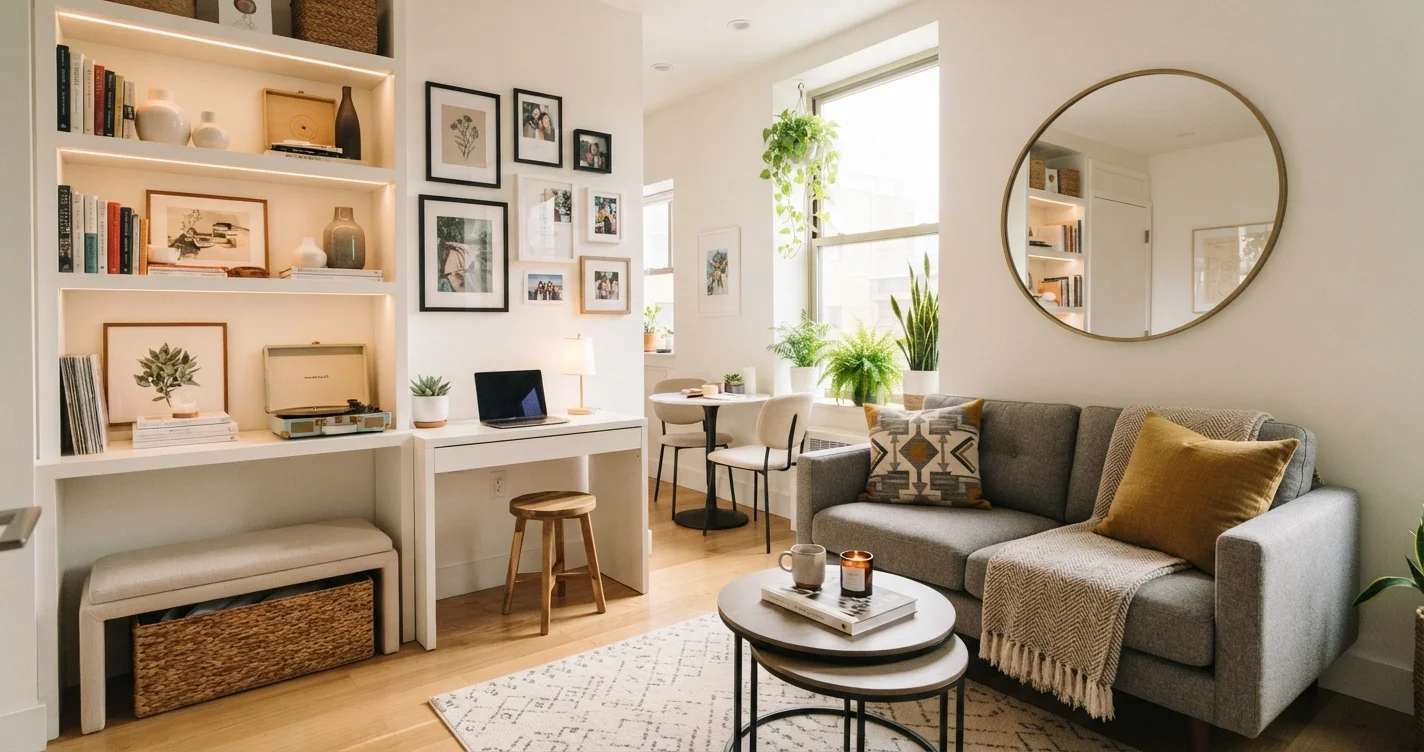
Living in a small home doesn’t mean sacrificing style or comfort. Professional designers have perfected the art of making compact rooms feel spacious, functional, and beautiful. Here are the same small space decorating tricks they use to transform tiny apartments and cozy cottages.
1. Embrace the Power of Vertical Space
When floor area is limited, the walls become your best real estate. Designers install shelving from floor to ceiling to draw the eye upward and double storage capacity.
Use floating shelves above doors, around windows, and in narrow hallways. In the kitchen, mount magnetic knife racks and pot rails. In the bedroom, floor-to-ceiling wardrobes create a seamless, custom look.
This approach not only stores more but also makes ceilings feel higher—a classic tiny room design idea.
2. Choose Multipurpose Furniture Wisely
Every piece should earn its keep. Look for ottomans with hidden storage, sofa beds with built-in compartments, and nesting tables that tuck away.
Designers love a good murphy bed with integrated shelving or desk. A dining table that folds against the wall when not in use is essential for compact home styling.
Pro tip: avoid furniture that is too bulky. Clean lines and exposed legs keep the visual weight light and airy.
3. Use Mirrors to Trick the Eye
Mirrors are the cheapest way to double your square footage visually. Place a large mirror opposite a window to bounce natural light around the room.
Designers often use mirrored closet doors or an entire mirrored wall in a hallway. A gallery wall with a mix of mirrors and art adds depth and personality.
This trick works wonders in bathrooms and tiny entryways, instantly making them feel twice as large.
- Best spots for mirrors: Opposite windows, behind dining tables, and in narrow corridors.
- Pro move: Use a single oversized mirror instead of multiple small ones for maximum impact.
- Bonus effect: Mirrors reduce clutter perception by creating an illusion of openness.
4. Master the Art of Zoning Without Walls
Open floor plans can feel chaotic. Designers create distinct zones using rugs, lighting, and furniture placement rather than solid walls.
Use a large area rug to define the living room, and a separate runner for the entryway. A slim console table behind a sofa acts as a room divider while serving as a drop zone.
Hanging pendant lights over a dining area or reading nook visually separates spaces without closing them off. Small apartment hacks like these make a home feel organized and intentional.
5. Go Vertical with Your Decor
Scale matters in small rooms. Instead of small, cluttered accessories, designers choose one or two statement pieces—a tall vase, a large abstract canvas, or an oversized floor lamp.
Hanging curtains high and wide is another trick. Mount rods close to the ceiling and let drapes fall to the floor. This instantly draws the eye up, making windows and walls feel larger.
Even a large clock or a tall plant like a fiddle-leaf fig can become a focal point that distracts from the limited floor space.
6. Lighten Up with Strategic Color
Light, neutral colors are the foundation of small-space design. White, cream, soft gray, and pastel shades reflect light and create an airy atmosphere.
But designers don’t stop there. They introduce one dark accent wall in a tiny powder room or behind a bed to add depth without shrinking the room. Dark colors recede, making edges feel farther away.
Glossy finishes on walls or cabinets also bounce light around—perfect for maximizing square footage in a galley kitchen.
7. Let Natural Light Flood In
Window treatments should be minimal. Opt for Roman shades, roller blinds, or sheer linen curtains that let sunlight pour through.
Keep windowsills clear of clutter. Place a small bench or reading chair near the window to create a cozy nook that feels connected to the outdoors.
If privacy is a concern, designers use frosted window film or semi-sheer curtains that filter light without blocking it entirely.
| Trick | Why It Works | Easy Implementation |
|---|---|---|
| Vertical storage | Uses wasted wall space, lifts the eye | Floating shelves, tall bookcases |
| Mirrors | Reflects light, creates depth | Large mirror opposite window |
| Multipurpose furniture | Reduces clutter, increases function | Ottoman storage, folding table |
| Light colors | Makes room feel larger and brighter | White walls, pale flooring |
| Zoning with rugs | Defines areas without walls | Area rugs in different zones |
8. Edit Ruthlessly and Organize Smartly
Every designer will tell you: clutter is the enemy of small spaces. Adopt a “one in, one out” rule for decor and clothing.
Use baskets, trays, and bins to corral small items on shelves and tables. Wall-mounted organizers for mail, keys, and chargers keep surfaces clear.
Drawer dividers in the kitchen and bathroom prevent chaos. When everything has a home, your small home instantly feels larger and more peaceful.
Frequently Asked Questions
1. What is the most effective small space decorating trick?
Using mirrors to reflect light and create an illusion of depth is arguably the most effective. It’s cheap, instant, and works in any room.
2. Should I use dark colors in a small room?
Yes, with caution. An accent wall in a deep navy or charcoal can add drama and make the room feel deeper. But keep the other walls light to balance it.
3. What furniture should I avoid in a small apartment?
Avoid oversized sofas, bulky recliners, and heavy coffee tables. Stick to pieces with exposed legs, slim profiles, and multiple functions.
4. How can I make a small living room feel bigger?
Use a large rug, mount the TV on the wall, choose a sofa with slim arms, and add floor-to-ceiling curtains. Keep decor minimal and vertical.
5. Are open shelves a good idea for small kitchens?
They can be, but only if you keep them curated. Avoid overcrowding. Use matching glass jars and a few small plants to create a clean, airy look.
6. How do I decorate a small bedroom without clutter?
Opt for a platform bed with storage drawers. Use wall-mounted nightstands or floating shelves. Keep bedding neutral and limit decorative pillows to two.
7. What is the best flooring for small spaces?
Large-format tiles or wide planks with minimal grout lines create a seamless look. Light wood or pale luxury vinyl plank are top choices.
8. Can I use wallpaper in a small room?
Absolutely. Choose a wallpaper with a small-scale pattern or a vertical stripe to add height. Use it on a single accent wall for maximum impact without overwhelming the space.
Conclusion
Mastering small space decorating tricks is all about being intentional with every choice you make. From vertical storage and strategic mirrors to multifunctional furniture and smart zoning, these designer-approved techniques prove that a compact home can still be luxurious, functional, and full of personality.
Start with one or two tricks this weekend, and watch your small space transform into a spacious retreat. Remember: less really is more—when it’s done right.


