
How to Use Mirrors to Make Small Rooms Feel Larger
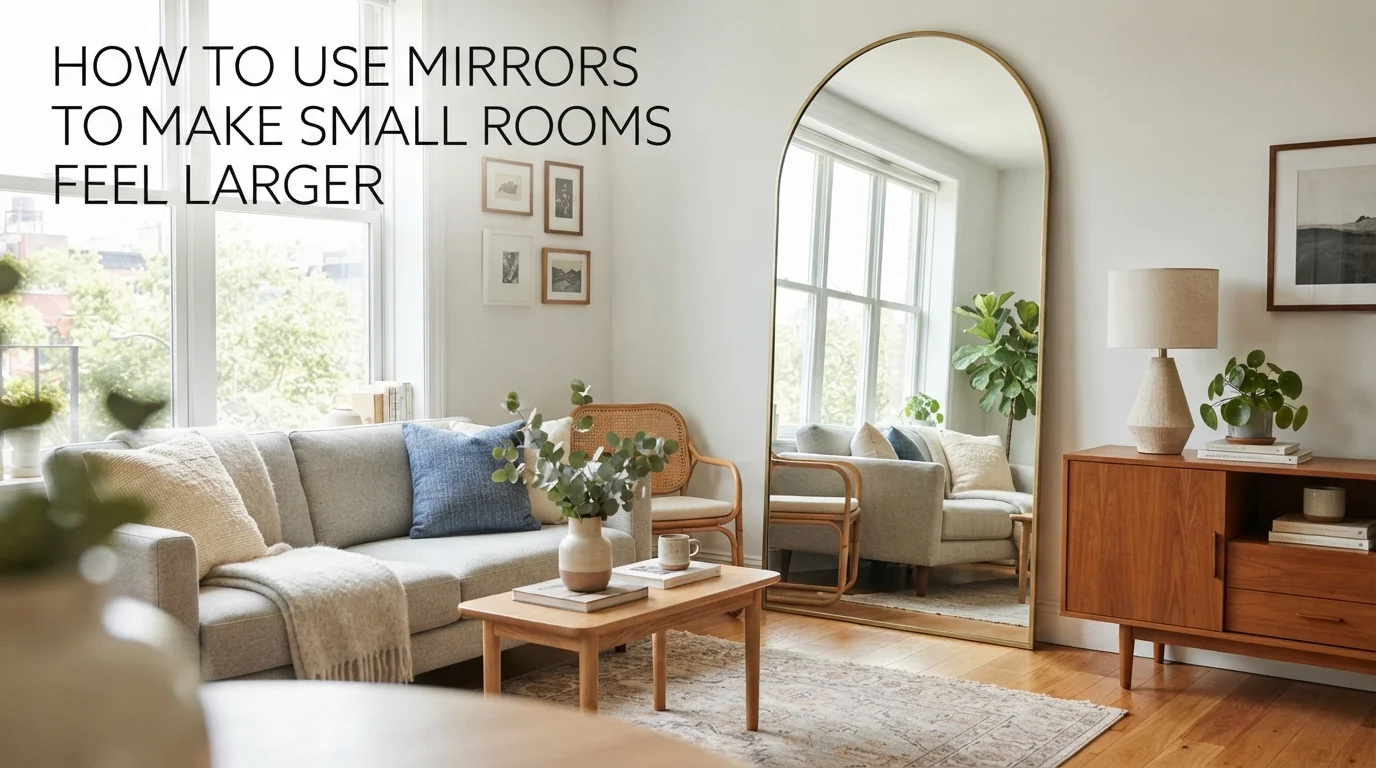
Living in a compact apartment or a cozy house doesn’t mean you have to feel cramped. One of the oldest and most effective tricks in interior design is using mirrors strategically. When you know how to use mirrors to make small rooms feel larger, you can double your square footage visually without renovation.
Mirrors manipulate light and perspective. They bounce natural light around the room, create depth, and trick the eye into seeing more space. But there is a science to it. A poorly placed mirror can feel gimmicky. The right placement, however, transforms a tight space into an airy retreat.
This guide walks you through proven techniques. From choosing the best size to positioning them for maximum impact, you will learn actionable tips that work in living rooms, bedrooms, hallways, and bathrooms.
Why Mirrors Are a Secret Weapon for Small Spaces
Mirrors are not just functional objects for checking your reflection. They are powerful tools for optical illusion. A well-placed mirror can make a room feel twice as wide or much taller. The key is understanding how they interact with light and sightlines.
When natural light hits a mirror, it reflects into darker corners. This eliminates shadow pockets that make a room feel closed in. Furthermore, mirrors create a sense of continuity. By reflecting the opposite wall, they suggest the room extends beyond its actual boundaries.
In small space design, every inch counts. Mirrors cost less than structural changes and deliver immediate results. They are the easiest way to achieve a spacious atmosphere without losing actual floor area.
Best Placement Strategies for Small Room Mirror Placement
Where you hang a mirror is more important than the mirror itself. Small room mirror placement should follow a few visual rules. The goal is always to double the view of the largest or brightest part of the room.
Place mirrors directly opposite windows. This is the classic move. The mirror captures incoming daylight and throws it back across the entire room. It brightens every corner and adds a second “window” effect instantly.
Another top spot is on a wall perpendicular to a window. This creates a layered reflection that pushes the eye sideways. It visually widens a narrow room. Avoid placing mirrors on walls that face a blank wall or a cluttered area, as that only doubles the clutter.
- Opposite a window — reflects natural light and outdoor views.
- Behind a light source — amplifies lamp or candle glow.
- At the end of a hallway — extends the corridor visually.
- Above a console table — adds depth while keeping a functional surface.
- Behind floating shelves — creates the illusion of a deeper display.
Also consider the mirror’s height. Hang it so it reflects something interesting, like a piece of art or a plant. If it only reflects the ceiling, you miss an opportunity to enhance the room’s best features.
Choosing the Right Size and Shape for Maximum Impact
When it comes to mirrors for small spaces, bigger is almost always better. A large mirror makes a bold statement and covers more wall area. Think of it as a replacement for bulky art. A single oversized mirror can open up a room better than several small ones.
Tall, vertical mirrors work wonders in rooms with low ceilings. They draw the eye upward, creating the impression of height. Horizontal mirrors, on the other hand, are ideal for narrow rooms. They push the walls outward visually.
Round and oval mirrors soften the sharp lines of furniture. They are perfect for small dining nooks or tiny entryways. Avoid overly ornate frames in tight spaces. A simple, thin frame or a frameless mirror keeps the look clean and uncluttered.
| Room Type | Mirror Shape | Placement Tip | Effect |
|---|---|---|---|
| Narrow hallway | Horizontal rectangle | At the far end wall | Extends the length visually |
| Low-ceiling bedroom | Vertical rectangle | Floor-leaning or full-length | Adds height |
| Small living room | Large round or oval | Above sofa or opposite window | Opens up the space |
| Compact bathroom | Square or rectangular | Above vanity or opposite door | Doubles the perceived size |
| Tiny dining corner | Round with slim frame | On a side wall near table | Expands the eating area feel |
A common mistake is using a mirror that is too small. A tiny mirror on a large wall breaks the visual flow. It draws attention to the limited size rather than expanding it. Always lean toward scaling up if you are unsure.
Using Mirrors to Reflect Light and Color
The best way to make a room look bigger with mirrors is to pair them with light and color. Mirrors amplify whatever they face. If they face a dark wall, they amplify the darkness. If they face a bright, airy wall, they double that brightness.
Paint the wall opposite your mirror in a light, neutral tone like soft white or pale gray. This combination floods the room with reflected light. You can also position a mirror so it reflects a colorful rug or a vibrant piece of art. This distributes the color throughout the room without painting every wall.
In a windowless room, mirrors become essential. Place one behind a bright lamp or a group of candles. The mirror multiplies the light source, making the room feel sunlit. For extra effect, use mirrors with beveled edges. They catch light from multiple angles and create subtle sparkle.
Creative Ways to Group and Arrange Small Mirrors
If a single large mirror does not fit your style or budget, consider a gallery wall of small mirrors. Grouping several mirrors together creates a dynamic focal point. It resembles art while functioning as a space expander.
Arrange them in a grid for a clean, modern look. This works wonderfully above a bed or a desk. You can also mix shapes—round, oval, and irregular—for a bohemian vibe. Just keep the frames consistent in color to avoid visual chaos.
Another creative trick is using mirrors on closet doors. Whether sliding or hinged, mirrored closet doors make a bedroom feel significantly larger. They serve double duty as a full-length mirror and a space enhancer. For existing doors, add stick-on mirror tiles to transform them cheaply.
Furniture with mirrored surfaces also helps. A mirrored coffee table or a console table with a reflective top adds depth without hanging anything on the wall. Just be mindful of fingerprints—glass cleaner will become your best friend.
Avoiding Common Mirror Mistakes in Small Rooms
Even with good intentions, mirror placement can backfire. One classic error is placing a mirror opposite a cluttered area. You end up magnifying the mess. The room feels chaotic instead of spacious. Always keep the reflected view tidy and curated.
Another mistake is hanging mirrors too high. A mirror should be at eye level or slightly lower. If it is too high, it only reflects the ceiling or the top of the wall, which does little to expand the room’s feel. In a dining area, hang it so it reflects the table and artwork, not the light fixture.
Avoid placing mirrors where they reflect a door that is often closed. That just shows you a solid surface. Instead, aim them toward open pathways or windows. Finally, do not overcrowd a wall with mirrors. One or two well-placed mirrors are more effective than a house full of lookalike reflections.
Frequently Asked Questions
1. Does a mirror make a room look bigger?
Yes. A mirror creates visual depth and reflects light, which tricks the eye into perceiving more square footage than actually exists.
2. Where is the best place to put a mirror in a small room?
Directly opposite a window is the best spot. It reflects natural light and outdoor views, making the room feel brighter and larger.
3. Can mirrors make a room look bigger on both sides?
Yes, when placed on adjacent walls, mirrors can reflect each other. This creates an infinite corridor effect that dramatically expands the perceived space.
4. What is the best size mirror for a small room?
Go as large as the wall allows. Oversized floor-to-ceiling mirrors or wide horizontal mirrors provide the strongest illusion of extra space.
5. Should I use framed or frameless mirrors in a small space?
Frameless mirrors blend into the wall best. If you prefer a frame, choose a thin, light-colored one to avoid adding visual weight.
6. Do round mirrors work better than square mirrors in small rooms?
Round mirrors soften angles and work well above furniture in compact corners. Square mirrors are better for creating structured, expansive reflections.
7. Can I put a mirror in front of a window?
No. Placing a mirror directly in front of a window blocks light. Always position it at an angle to the window to catch and bounce the light.
8. How many mirrors should I use in a small room?
One large mirror or a small cluster of 2-3 mirrors is typically enough. More than that can feel chaotic and reduce impact.
Conclusion
Mastering how to use mirrors to make small rooms feel larger is a skill that pays off immediately. You do not need a renovation budget or a professional decorator. Just a few thoughtful choices about placement, size, and reflection strategy can completely transform your space.
Start by identifying the brightest spot in your room. Hang a mirror there. Watch how the light multiplies. Then look for a narrow hallway or a dark corner and add another. The result is an open, airy home that feels double its actual size.
Remember, mirrors are not just decorative accents. They are functional tools for expanding perception. Use them wisely, and your small space will feel like a spacious sanctuary.


