
The Best Lighting for Small Spaces
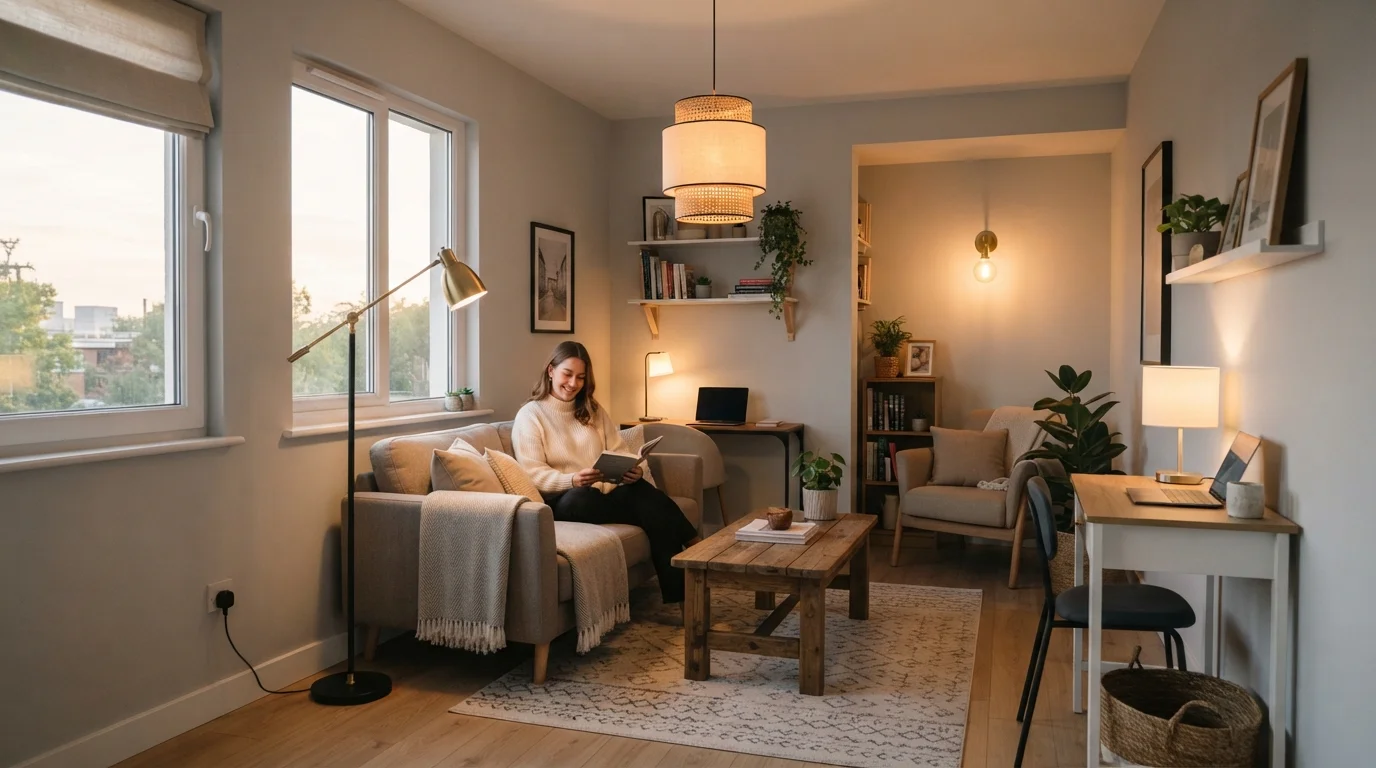
Lighting can make or break a small room. Get it right, and your cozy apartment or tiny den feels twice as big. Get it wrong, and even the most spacious layout feels cramped and shadowy.
After 15 years writing about home design, I’ve learned one hard rule: the best lighting for small spaces isn’t about brightness alone. It’s about layering, placement, and choosing fixtures that pull double duty.
In this guide, I’ll walk you through small room lighting ideas that actually work. You’ll discover space-saving light fixtures, smart tricks to bounce light, and a few common mistakes to avoid. Let’s flip the switch.
Why Lighting Matters More in Small Spaces
Think of a small room as a box. If you only have one overhead light, the box stays flat and dull. Every corner feels like a cave. But add layered lighting — a warm lamp here, a wall sconce there — and the box transforms into a living space with dimension and depth.
Good lighting also improves mood and functionality. A well-lit kitchen counter makes cooking easier. A softly lit reading nook invites relaxation. And bright, indirect light makes ceilings feel higher.
For compact rooms, the goal is to eliminate harsh shadows and create visual flow. That’s where intentional fixture choice comes in.
Layer Your Light: The Three Types You Need
Designers talk about ambient, task, and accent lighting. In a small space, you need all three — even if your square footage is tight. Here’s how each one works:
- Ambient lighting – The base layer. Think flush-mount ceiling fixtures or a slim pendant. It provides overall illumination without dominating the room.
- Task lighting – Focused light for specific activities. Desk lamps, under-cabinet strips, or a swing-arm wall light over a sofa for reading.
- Accent lighting – The magic touch. Picture lights, small LED strips behind a mirror, or a tiny spotlight on a shelf to highlight a sculpture.
When you combine these, your room feels curated, not cluttered. And each fixture can be chosen for its cozy apartment lighting qualities — warm color temperatures and adjustable brightness.
Best Fixture Types for Tight Footprints
Not all lamps are created equal when floor space is at a premium. Here are five fixture types that punch above their weight in compact home design:
1. Wall Sconces
They mount flush to the wall, so they take zero floor or table space. Use them on either side of a bed or above a narrow hallway console. Look for swing-arm models that allow directional light.
2. Flush-Mount and Semi-Flush Ceiling Lights
These sit close to the ceiling, making them ideal for rooms with low ceilings. They provide wide, even ambient light without visual obstruction. Drum-shaped shades in white linen diffuse light beautifully.
3. Slim Linear Pendants
Perfect above a narrow dining table or kitchen island. Because they’re long and narrow, they follow the shape of small surfaces without overwhelming them.
4. Clip-On and Magnetic Lights
These are the ultimate space-saving light fixtures. Clip a small LED lamp to the edge of a bookshelf, or stick a magnetic under-cabinet light above a desk. No permanent installation needed.
5. Floor Lamps with Narrow Profiles
Skip the bulky torchieres. Look for arc lamps that extend over furniture, or slim tripod lamps that fit into tight corners. A narrow base with a shade pointing upward adds ambient bounce.
Color Temperature and Brightness: Get the Numbers Right
Light color matters just as much as fixture style. For best lighting for small spaces, stick to these guidelines:
| Room Type | Recommended Color Temperature | Recommended Lumens |
|---|---|---|
| Living room / bedroom | 2700K – 3000K (warm white) | 800 – 1,500 total |
| Home office / kitchen | 3000K – 4000K (neutral white) | 1,500 – 3,000 total |
| Bathroom / hallway | 3000K – 3500K | 500 – 1,000 total |
Warm light (2700K) creates a cozy, relaxing vibe. Neutral light (3000K-3500K) boosts focus without feeling sterile. Avoid anything above 4000K in small living spaces — it looks clinical and unforgiving.
Also, use dimmer switches on your ambient and task lights. You can shift the mood from bright and productive to soft and romantic in seconds.
Mirrors and Light: The Ultimate Small-Room Trick
Here’s a trick that costs almost nothing: place a mirror opposite your main light source. The mirror bounces natural or artificial light around the room, instantly making it feel larger.
For example, put a large mirror on the wall facing a west-facing window. Late afternoon sunlight will flood your living room. At night, place a wall sconce next to that mirror for double the glow.
Combine mirrors with cozy apartment lighting fixtures like warm Edison bulbs for a soft, layered effect. The reflection adds depth without adding a single lamp.
Small Room Lighting Ideas by Room
Every room has different needs. Here are targeted small room lighting ideas for the most common tight spaces:
Living Room
Use a flush-mount ceiling light for ambient fill. Then add two small table lamps on opposite sides of the room (end tables or floating shelves). This creates light balance and reduces shadows. A corner floor lamp with a translucent shade adds warmth.
Bedroom
Go for wall sconces on both sides of the bed instead of bedside table lamps. This saves surface space for a book or phone. Use a low-profile pendant or flush-mount in the center of the ceiling. Avoid harsh downlights directly above the pillow.
Kitchen
Under-cabinet LED strips are non-negotiable. They provide focused task light for prep surfaces without cluttering countertops. For ambient light, choose a slim linear pendant over the sink or dining area. Bright, neutral light (3000K) works best here.
Bathroom
Vanity lights on both sides of the mirror (or a long bar above) eliminate facial shadows. To save space, select a sconce that mounts directly to the wall without a bulky backplate. A small skylight or high-wattage LED pendant supplements ambient light.
Common Mistakes to Avoid
Even good intentions can backfire. Watch out for these three small space lighting no-no’s:
- One single overhead light – It creates harsh shadows and no depth. Always layer.
- Oversized fixtures – A massive chandelier in a tiny room feels heavy and overwhelming. Keep fixtures visually light and proportional.
- Cold color temperatures – Anything above 4000K makes a small room feel like a hospital hallway. Stick to warm and neutral whites.
Frequently Asked Questions (FAQ)
What type of lighting makes a small room look bigger?
Bright, indirect ambient light paired with mirrors. Wall sconces and flush-mount fixtures keep the floor clear, making the room feel more open. Aim for warm white bulbs at 2700K-3000K.
Can I use pendant lights in a small room?
Yes, but choose slim, linear pendants and hang them at least 12 inches below an 8-foot ceiling. For lower ceilings, opt for semi-flush mounts instead.
Should I use dimmers in small spaces?
Absolutely. Dimmers let you adjust brightness for different activities and moods. They also prolong bulb life and reduce energy consumption.
What is the best color bulb for cozy apartment lighting?
Warm white at 2700K. It mimics the soft glow of incandescent bulbs and creates an inviting, relaxed atmosphere.
How many lights do I need in a small room?
At least three separate light sources: one ambient, one task, and one accent. Even a 10×10 room benefits from a ceiling light, a desk lamp, and a small picture light.
Are floor lamps a good idea for small spaces?
Yes, if you choose a narrow-profile model. Arc lamps or slim tripod designs take up minimal floor space while providing upward light that bounces off the ceiling.
Can I mix warm and cool light in the same room?
It’s best to stick to one color temperature family per room. Mixing warm (2700K) and cool (4000K) creates visual discord. For small rooms, warm neutral is the safest bet.
Conclusion
The best lighting for small spaces isn’t about a single perfect fixture. It’s about strategy. Start with ambient light that spreads evenly. Add task lighting where you work or read. Finish with accent lights that add character and depth.
Choose space-saving light fixtures like wall sconces, slim pendants, and narrow floor lamps. Keep color temperatures warm (2700K-3000K) for living and sleeping areas, and neutral (3000K-3500K) for kitchens and workspaces. Don’t forget dimmers and mirrors — they’re your best friends in a compact room.
With these tips, you can make any small space feel bigger, better, and brighter. Now go forth and light up your home.


