
How to Choose the Right Mattress for Your Sleep Style
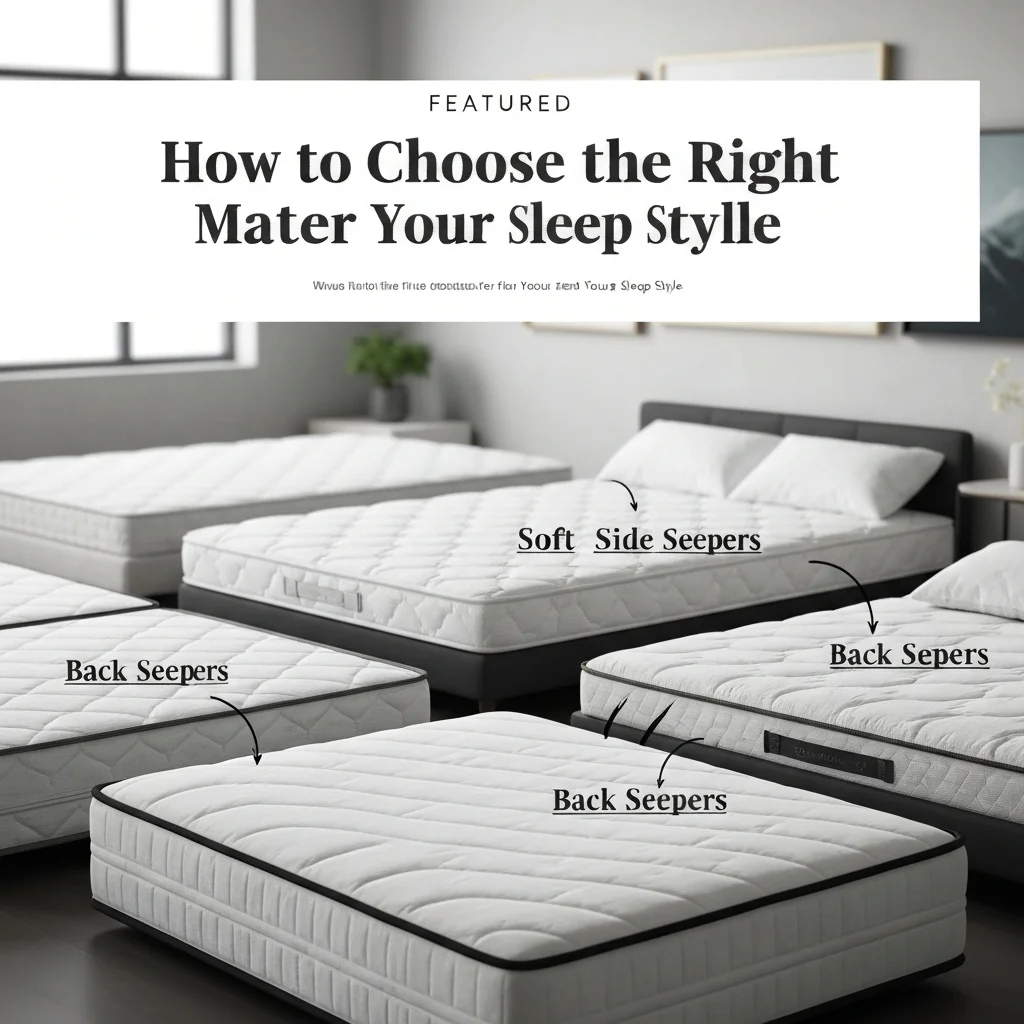
Finding the perfect mattress can feel overwhelming. With endless options in firmness, material, and price, it’s easy to get lost. But here’s the secret: the best mattress for you depends entirely on how you sleep.
Your sleep style—whether you’re a side sleeper, back sleeper, stomach sleeper, or a combination—determines the support and pressure relief your body needs. Choosing a mattress that doesn’t align with your sleep posture can lead to back pain, stiff necks, and restless nights.
In this guide, I’ll walk you through exactly how to choose the right mattress for your sleep style. We’ll cover firmness levels, material types, and specific recommendations for each position. By the end, you’ll have a clear roadmap to your best night’s sleep.
Why Your Sleep Style Matters for Mattress Selection
Your spine has a natural curve. When you sleep, you want that curve to stay aligned—not bent into awkward angles or flattened out. A mattress that matches your sleep style keeps your spine in a neutral position.
Side sleepers, for example, need extra cushioning at the shoulders and hips. Back sleepers require even support to fill the lumbar gap. Stomach sleepers need a firmer surface to prevent the hips from sinking too deep, which can strain the lower back.
Ignoring your sleep style when shopping for a mattress is like buying shoes without knowing your size. You might get lucky, but the odds aren’t in your favor. Expert resources on sleep posture support consistently emphasize that alignment is the number one factor in mattress satisfaction.
Remember: a mattress that works wonders for your partner may leave you tossing and turning. Your sleep style is unique.
Best Mattress for Side Sleepers: Soft to Medium Support
Side sleeping is the most common position, especially among women and older adults. The key challenge here is pressure on the shoulders and hips. A mattress that’s too firm will create pressure points, leading to numbness and pain.
The best mattress for side sleepers typically falls in the soft to medium-firm range (3–5 on the firmness scale). Memory foam and hybrid mattresses excel here because they conform to your body’s curves.
Look for a mattress with at least 2–3 inches of comfort foam on top. This allows your heavier body parts—hips and shoulders—to sink in slightly while your spine stays straight. Latex is another excellent material for side sleepers, offering contouring without the “sinking” feeling of memory foam.
If you wake up with a numb arm or a sore shoulder, your current mattress is likely too firm for your side-sleeping posture.
Back Sleepers: The Goldilocks Zone of Firmness
Back sleepers have it somewhat easier because your body weight is evenly distributed. However, finding the right balance between support and comfort is tricky. Too soft and your hips sink, causing a “hammock” effect that strains your lower back. Too firm and your lumbar curve won’t be supported.
A medium-firm mattress (5–7 on the firmness scale) is ideal for most back sleepers. This provides enough support for your spine while allowing slight contouring for the lower back. Hybrid mattresses with a pocketed coil base and a plush comfort layer are a popular choice.
Pay attention to your mattress firmness guide when shopping. Many brands label their mattresses with numbers (1 being softest, 10 hardest). For back sleeping, aim for 5 or 6. You can also test this at home: lie on your back and slide your hand under your lower back. If it slides easily, the support is good.
Back sleepers with chronic lower back pain should consider a mattress with zoned support, which is firmer in the middle and softer at the shoulders and feet.
Stomach Sleepers: Firmness Is Your Friend
Stomach sleeping is the most demanding on your spine. Because your midsection is the heaviest part of your body, it naturally sinks into the mattress, pulling your lower back into an exaggerated curve. This can cause significant pain over time.
The solution is a firmer mattress, typically a 7 or 8 on the firmness scale. This keeps your hips from sinking too deep, maintaining a straighter spine. Latex and innerspring mattresses work well for stomach sleepers because they provide strong pushback.
If you’re a stomach sleeper, avoid soft memory foam mattresses. You’ll likely wake up with a sore lower back. Instead, look for a mattress with a firm support core and a thin, breathable comfort layer. A flat, plush pillow is also recommended to avoid straining your neck.
Many stomach sleepers eventually train themselves to sleep on their back to reduce pain. But if you’re committed to the position, prioritize firmness above all else.
Combination Sleepers: Versatility Is Key
Do you change positions throughout the night? You’re a combination sleeper. This is common: about one-third of people shift positions regularly. Your mattress needs to respond quickly as you move from side to back to stomach.
The best choice for combination sleepers is a medium-firm hybrid mattress or a latex mattress. These materials offer bounce and responsiveness, making it easy to change positions without feeling stuck. Memory foam, especially slow-recovery types, can feel like quicksand when you try to roll over.
Look for a mattress with good edge support. You’ll likely sleep near the edges if you’re a restless sleeper, and you don’t want to feel like you’re about to roll off. Pocketed coils and reinforced foam edges are features to prioritize.
Your mattress material types matter here: hybrids combine the best of foam and coils, giving you pressure relief where you need it and support where you don’t.
Mattress Materials Compared: Which One Fits Your Sleep Style?
Not all mattresses are created equal. Each material has a distinct feel and performance. Here’s a quick comparison to help you match material to your sleep style:
| Material | Best For | Firmness Range | Key Features |
|---|---|---|---|
| Memory Foam | Side sleepers, back sleepers | Soft to medium | Excellent pressure relief, motion isolation |
| Latex | Combination sleepers, stomach sleepers | Medium to firm | Bouncy, responsive, durable, cool |
| Hybrid (Coils + Foam) | All sleep styles, especially back and combo | Medium to medium-firm | Best of both worlds, good edge support |
| Innerspring | Stomach sleepers | Firm | Breathable, firm support, traditional feel |
| Airbeds (Adjustable) | Couples, people with changing needs | Adjustable | Custom firmness per side |
When evaluating mattress material types, consider temperature, motion transfer, and how long you keep a mattress. Memory foam tends to sleep hot, while latex and innerspring are cooler. If you share a bed, motion isolation (memory foam) is valuable.
Key Factors Beyond Sleep Style
While your sleep style is the primary factor, other elements influence your mattress choice:
- Weight: Heavier individuals (over 230 lbs) need thicker, firmer mattresses to avoid sinking. Lighter people may prefer softer models.
- Sleep temperature: If you sleep hot, choose latex, innerspring, or a hybrid with cooling gel. Avoid dense memory foam without cooling features.
- Partner movement: For couples, memory foam or hybrid with good motion isolation prevents disturbances at night.
- Health concerns: People with allergies should consider hypoallergenic materials like latex. Those with back issues should look for zoned support designs.
- Mattress lifespan: Innerspring mattresses last 6–8 years, memory foam 8–10 years, and latex 12–15 years.
Always check the trial period and warranty. A minimum of 90 nights lets you truly test how to choose the right mattress for your sleep style in your own home.
Frequently Asked Questions
What is the best mattress firmness for side sleepers?
Side sleepers generally need a soft to medium-firm mattress (3–5 out of 10). This allows the shoulders and hips to sink in slightly, keeping the spine aligned. Memory foam or plush hybrid mattresses work best.
Can a mattress be too firm for back sleepers?
Yes. A mattress that is too firm for back sleepers won’t contour to the lower back’s natural curve, leaving a gap that strains muscles. Medium-firm is usually the sweet spot.
Is memory foam good for stomach sleepers?
Generally, no. Classic memory foam is often too soft and causes the hips to sink, creating lower back strain. Stomach sleepers should opt for firm latex or innerspring mattresses instead.
How often should I replace my mattress?
Most experts recommend replacing a mattress every 7–10 years. Signs you need a new one include visible sagging, waking up sore, or worsening allergy symptoms. A worn-out mattress won’t provide proper sleep posture support.
What is the difference between a hybrid and a memory foam mattress?
Hybrid mattresses combine foam layers with a coil support core, offering more bounce and airflow. Memory foam mattresses are all foam, providing deep contouring and motion isolation but less breathability.
Do I need a different mattress if I sleep on my back vs stomach?
Yes. Back sleepers need medium-firm support for lumbar alignment. Stomach sleepers need a firmer surface to prevent hip sink. One mattress rarely works perfectly for both positions unless it’s a hybrid with zoned support.
Can a mattress topper fix the wrong mattress firmness?
Partly. A mattress topper can make a firm mattress softer, but it cannot make a soft mattress firm. Toppers are a good temporary solution, but they won’t fix foundational support issues.
What is the best material for a cool night’s sleep?
Latex and innerspring mattresses are naturally cooler because they allow more airflow. Hybrids with cooling gel, copper infusions, or breathable covers also perform well for hot sleepers.
Conclusion
Choosing the right mattress isn’t just about comfort—it’s about health. Your sleep quality affects your mood, productivity, and physical well-being. By focusing on your sleep style, you eliminate the guesswork.
Remember these core takeaways: side sleepers need soft pressure relief, back sleepers need balanced medium-firm support, stomach sleepers need firmness, and combination sleepers need responsiveness. Match material to need, and always prioritize alignment.
Now that you know how to choose the right mattress for your sleep style, you’re ready to shop with confidence. Take advantage of trial periods, read reviews from people with similar sleep habits, and don’t settle for a mattress that only feels good for five minutes in a showroom. Your best sleep is out there.


