
How to Organize Small Cabinets
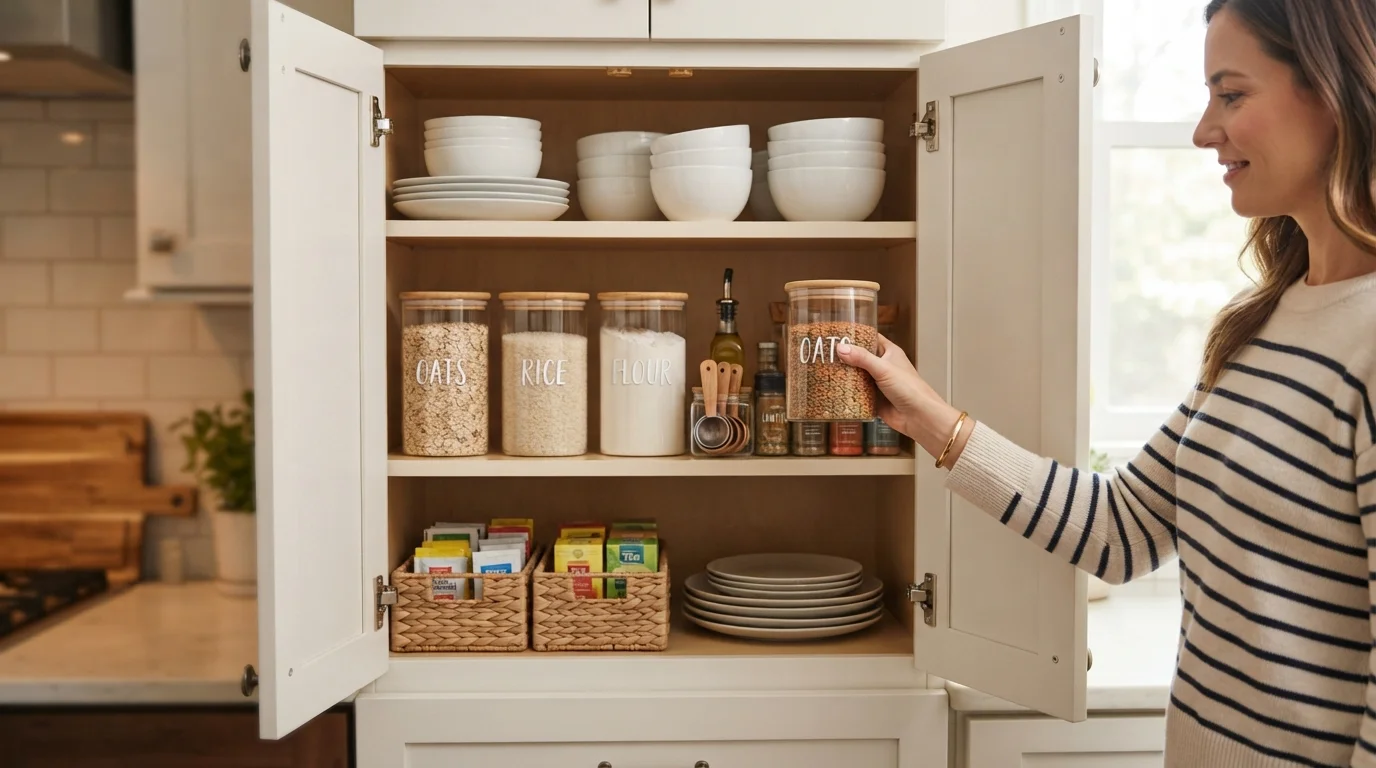
If you live in a cozy apartment or a home with limited square footage, you know the pain of opening a cabinet and watching everything tumble out. Small cabinets are tricky—they hold just enough stuff to create chaos but not enough to store everything neatly. The good news? With the right strategy, you can turn even the tiniest cabinet into an ultra-functional storage zone.
In this guide, we’ll walk you through proven methods on how to organize small cabinets like a pro. From kitchen spice racks to bathroom medicine cabinets, these small cabinet organization ideas will help you reclaim every inch of space. Let’s dive in.
1. Start with a Hard Declutter
Before buying a single bin or shelf, empty the cabinet completely. Lay everything on the counter or floor. You’ll be shocked at how many mismatched lids, expired spices, or dry skin products you’ve been hoarding.
Sort items into three piles: Keep, Donate, Toss. Be ruthless. If you haven’t used that crepe pan in two years, pass it on. This step alone can free up 30% of your space instantly.
A clean slate makes the rest of your small cabinet organization journey much easier. Remember: you can’t organize clutter—you can only organize what you actually need.
2. Use Vertical Space with Stackable Risers
Most small cabinets waste the area above eye level. That’s prime real estate. Invest in stackable shelf risers or small wire racks. They double your storage by creating two layers out of one shelf.
For kitchen cabinets, use risers for plates and bowls. For bathroom cabinets, use small acrylic steps for skincare bottles. This trick is a game-changer for maximize kitchen cabinet space without renovating a thing.
- Kitchen risers: Place spices on the top tier, baking supplies below.
- Bathroom risers: Store daily-use items (toothbrush, serum) on top, backups below.
- Under-sink risers: Use a sliding riser to reach cleaning products at the back.
3. The Magic of Drawer Dividers and Bins
Deep cabinets are black holes for small items. Without dividers, everything slides into a messy pile. Use adjustable drawer dividers or small plastic bins to create distinct zones.
For a deep under-sink cabinet, try a 2-tier slide-out organizer. You can keep sponges and scrubbers on top, and soap refills or trash bags below. This is one of the best bathroom cabinet storage tips I’ve ever used.
In a pantry cabinet, use clear, labeled bins for snacks, cans, and baking mix. The transparency helps you see what’s inside without rummaging.
4. Think Outside the Cabinet Door
The inside of the cabinet door is often ignored. That’s a mistake. Install slim adhesive hooks or wire racks to hold measuring spoons, oven mitts, or hair styling tools.
In a small bathroom, stick a magnetic strip inside the medicine cabinet for tweezers, nail clippers, and bobby pins. For kitchen cabinets, a small spice rack on the door frees up shelf space for pots and pans.
These vertical hacks are perfect small space solutions that add storage without subtracting floor or counter area.
5. Embrace the “Rotate and Reach” Rule
Clutter builds when you can’t find what you need. Follow the Rotate and Reach method: store items you use daily at the front, and rarely-used items at the back.
Use lazy Susans in corner cabinets or deep shelves. A spinning turntable for oils, vinegars, or condiments lets you reach anything with a simple flick. For bathroom cabinets, a small lazy Susan works great for toothpaste, floss, and meds.
This principle applies to any cabinet and keeps your small cabinet organization ideas functional long-term.
6. Go Modular with Drawer Systems
Not all cabinets are deep enough for shelves. For narrow or shallow cabinets (like a 6-inch kitchen spice cabinet), use modular drawer inserts. They stack vertically and slide out like a filing cabinet.
These systems are perfect for how to organize small cabinets in an apartment kitchen. You can store cutting boards, baking sheets, or trays vertically—no more awkward jenga moves.
For a desk cabinet, use modular cubes for mail, charging cables, and notebooks. The key is to break the space into small, predictable zones.
7. Label Everything for Long-Term Order
You’ve put in the work. Now make sure it stays that way. Use a label maker or chalkboard labels to mark each bin, shelf, or drawer. It takes 10 minutes but prevents the “where does this go?” confusion.
Labels are especially helpful in shared cabinets (like the kitchen or hallway storage). Everyone in the household can maintain the system. Plus, it looks polished and intentional—great for small space solutions that double as design.
| Cabinet Location | Best Labeling Strategy | Example Items |
|---|---|---|
| Kitchen Base Cabinet | Chalkboard labels on bins | Pots, lids, baking sheets |
| Bathroom Vanity | Waterproof sticker labels | Hair products, first-aid, makeup |
| Under-Sink Cabinet | Clear plastic tags | Cleaning spray, sponges, trash bags |
| Pantry Cabinet | Whiteboard labels (reusable) | Canned goods, snacks, spices |
Frequently Asked Questions
What is the most affordable way to organize small cabinets?
Repurpose shoe boxes, clean takeout containers, or egg cartons as drawer dividers. Spend money only on a few shelf risers and a label maker. Total cost: under $20.
How do I organize a deep but narrow cabinet?
Use a pull-out drawer system or a vertical file organizer. Store cutting boards, baking trays, or tall bottles vertically so you can see everything at a glance.
Can I use tension rods in cabinets?
Absolutely! Tension rods work great for securing spray bottles under the sink or as a shelf divider for lids and cutting boards. They’re a versatile small space solution.
How do I keep small cabinets from getting messy again?
Adopt the “one-in, one-out” rule. Every time you buy a new item, remove an old one. Also, do a quick 5-minute tidy each week to reset the system.
What should I avoid when organizing small cabinets?
Avoid overstuffing. If a bin is too full to remove easily, you will stop using it. Also, avoid storing heavy items on high shelves—gravity is not your friend.
Are stackable bins better than shelf risers?
It depends on the cabinet. Stacking bins work well for deep cabinets where you can pull entire stacks out. Risers are better for shallow cabinets where you want to see everything at once.
How do I optimize a cabinet above the fridge?
That space is often wasted. Use a small step stool and store large, rarely-used items like a slow cooker, party platters, or holiday decorations. Use clear bins so you know what’s inside.
What’s the number one mistake people make?
Not measuring before buying organizers. Always measure height, depth, and width. A bin that “almost fits” will drive you crazy and waste space.
Conclusion
Learning how to organize small cabinets doesn’t require a renovation budget or a contractor. It just takes a bit of planning, a few clever tools, and the willingness to let go of things you don’t use. Whether you’re tackling a tiny kitchen corner, a cramped bathroom vanity, or an under-sink cabinet, these strategies work.
Start with one cabinet this weekend. Empty it, declutter, add a riser and some labels, and see how much better you feel. Small cabinets can hold a lot more than you think—they just need the right system. Happy organizing!


