
Small Space Ideas for Kids
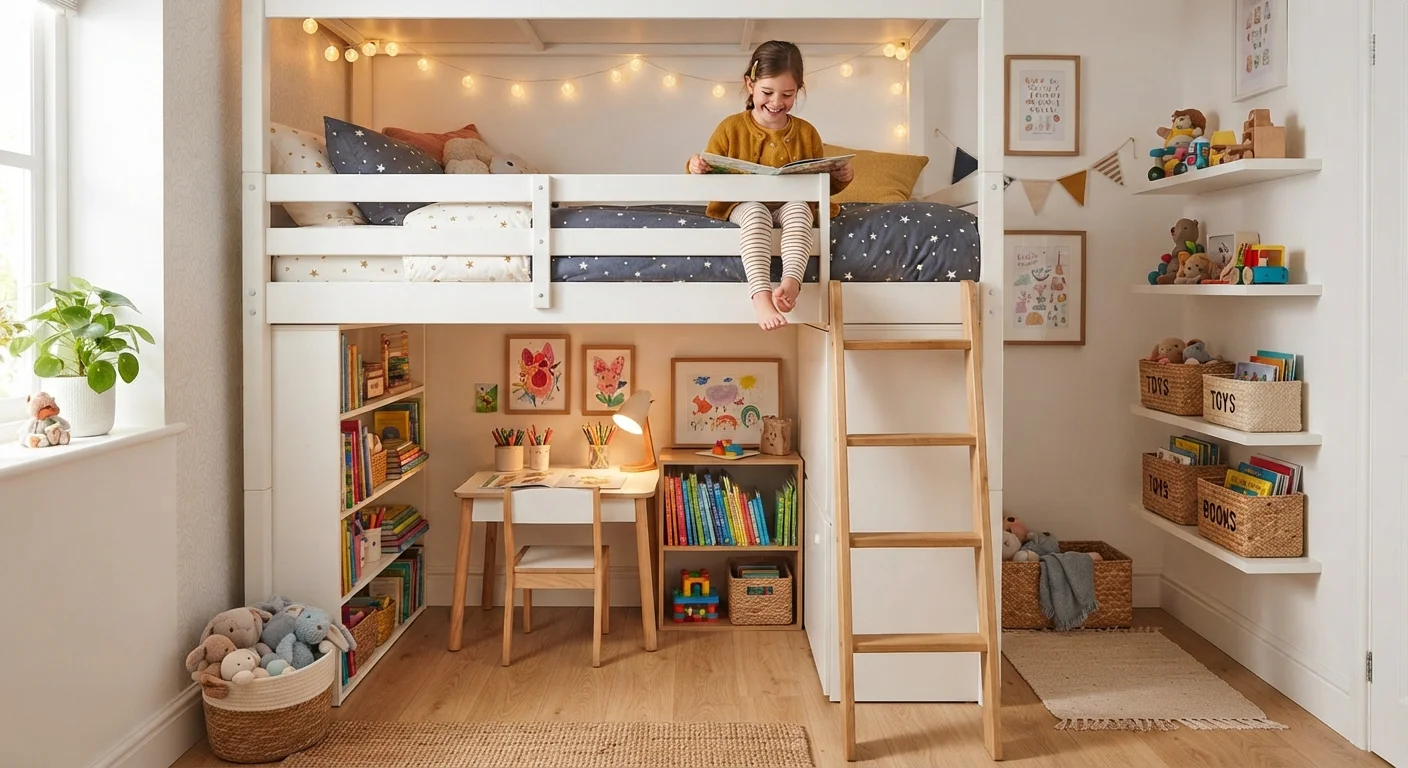
Raising kids in a compact home doesn’t mean sacrificing style, comfort, or play. Whether you’re working with a tiny bedroom or a shared nook, the right small space ideas for kids can turn any corner into a functional and fun retreat.
In this guide, I’ll share battle-tested strategies from real homes. You’ll learn how to maximize every square inch without making the room feel cramped or cluttered.
1. Go Vertical: The Golden Rule of Small Kids’ Rooms
When floor space is limited, look up. Vertical storage is your best friend. Install wall-mounted shelves, tall bookcases, or a loft bed with a desk or play area underneath.
For example, a bunk bed with stairs that double as drawers gives you sleeping space and storage in one footprint. Add a wall-mounted toy hammock for stuffed animals—it’s cute and keeps them off the floor.
2. Choose Multifunctional Furniture
Every piece of furniture in a small kid’s room should do double duty. A storage ottoman can hold toys and serve as a seat. A crib that converts into a toddler bed and later a daybed saves you money and space over time.
Look for compact kids furniture like a desk that folds into the wall or a trundle bed with pull-out drawers. These pieces adapt as your child grows.
3. Create Zones with Rugs and Room Dividers
In a shared or open-plan space, define areas using soft boundaries. A bright rug marks the play zone. A low bookshelf or a curtain can separate the sleeping area from the study corner.
This technique helps kids understand “this is where I sleep” vs. “this is where I play.” It also makes the room feel larger by visually organizing the chaos.
4. Use Smart Storage Systems
Clutter is the enemy of small spaces. Invest in kids room storage solutions that make tidying up easy for children. Clear bins with labels (use pictures for non-readers) let kids find and put away toys independently.
- Cubbies with fabric bins for categories like blocks, cars, and art supplies
- Over-the-door shoe organizers for small toys, crayons, or hair accessories
- Under-bed rolling drawers for off-season clothes or extra bedding
One mom I worked with used a hanging closet organizer for Lego sets—each brick bag went into its own pocket. The kids loved it.
5. Maximize Awkward Corners and Nooks
Don’t ignore that weird corner under the window or the space behind the door. Install a corner desk with a floating shelf above. Use a narrow bookcase in a hallway or dead space next to the closet.
For a small bedroom layout for kids, consider placing the bed diagonally. It frees up floor area for a small tent or reading nook. Even a window seat with hidden storage turns a wasted ledge into a cozy spot.
6. Embrace Light Colors and Mirrors
Light walls, bedding, and curtains reflect natural light, making a small room feel airy and bigger. Add a large mirror on one wall—it visually doubles the space.
You don’t need all white. Soft pastels, pale blues, or warm creams work beautifully. Use bright accents sparingly: pillows, artwork, or a feature wall with peel-and-stick wallpaper.
7. Consider Loft Beds and High-Low Bunks
A loft bed is a game-changer for vertical storage for children. The space underneath can hold a desk, a playhouse, or a cozy reading corner with floor cushions.
For two kids in one room, a high-low bunk bed (one bed high, one low) creates room for a shared activity table or dresser underneath the top bunk. Compare your options below:
| Bed Type | Best For | Space Saved |
|---|---|---|
| Loft bed (full height) | Single child with desk or play area below | 30-40 sq ft |
| High-low bunk | Two kids with shared storage | 20-30 sq ft |
| Trundle bed | Guest sleepovers or siblings sharing | 15-20 sq ft |
| Floor bed with storage frame | Toddlers or Montessori-style rooms | 10-15 sq ft |
8. Keep It Flexible for Growing Kids
Your child’s needs change fast. Choose furniture that can be rearranged or repurposed. A changing table can become a bookshelf. A play kitchen can later hold craft supplies.
Use baskets and stackable bins that can move between rooms. Avoid built-in solutions that can’t adapt. The best kids playroom organization systems are modular and easy to swap out.
Frequently Asked Questions
How can I make a small kids’ room feel bigger?
Use light paint colors, mirrors, and vertical storage. Keep the floor clear by mounting shelves and using under-bed bins. Choose furniture that lifts the bed off the ground.
What is the best bed for a small room with two kids?
A high-low bunk or a trundle bed works best. The high-low bunk allows space for a desk or storage underneath, while the trundle pulls out only when needed.
Can I fit a desk in a tiny kids’ bedroom?
Absolutely. Use a wall-mounted fold-down desk or a desk that fits under a loft bed. Even a narrow console table against the wall can serve as a homework station.
How do I organize toys in a small space?
Use vertical cubbies, clear labeled bins, and over-the-door organizers. Rotate toys seasonally—keep only a few accessible at a time. Store the rest in a closet or under the bed.
Are loft beds safe for young children?
Yes, for children age 6 and up. For younger kids, use a low loft bed (with the mattress on the floor or very low) or a standard floor bed with storage underneath.
What color scheme is best for a small kids’ room?
Stick with light neutrals like white, cream, soft gray, or pale blue. Add pops of color through accessories, art, and bedding that can be easily changed as your child grows.
How can I create a study area in a shared kids’ room?
Use a long wall-mounted desk that fits two chairs. Add a fabric room divider or a tall bookshelf to separate the study zone from the sleep area. Each child gets their own drawer or bin for supplies.
Conclusion
Designing a kid’s room in a small home is all about smart choices, not big budgets. By focusing on small space ideas for kids—vertical storage, multifunctional furniture, and flexible layouts—you can create a room that feels spacious, organized, and fun.
Start with one change today: clear the floor, add a shelf, or swap a bulky bed for a loft. Your child will love the new room, and you’ll love the extra breathing space.


