
The Best Ways to Hide Electronics in Small Rooms
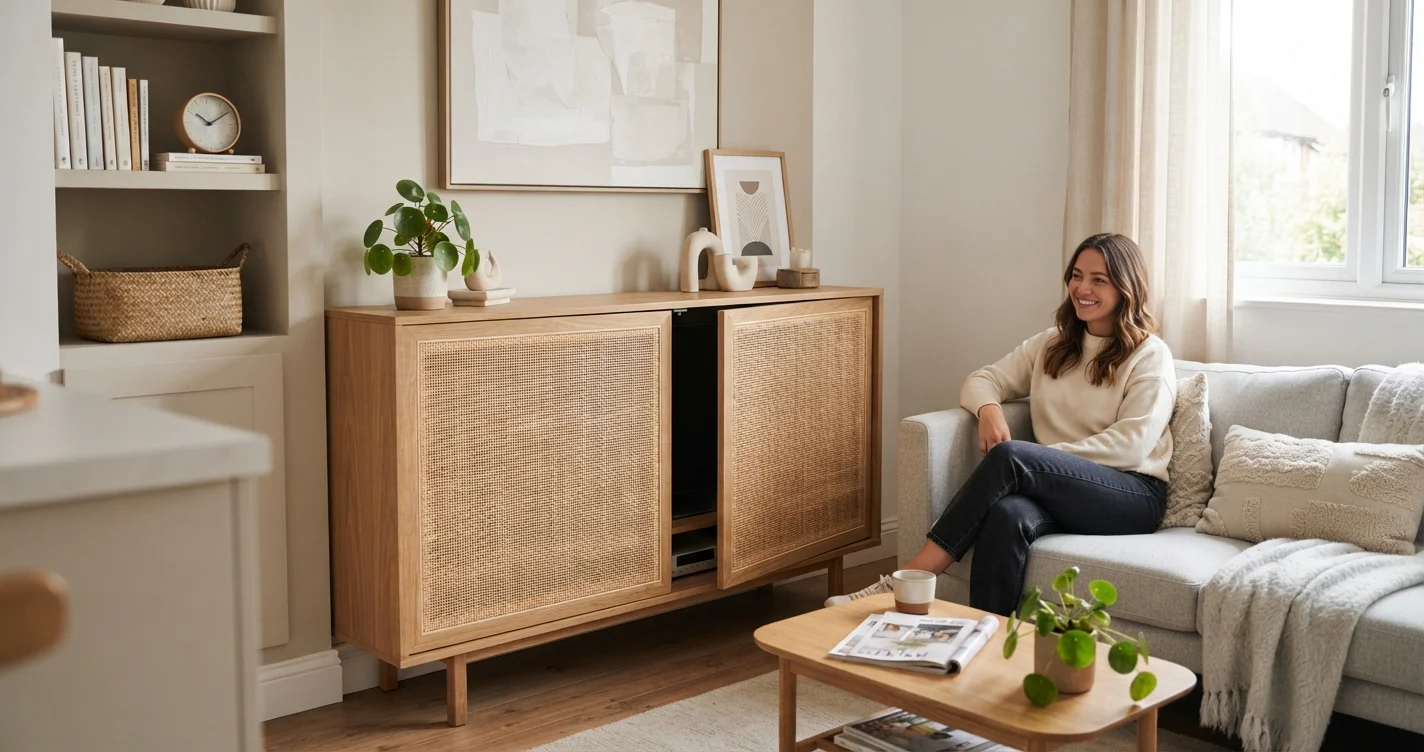
Living in a small room doesn’t mean you have to stare at a tangle of wires and glowing electronics all day. Whether it’s a cozy apartment bedroom, a compact home office, or a tiny living room, finding clever ways to hide electronics in small rooms is essential for a clean, calm aesthetic.
As a designer who has worked on hundreds of tight spaces, I’ve learned that the key isn’t about removing tech—it’s about integrating it smartly. Below, you’ll find practical, design-forward strategies that keep your devices accessible while letting your decor breathe.
1. Invest in Multi-Functional Furniture with Hidden Compartments
The easiest win for small space electronics storage is furniture that works double duty. Look for media consoles with sliding doors, lift-top coffee tables, or ottomans with internal power hubs.
For example, a lift-top coffee table can hide your laptop, tablet, and chargers completely while still giving you a surface to eat or work. Just lift the top, and your tech is ready to go. No visible wires, no clutter.
2. Go Vertical with Floating Shelves and Cabinets
When floor space is tight, go up. Wall-mounted hidden TV cabinet ideas are a game-changer. Use deep floating shelves with doors that close flush to the wall, or install a custom cabinet that blends with your wall color.
Inside, you can store a slim TV, soundbar, and router. When closed, it just looks like a sleek piece of millwork. Bonus: you can route all cables through the wall or inside the cabinet for a zero-wire look.
3. Embrace the Power of Decorative Screens and Room Dividers
Don’t want to drill into walls? A decorative folding screen or a tall room divider can hide an entire electronics station. Place your desk, monitor, and cables behind it. From the living area, it looks like an elegant piece of art.
I once used a rattan screen to hide a gaming setup in a studio apartment. The client loved it—functional tech, zero visual noise. Choose materials like wood, fabric, or bamboo to match your room’s vibe.
4. Master the Art of In-Wall and In-Cabinet Cable Management
Nothing screams “clutter” like exposed cords. Cord management solutions are non-negotiable in small rooms. Use in-wall cable kits for TVs, cord raceways that paint match your trim, and zip ties to bundle excess wire.
Inside cabinets, install a power strip with a long cord and use adhesive clips to keep everything off the floor. When devices are hidden but cables aren’t, the illusion breaks. Take the extra 30 minutes to tuck everything away.
5. Use Decorative Boxes, Baskets, and Trays
For devices you use daily (like a phone charger, earbuds, or a remote), keep them close but out of sight. A beautiful woven basket on a shelf can hold your power strip and all its plugs. A lidded ceramic box can hide a smart speaker or router.
For clutter-free home design, the trick is choosing containers that look intentional. A stack of leather-bound boxes on a side table can hide your hard drives and cables while doubling as decor.
6. Consider Custom-Built Niches and Recesses
If you own your space, nothing beats a custom recessed niche between studs. Cut a shallow opening in a wall (between two studs) and install a shelf for your router, modem, or even a small TV. Face it with a simple frame or a flip-down door.
This technique is the holy grail for minimalist tech storage. It takes zero floor space, and the device sits completely flush with the wall. I’ve done this in laundry rooms, hallways, and tiny bedrooms with excellent results.
Comparison Table: Best Hiding Methods by Device Type
| Device | Best Hiding Method | Difficulty Level | Cost Estimate |
|---|---|---|---|
| TV (up to 55”) | Flush-mount cabinet with doors | Medium | $$ |
| Router & Modem | Decorative box or wall niche | Easy | $ |
| Laptop & Tablet | Lift-top coffee table | Easy | $$ |
| Gaming Console | Media console with vented doors | Medium | $$$ |
| Soundbar & Speakers | Acoustically transparent fabric panels | Hard | $$$ |
7. Use Sliding Panels or Barn Doors
For a more dramatic solution, install a sliding panel or small barn door in front of your media wall. This works brilliantly for a wall-mounted TV or a row of electronics. Slide it closed when you want a clean room aesthetic.
Choose a panel made from the same material as your furniture. For instance, a walnut sliding door over a white wall creates a beautiful focal point—while hiding all your clutter-free home design challenges.
Frequently Asked Questions
What is the easiest way to hide electronics in a small room?
Start with decorative boxes and baskets. They require no installation, are affordable, and instantly hide small devices like routers, chargers, and game controllers.
Can I hide a TV inside furniture?
Absolutely. Look for media consoles with lift mechanisms or sliding doors. Ensure the furniture has ventilation holes or gaps to prevent overheating.
How do I hide wires without damaging walls?
Use cord raceways that stick to the wall with strong adhesive, or run cables under rugs. For a cleaner look, try a cable sleeve that matches your wall color.
Is it safe to hide a router in a closed cabinet?
Yes, as long as the cabinet has ventilation holes or slatted doors. Routers don’t get extremely hot, but airflow prevents signal degradation and overheating.
What furniture is best for hiding electronics in a small bedroom?
A bedside table with a built-in charging drawer or a storage bench at the foot of the bed. Both offer hidden compartments while keeping devices accessible.
How do I hide a gaming console in a small living room?
Use a low-profile media console with mesh or slatted doors that allow airflow. Alternatively, place it on a pull-out shelf inside a cabinet so you can play without moving it.
Can I hide electronics behind a mirror?
Yes! Two-way mirrors or a cabinet door with a mirrored surface are excellent for hiding a TV or monitor. It looks like a decorative mirror when turned off.
How much does it cost to build a custom hidden electronics cabinet?
It varies widely. A DIY solution using an IKEA cabinet can cost under $300. A professional custom-built unit with hidden wiring can run $1,000 to $3,000 depending on size and materials.
Conclusion
Learning how to hide electronics in small rooms completely changes how your space feels. It goes from “tech cave” to “serene sanctuary” in just a few design moves. Start with one solution—maybe a decorative basket or a floating cabinet—and build from there.
Remember, good design isn’t about owning less tech. It’s about making the tech you own invisible until you need it. Your small room will feel bigger, calmer, and infinitely more stylish.


