
Living Room Styling Mistakes That Make the Room Feel Cluttered
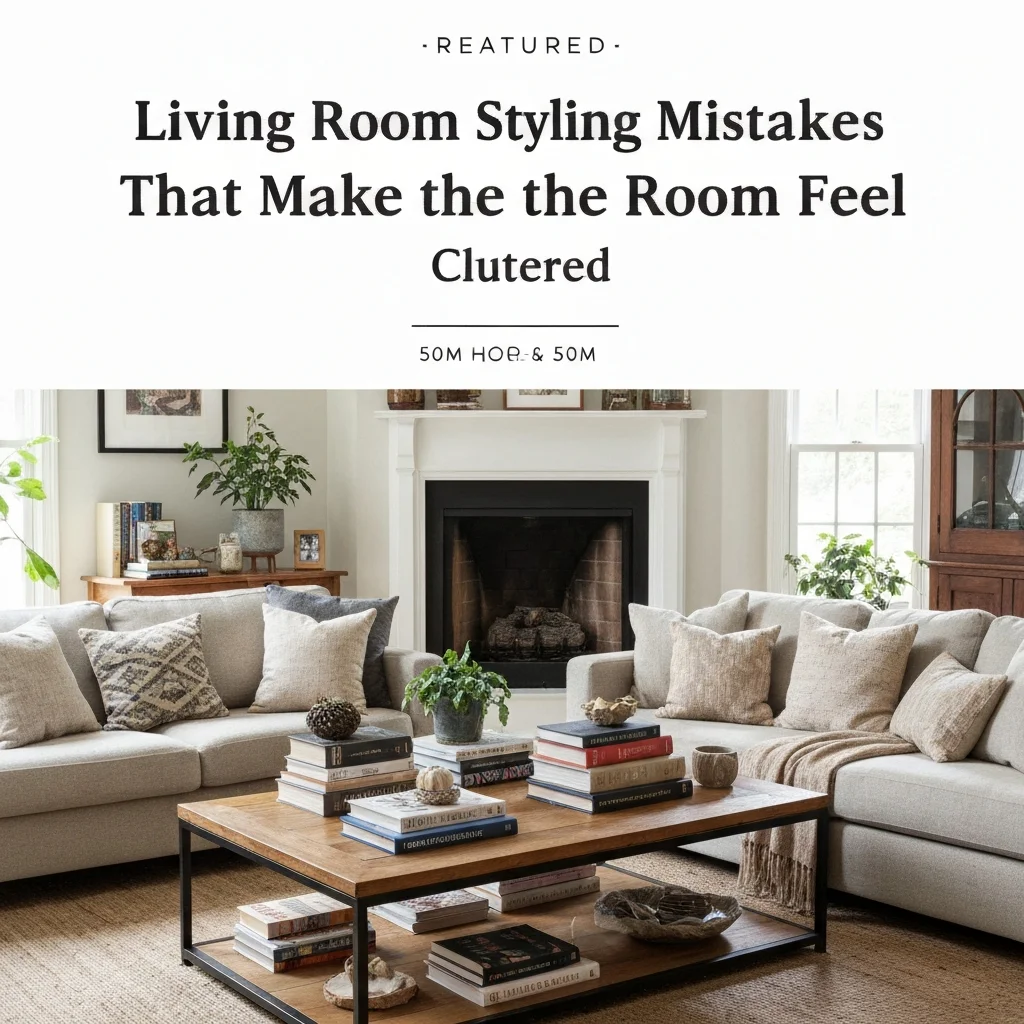
We’ve all been there. You walk into a living room that should feel relaxing, but instead, it feels like a storage unit exploded. The culprit? A few sneaky living room styling mistakes that make the space feel cramped and chaotic.
The good news is that fixing these issues doesn’t require a full renovation. With a few tweaks to your layout, furniture choices, and decor habits, you can transform a cluttered living room into a breathable, stylish sanctuary. Let’s dive into the most common offenders and how to fix them.
1. Overloading the Room with Too Much Furniture
It’s tempting to fill every empty corner with a chair, ottoman, or side table. But when it comes to a cluttered living room fix, less is truly more. Oversized sectionals, bulky recliners, and multiple coffee tables can make a space feel like a maze.
Stick to the essentials: one sofa, one coffee table, and maybe an accent chair. Measure your room before buying anything. A good rule of thumb is to leave at least 18 inches between furniture pieces for easy traffic flow.
If you need extra seating, consider a bench against the wall that doubles as a display surface. It keeps the floor clear and the room visually light.
2. Pushing All Furniture Against the Walls
This is one of the most common living room styling mistakes. Many people think pushing everything against the wall makes the room look bigger. In reality, it creates a barren center and forces all the visual weight to the edges.
Try floating your sofa a few feet away from the wall. This creates an intimate conversation area and makes the room feel larger. Even in a small space, a gap of 3–4 feet between the sofa and the back wall can work wonders.
Use a narrow console table behind the sofa to anchor the space without closing it off.
3. Ignoring Scale and Proportion
A giant sectional in a tiny room is a recipe for disaster. Likewise, a tiny loveseat in a grand living room looks awkward and out of place. This is where furniture arrangement tips come into play—scale matters more than style.
Always measure your room’s dimensions before buying furniture. For a standard 12×15 foot living room, a 72-inch sofa is ideal. Pair it with a coffee table that is about two-thirds the length of the sofa.
Don’t forget about vertical scale. Low furniture makes ceilings feel higher, while tall bookcases can add drama without eating up floor space.
4. Too Many Decorative Objects on Every Surface
Magazines, remote controls, coasters, plants, candles, and figurines—populating every flat surface is a fast track to visual chaos. A living room declutter guide always starts with editing your accessories.
Group items in odd numbers (threes work best) and leave plenty of empty space around them. On a coffee table, stick to one tray holding a few remote controls, a candle, and a small plant. Anything else goes into drawers or baskets.
Dressers and media consoles should be treated the same way. Keep the top clear except for two or three curated objects. Empty space is not wasted—it’s visual breathing room.
5. Poor Lighting Choices That Create Shadows
Dark corners and harsh overhead lights make a room feel smaller and more cluttered. If your living room has only one ceiling light, you are likely falling into one of the biggest living room styling mistakes.
Layer your lighting with three types: ambient (overhead), task (floor lamps by seating), and accent (table lamps or wall sconces). This distributes light evenly and eliminates gloomy spots that attract clutter.
Place floor lamps in corners to visually “push” the walls outward. A well-lit room feels twice as spacious as a dim one.
6. Forgetting to Create Zones in Open-Plan Spaces
In an open-concept home, a living room that bleeds into the dining area can feel like one giant mess. Without clear zones, furniture looks scattered and disorganized. This is a key area where small living room layout ideas can save the day.
Use a rug to define the living area. The front legs of your sofa and chairs should rest on the rug. Then place a different rug under the dining table to visually separate the two spaces.
If you have a long, narrow room, consider placing the sofa perpendicular to the wall instead of parallel. This breaks up the “tunnel” effect and creates a natural division.
7. Neglecting Negative Space (Yes, Empty Space Is Good)
Negative space is the area around and between objects. When every inch is covered with furniture, decor, or art, your eyes have nowhere to rest. The result? A feeling of being overwhelmed.
Here’s a quick checklist to evaluate your room:
- Walls: Are they covered with too many small frames? Stick to one large statement piece per wall.
- Floor: Is there a clear path from the door to the sofa? Remove any items that block it.
- Shelves: Are they stuffed? Leave at least 30–40% of shelf space empty.
Think of negative space like punctuation in a sentence—it gives structure and clarity to your design.
Comparison Table: Cluttered vs. Curated Living Room
| Aspect | Cluttered Living Room | Curated Living Room |
|---|---|---|
| Furniture count | 7+ pieces in a small room | 3–5 essential pieces |
| Table surfaces | Covered with trinkets | One curated tray or empty space |
| Rug size | Too small (floating) | Large enough to anchor seating |
| Lighting | Single overhead fixture | 3 layers of light |
| Wall decor | 8+ small frames | 1–2 large statement pieces |
| Traffic flow | Zigzag paths | Clear, direct pathways |
Frequently Asked Questions
1. What is the number one mistake that makes a living room look cluttered?
Over-furnishing is the biggest offender. Too many big pieces crammed into a small space instantly creates a crowded, chaotic feel. Edit ruthlessly.
2. How can I make my living room look less cluttered without buying new furniture?
Start by decluttering all surfaces. Remove 50% of the items on shelves, coffee tables, and media consoles. Then add one large mirror to reflect light and make the room feel bigger.
3. Can a rug make my living room look cluttered?
Yes, if it is too small. A rug that stops short of the furniture makes the room look disjointed. Always choose a rug that allows the front legs of your sofa and chairs to sit on it.
4. How many pieces of decor should I have on a coffee table?
No more than three items on a tray. For example, a candle, a small plant, and a coaster set. Everything else should be stored away.
5. Is it better to have open or closed storage in a small living room?
Closed storage is your best friend. Cabinets and baskets hide the visual noise of cords, remotes, and books. Open shelving should be reserved for curated displays only.
6. What color palette helps reduce visual clutter?
Stick to a neutral base (white, beige, gray) and add pops of color through one or two accent pieces. Too many colors competing for attention make the room feel busy.
7. Should I match all my furniture?
No, matching sets can look too uniform and even cluttered in a different way. Mix materials (wood, metal, fabric) and finish styles for a curated, collected look.
8. How often should I declutter my living room?
Do a quick edit every three months. Remove items that no longer serve you or that you haven’t used in months. A seasonal rotate of decor keeps the room feeling fresh without accumulation.
Conclusion
Avoiding these common living room styling mistakes is simpler than you think. By being intentional with your furniture scale, surface styling, lighting, and negative space, you can turn a chaotic room into a calm, inviting hub.
Remember: every piece should earn its place. If it doesn’t serve a purpose or bring you joy, it’s probably contributing to the clutter. Start with one corner, apply these furniture arrangement tips, and you’ll be surprised at how much bigger your room feels.
Your living room deserves to be your favorite room in the house—not a source of stress. Go ahead, give it some breathing room.


