
The Best Lighting for Your Kitchen
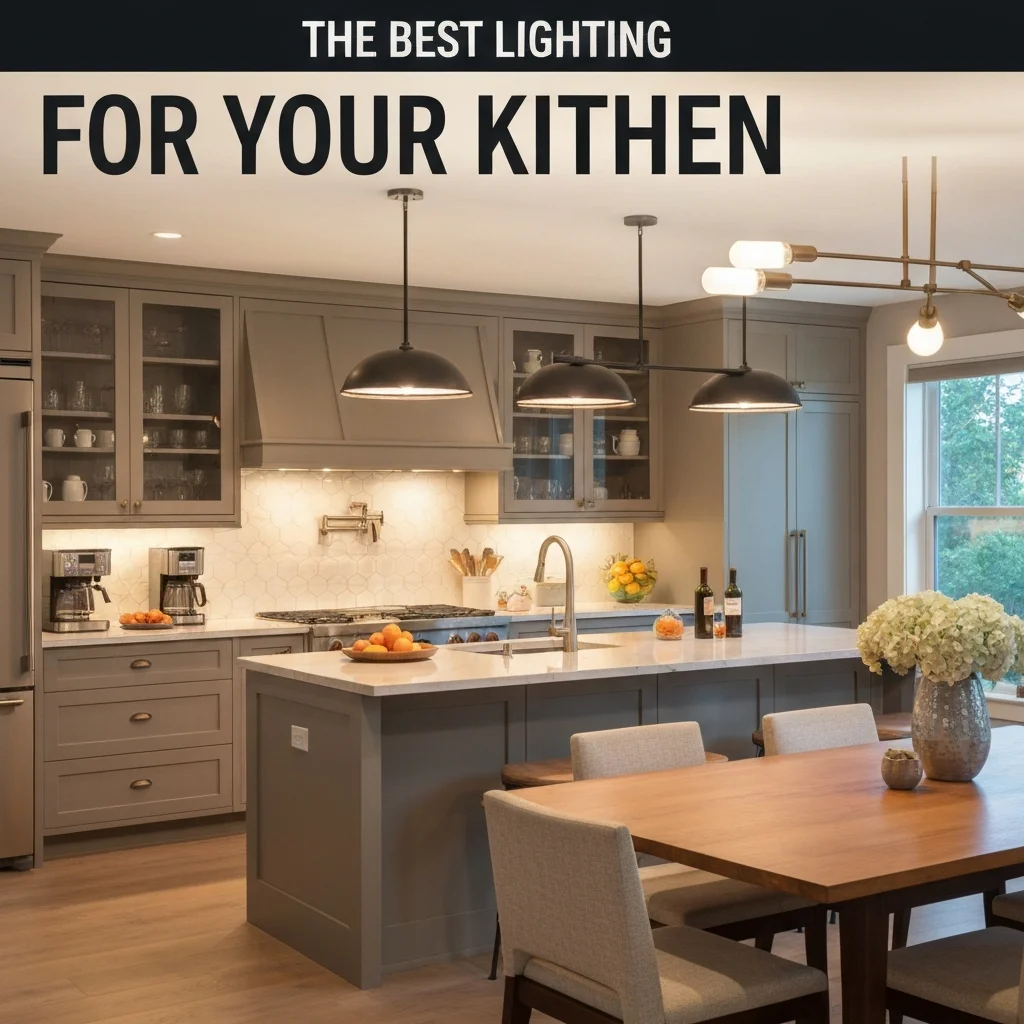
Great kitchen lighting does more than just help you see. It sets the mood, makes food prep safer, and highlights your design choices. Whether you’re renovating or just refreshing, understanding the best lighting for your kitchen is a game-changer.
Good lighting is all about layers. You need ambient light to fill the room, task light for chopping and cooking, and accent light to show off your backsplash or open shelves. Let’s break down how to nail each one.
1. Ambient Lighting: The Foundation of Any Kitchen
Ambient lighting is your base layer. It replaces natural light and ensures the whole room is evenly lit. Think flush-mount ceiling fixtures, recessed cans, or a statement chandelier.
For most kitchens, aim for 5-10 watts per square foot. Use dimmable LEDs so you can adjust brightness from bright cleanup mode to soft dinner vibes. Recessed lights spaced 4-5 feet apart work great for even coverage.
2. Task Lighting: Where Precision Meets Style
Task lighting is the workhorse. It targets areas where you need focused illumination: the countertop, sink, and stove. Without it, your own shadow can get in the way.
Under-cabinet lighting is the MVP here. Install slim LED strips or puck lights to eliminate shadows. Pendant lights over an island are also perfect for kitchen lighting ideas that combine function with flair. Place them 30-36 inches above the counter for best results.
3. Accent Lighting: The Design Finisher
Accent lighting adds drama and depth. It draws the eye to architectural details, glass-front cabinets, or a textured backsplash. This isn’t about brightness—it’s about contrast.
Use led strip tape inside glass cabinets, a track light over artwork, or toe-kick lighting to make the kitchen float. A layered lighting kitchen needs at least one accent layer to feel complete and curated.
4. Choosing the Right Light Fixtures
Your fixtures should match your home’s style without sacrificing performance. For farmhouse kitchens, go with gooseneck or schoolhouse pendants. Modern spaces love sleek linear suspension lights.
Always check the Color Rendering Index (CRI). For kitchens, you want a CRI of 90 or higher. That means colors—like the red of a tomato or the green of basil—look vibrant and true. Pendant lights kitchen installations also work well over breakfast bars.
5. Under Cabinet and Toe Kick Lighting: Don’t Skip the Details
These are often overlooked, but they make a massive difference. Under cabinet lighting eliminates shadows on your countertops, making task lighting for cooking safe and easy. Hardwire them for a clean look, or use plug-in options if your cabinets are already installed.
Toe-kick lights? They add a soft glow near the floor, perfect as a nightlight for late-night snacks. They also make small kitchens feel bigger by creating an illusion of floating cabinets.
- Ambient: Flush mounts, recessed cans, chandeliers
- Task: Under-cabinet strips, pendant lights, track heads
- Accent: In-cabinet LEDs, toe-kick strips, wall washes
6. Temperature and Dimming: Science Meets Comfort
Light bulb temperature is measured in Kelvins (K). For kitchens, 2700K (warm) creates a cozy dinner atmosphere. 4000K (cool white) is best for tasks because it mimics daylight and keeps you alert.
Install dimmer switches on all your main circuits. This lets you switch between a bright 4000K for chopping veggies and a warm 2700K for a relaxed breakfast. Smart bulbs are a great alternative—control everything from your phone.
| Layer | Best Fixture | Color Temp (K) | CRI |
|---|---|---|---|
| Ambient | Recessed lights | 2700-3500K | 80+ |
| Task | Under-cabinet LEDs | 3500-4000K | 90+ |
| Accent | Strip lights / spotlights | 2700-3000K | 90+ |
FAQ: Best Lighting for Your Kitchen
1. What is the best type of lighting for a small kitchen?
Recessed lights plus under-cabinet strips. They open up the space without bulky fixtures. Add toe-kick lighting for an extra visual lift.
2. Should pendant lights be hardwired or plug-in?
Hardwired is cleaner and safer for permanent installs. Plug-in lights are fine for renters or if you like swapping fixtures often.
3. How many lights do I need over a kitchen island?
For a standard 6-foot island, use two pendant lights. For an 8-foot or longer island, use three. Space them evenly, and keep the bottom of the fixture 30-36 inches above the counter.
4. Can I mix warm and cool light in the same kitchen?
Yes, but use layers wisely. Keep ambient warm (2700K) and task cool (4000K). Avoid mixing both in the same area or it will look mismatched.
5. What wattage is best for under cabinet lights?
With LEDs, look at lumens. Under cabinet strips should deliver about 450-500 lumens per linear foot for comfortable food prep. That equals roughly 5-7 watts of LED power per foot.
6. How do I make my kitchen feel brighter without renovating?
Swap old bulbs to 4000K LEDs, clean your fixtures, and add reflective surfaces like glass tile or metal backsplashes. Open shelves also let ambient light travel better.
7. Do I need a professional electrician for kitchen lighting?
For hardwired installations and dimmer switches, yes. For plug-in under-cabinet lights or battery-operated pucks, you can DIY safely.
Conclusion
Getting the best lighting for your kitchen isn’t about one perfect fixture. It’s about layering ambient, task, and accent lights. That blend turns a utilitarian room into the heart of your home.
Start with a solid ambient plan, zone in on task areas with under-cabinet and pendant lights, then add accent touches for personality. Use dimmers and the right color temperature, and your kitchen will feel brighter, bigger, and more beautiful.
Take it one layer at a time, and you’ll cook with confidence—and style.


