
How to Add Color to a Tiny Room Without Overwhelming It
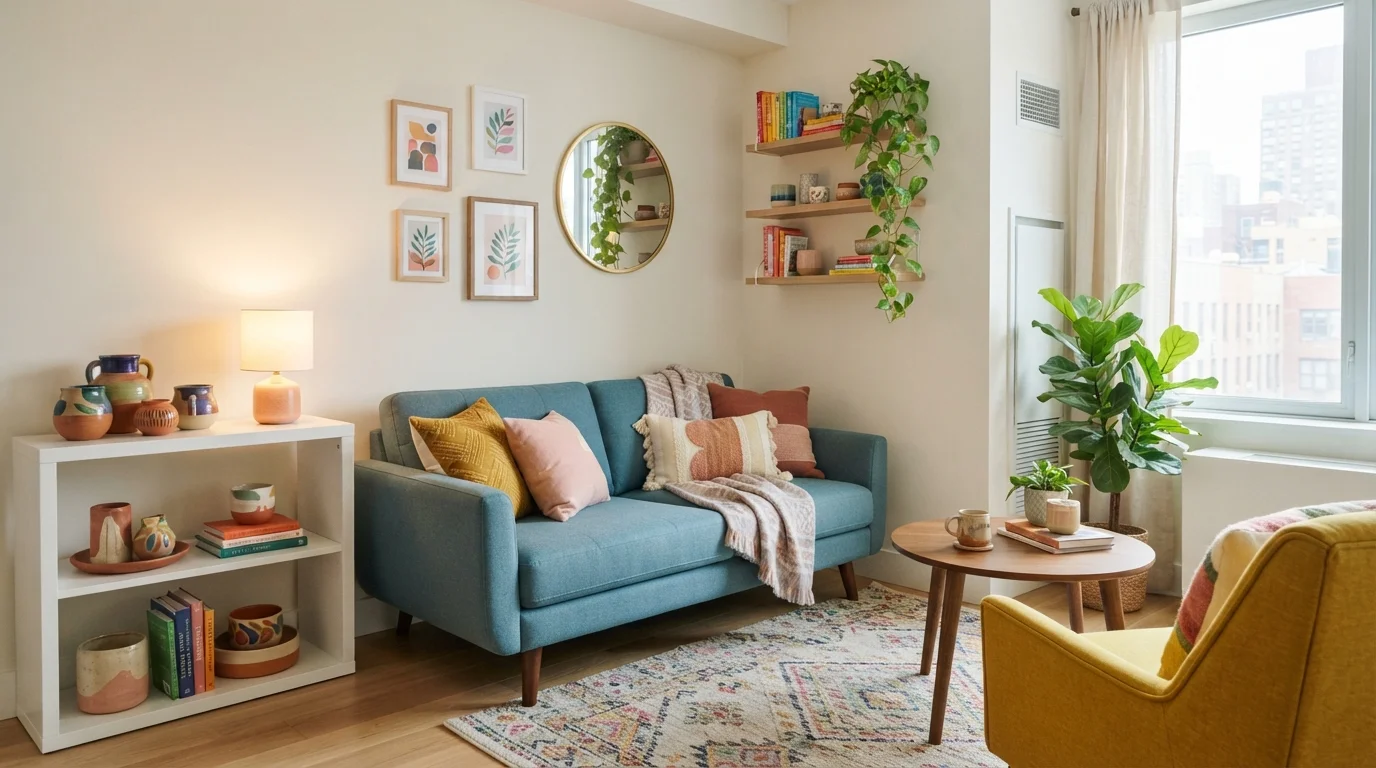
Walking into a small room shouldn’t feel like stepping into a beige box. Yet many of us default to white or gray because we’re terrified that color will make the space feel cramped. I’ve seen this fear ruin perfectly good rooms for over 15 years.
The truth is, a tiny room can handle bold color beautifully. The trick isn’t to avoid color—it’s to use it strategically so the space feels intentional, energetic, and still airy. In this guide, I’ll show you exactly how to add color to a tiny room without making it chaotic.
Start with an Intentional Color Palette
Before you buy a single paint can or throw pillow, decide on a focused palette. Stick to two or three shades at most. This keeps the visual clutter low while still giving you that punch of personality.
Try a dominant neutral (like warm white, soft taupe, or light gray) and then layer in one or two accent colors. For example, a pale cream room with deep navy and blush accessories feels curated, not chaotic. The key is balance. Neutrals ground the bold colors, while accents add the heartbeat.
Need inspiration? Look at the colors already in a tiny room: the rug, the sofa, or even the view outside. Pull two shades from there. This guarantees a cohesive look.
Use the 60-30-10 Rule for Visual Balance
Interior designers have been using this formula forever, and it works perfectly for small rooms. The rule says: 60% dominant color (walls, large furniture), 30% secondary color (upholstery, curtains), and 10% accent color (art, pillows, decor).
For a tiny bedroom, that might look like:
| Component | Example | Percentage |
|---|---|---|
| Walls + Bed frame | Soft oatmeal beige | 60% |
| Bedding + Rug | Dusty sage green | 30% |
| Throw pillows + Lamp | Citrus yellow | 10% |
This framework stops the eye from bouncing around. It gives the room a rhythm, and the 10% accent pops without taking over. It’s one of the smartest small room design ideas you can steal.
Paint the Ceiling (Yes, Really)
Most people ignore the fifth wall, but painted ceilings work magic in tiny rooms. A soft wash of color above pulls your gaze upward, making the room feel taller instead of boxed in.
Stick to lighter versions of your wall color, or a pale pastel like sky blue or blush. It adds surprise without weight. I once painted a 9×10 home office ceiling a faint lavender, and the client swore the room felt twice as big. That’s the power of looking up.
Avoid dark ceilings unless you’re going for a cozy den vibe. Dark ceilings drop the visual height, which shrinks the room. Stay light and dreamy.
Create an Accent Wall That Breathes
A single accent wall is a classic way to add color to a tiny room without painting four walls and feeling boxed in. But the choice of wall matters more than the color itself.
Pick the wall that naturally draws the eye—usually the one opposite the entrance or the wall behind the bed or sofa. This gives a focal point without overwhelming the space. Go for a deep teal, a warm terracotta, or even a graphic wallpaper pattern.
Here are a few accent wall ideas that keep the room airy:
- Geometric painted stripes with painter’s tape — cheap and removable.
- Peel-and-stick wallpaper in a small-scale pattern (large prints can shrink a room).
- A vertical board-and-batten treatment painted a saturated color to add texture.
Balance the accent wall with light or neutral furniture against the other walls. Let it sing, don’t let it shout.
Layer Color Through Textiles and Soft Furnishings
If you’re renting or just risk-averse, textiles are your best friend. They let you add color to a tiny room with zero commitment. Swap them out seasonally or whenever you crave a change.
Think about: throw blankets, cushion covers, a patterned rug, shower curtains, or even pillowcases. These small touches add large visual impact. For a boost, choose fabrics with a bit of texture—like a chunky knit in mustard or velvet in emerald green. Texture catches light and makes colors feel richer.
Remember the 10% rule? Apply it here. If your sofa is neutral, one colorful throw and two patterned pillows are enough to transform the vibe. Don’t pile on more than three textile colors in one tiny room.
Use Color to Define Zones in an Open Small Room
In studio apartments or small living-dining combos, color can mark different areas. A rich color on the wall behind the dining table tells the brain “this is the eating zone,” while a softer shade in the sleeping area signals rest.
This works without adding walls, which keeps the space open. Try painting half the wall in a bold color and leaving the top half white. Or use a large colorful area rug to anchor the seating area, separating it from the kitchen.
These decorating a small room techniques create visual structure and purpose. Even a tiny room can feel organized and spacious when color visibly defines function.
Frequently Asked Questions
Will dark paint make my small room look smaller?
Not necessarily. Dark colors like navy or charcoal absorb light, which can make a room feel cozy and intimate rather than smaller. The key is to pair dark walls with ample lighting and light-colored furniture to maintain balance.
How many colors should I use in a small room?
Stick to two or three colors maximum. More than that invites visual chaos. The 60-30-10 rule ensures a clean, curated look without overwhelming the space.
Can I use wallpaper in a tiny room?
Absolutely. Choose wallpaper with a small-scale pattern or a subtle texture. Large, loud prints can make a room feel busier. Peel-and-stick wallpaper is an excellent rental-friendly option.
What colors make a small room feel bigger?
Light, cool shades like pale blue, soft green, and blush pink reflect light and create an airy feel. White and cream do the job too, but adding a hint of color makes the space feel warmer.
Where should I place the accent color in a tiny room?
Focus on focal points: an accent wall, a colorful rug, statement art, or throw pillows. Keep the foundation neutral so the accents pop without overwhelming the room.
Is it okay to paint all four walls a bright color?
Proceed with caution. Painting all four walls a saturated shade can feel intense. If you love a bold color, try it on one accent wall and use lighter neutrals on the rest. This way you keep the brightness without the overwhelm.
How do I incorporate color without painting?
Use colorful textiles (rugs, curtains, blankets), artwork, plants, furniture, or decorative accessories like vases and lamps. These are low-commitment and easy to swap. It’s one of the best ways to try out a new palette.
Final Thoughts
Adding color to a small room isn’t about bravery—it’s about strategy. With a clear palette, the 60-30-10 rule, and smart placement, you can create a vibrant space that feels bigger, not smaller. Whether you paint a ceiling, layer a rug, or commit to an accent wall, each decision should breathe life into the room.
Remember, small doesn’t mean neutral. It means intentional. I’ve watched countless tiny rooms transform with a single pop of color, and yours can be next. Start with one element, test it for a week, and build from there. Your compact space deserves to feel bold and beautiful.


