
Small Space Hacks That Make Your Home Feel Huge
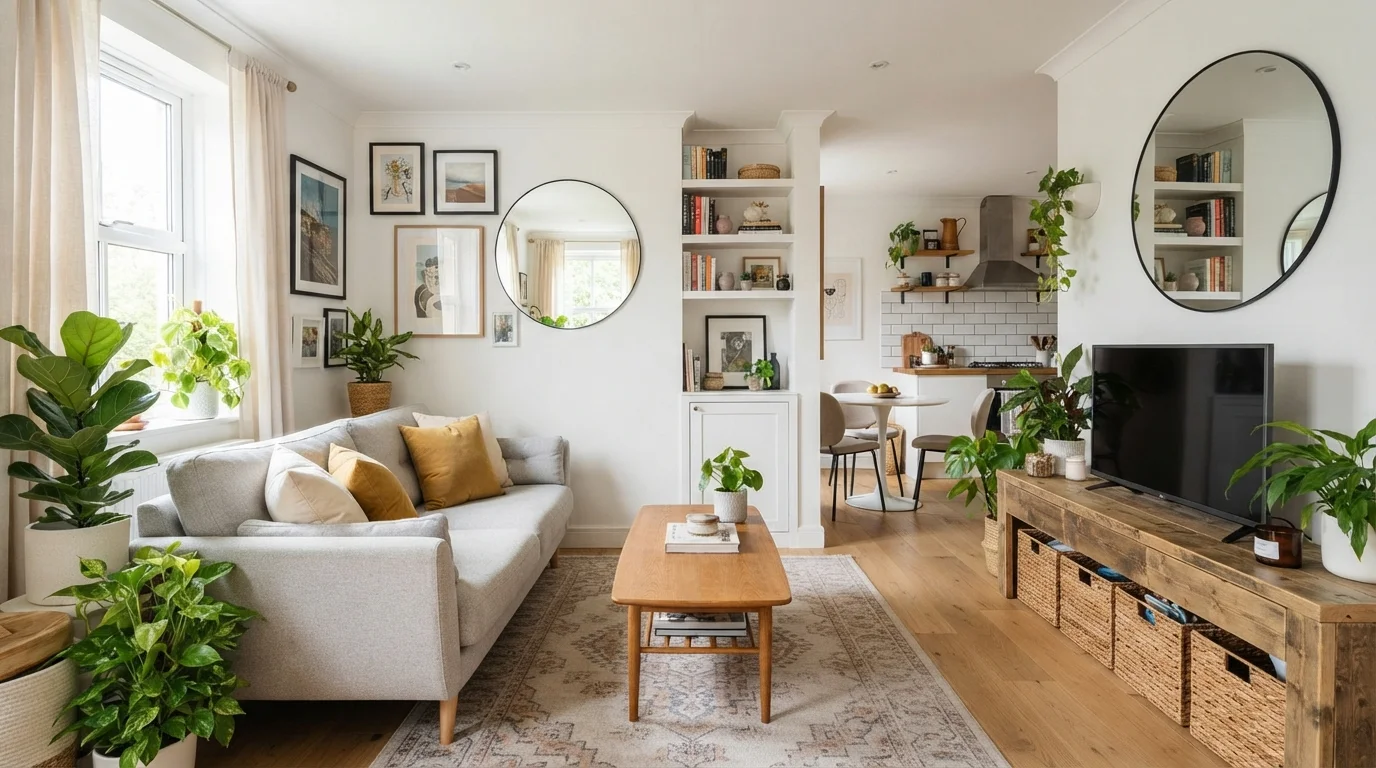
Living in a compact home doesn’t mean you have to sacrifice style or comfort. In fact, with the right approach, you can transform a cramped room into an airy, open sanctuary. After 15 years writing about home design and watching trends come and go, I’ve learned that the best small space hacks that make your home feel huge are often the simplest. Whether you’re in a studio or a cozy condo, these strategies will fool the eye and maximize every square foot.
1. The Magic of Mirrors: Double Your Visual Space
Mirrors are the oldest trick in the design book for a reason. Placing a large mirror opposite a window reflects natural light and creates the illusion of depth. A mirrored wall in the dining area or behind a sofa can make a 12-foot room feel like 20.
Try leaning a full-length floor mirror against a corner. You not only get a functional piece for checking your outfit but also a dramatic expansion. Pro tip: use mirrored closet doors in the bedroom for an instant upgrade in small apartment ideas.
2. Go Vertical: Wall-Mounted Everything
When floor space is a premium, look up. Vertical storage solutions are a game-changer for optimizing small rooms. Install floating shelves above doorways or along empty walls to store books, plants, or decorative boxes that hide clutter.
In the kitchen, magnetic strips for knives and pot racks free up counter space. In the bathroom, a tall, narrow cabinet or a ladder shelf takes advantage of height without eating into foot traffic. Remember: a cluttered floor makes a room feel smaller.
3. Multifunctional Furniture: Do Double Duty
The most effective small space hacks that make your home feel huge involve furniture that works overtime. A storage ottoman acts as a coffee table, footrest, and hidden bin for blankets. A sofa bed turns a living area into a guest room in seconds.
Consider a dining table that folds down when not in use, or nesting tables that tuck away under each other. Desks that flip into wall art are popular in WFH setups. Pick pieces with built-in drawers or cubbies to avoid adding separate storage units.
4. Light and Color Psychology: Paint the Ceiling Right
Color has a profound impact on spatial perception. Lighter tones—whites, soft grays, pale blues—reflect light and make walls recede. Dark colors absorb light and can shrink a room, but using them strategically on an accent wall adds depth.
Paint the ceiling a shade lighter than the walls. This tricks the eye into thinking the ceiling is higher, a classic home design tip. Also, use sheer curtains instead of heavy drapes. Natural light is your best friend; let it flood every corner.
5. Clever Storage: Hide the Mess in Plain Sight
Clutter is public enemy number one for a small space. The key is to have a designated home for everything. Use under-bed storage boxes for out-of-season clothes, and install hooks behind doors for bags and coats.
- Ottoman with hidden compartment: Perfect for living room toys or magazines.
- Over-the-toilet shelving: Adds 3 square feet of storage in the bathroom.
- Kitchen cabinet risers: Create a second tier for plates and mugs.
- Magnetic spice rack on fridge: Frees up counter space.
These small apartment ideas keep surfaces clear and the room breathing easy.
6. Furniture Placement: Float It for Flow
A common mistake is pushing every piece of furniture against the wall. In a small room, pulling the sofa away from the wall by a few inches creates a path behind it, making the room feel larger. This technique is called “floating.”
Use a low-profile sofa or a bench instead of bulky armchairs. In the bedroom, floating the bed with nightstands on either side balances the layout. This allows light to circulate underneath and lowers the visual weight, achieving a spacious vibe.
7. Scale and Proportion: Go Big or Go Home (Small)
Counterintuitive but true: one large statement piece often works better than many small ones in a compact room. A single oversized floor lamp creates vertical drama, while a giant piece of artwork gives the eye a resting point.
| Mistake | Better Choice |
|---|---|
| Three small rugs that cut the room | One large rug that anchors the whole area |
| Many tiny wall art pieces | One large canvas or a gallery wall with spacing |
| Small side table with clutter | One sleek console table with drawer storage |
This principle of “less is more” is essential for small space hacks that make your home feel huge.
Frequently Asked Questions
What is the best paint color to make a small room look bigger?
Light, neutral tones like white, soft beige, pale gray, or light blue work best. They reflect natural light and make walls seem farther away. For a dramatic effect, try painting the trim and ceiling the same color as the walls.
Can dark furniture work in a small room?
Yes, but use it sparingly. One dark piece, like a navy sofa, can anchor the room. Balance it with light walls and flooring. Avoid dark furniture in every piece, as it can feel heavy and close in the space.
Does removing cabinet doors make a kitchen look bigger?
Open shelving can create a sense of openness, but it requires meticulous organization. If your dishware is tidy and uniform, removing doors can work. Otherwise, keep glass-front cabinets for a similar effect with less dust.
How do I make a narrow room appear wider?
Place the bed or sofa along the long wall to open the center for movement. Use horizontal stripes in paint or wallpaper. A large mirror on the short wall adds depth.
Is it a good idea to use large patterns on walls in a small space?
Large patterns can overwhelm a tiny room unless they are subtle and low-contrast. Small geometric patterns or vertical stripes tend to be safer choices for a spacious feel.
What is the best way to maximize storage in a studio apartment?
Invest in a platform bed with built-in drawers, use an armoire for both clothes and media, and install ceiling-mounted shelves around the perimeter. Room dividers with storage (like bookcases) create separate zones.
Can plants help a small room feel larger?
Definitely. Tall, slim plants like snake plants or fiddle-leaf figs draw the eye upward, emphasizing height. Place one in a bright corner to bring life without stealing floor space.
What is a common mistake in small space decor?
Over-decorating. Too many throw pillows, knickknacks, or art pieces create visual noise. Stick to a curated few and let each piece have room to breathe. Simplicity is a powerful tool.
Conclusion
Making a small home feel huge isn’t about magic—it’s about smart choices. From mirrors and paint to furniture that multitasks, these small space hacks that make your home feel huge are within reach for any budget. Start with one project—like adding a mirror or clearing a vertical wall—and watch your space transform. Remember, the goal is to let your home breathe, not to stuff it full. With these home design tips, you can live large, even in a small footprint.


