
How to Choose the Right Curtains for Your Living Room
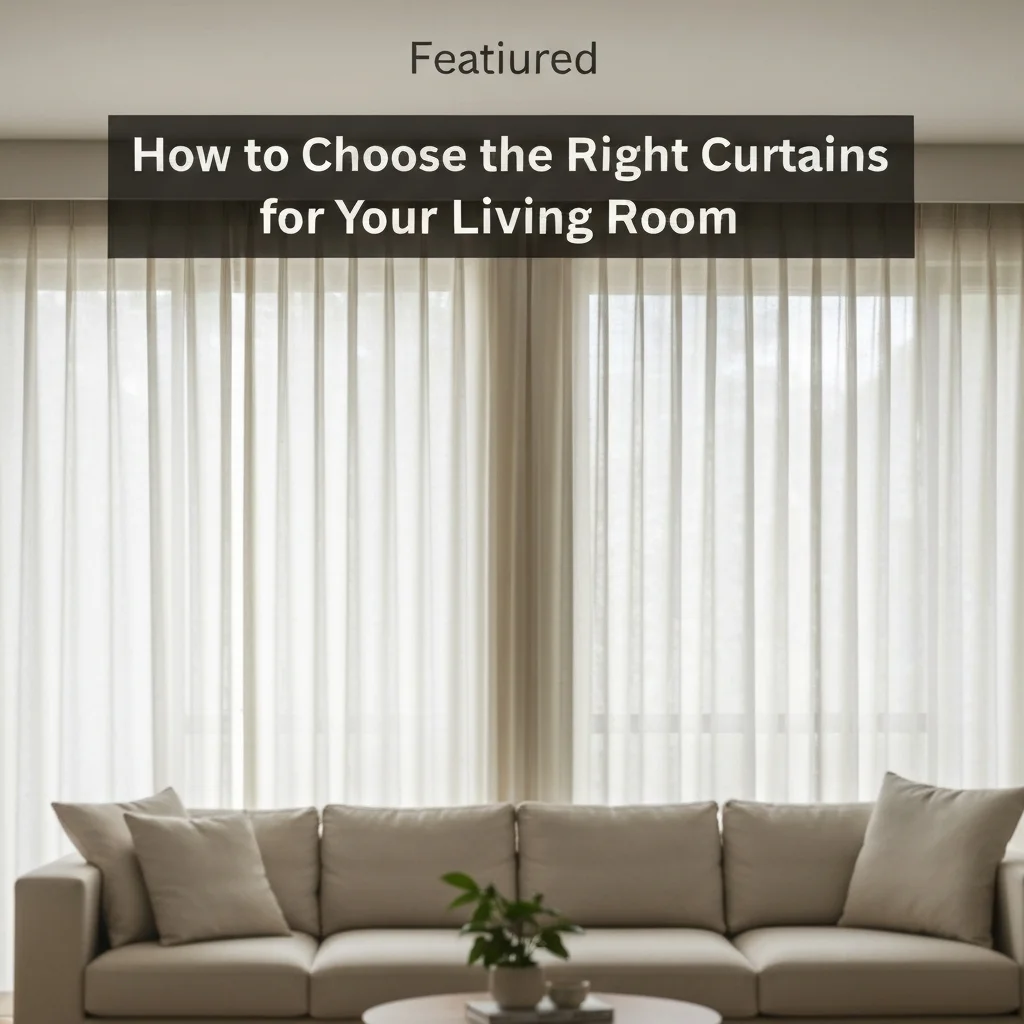
Your living room is the heart of your home, and the right curtains can make or break the entire space. They frame your windows, control natural light, and add layers of texture and color. But with so many options out there—from fabric types to hanging heights—it’s easy to feel overwhelmed.
That’s why I put together this complete guide. Whether you’re after a cozy, boho vibe or a sleek, modern look, knowing how to choose the right curtains for your living room will save you time, money, and regret. Let’s dive into the details so you can pull off a professional finish, even if you’re on a budget.
Start with the Right Fabric for Your Lifestyle
The fabric you choose sets the tone for the entire room. It also determines how much light, privacy, and insulation you get. For a formal living room, go with velvet or silk. These fabrics drape beautifully and add instant luxury. Just know they require dry cleaning and can fade in direct sun.
If you have kids or pets, durability matters. Consider cotton blends, linen, or polyester. They’re easy to clean, resist wrinkles, and come in a wide range of colors. For a relaxed, airy feel, linen is a top pick. It softens over time and filters sunlight gently, giving your room that effortless “lived-in” elegance.
Don’t forget blackout fabrics if you watch movies during the day or have a home theater setup. They typically have a foam backing or triple-weave construction that blocks up to 99% of light. I always recommend blackout liners for south- or west-facing windows that get intense afternoon glare.
Measure Twice, Hang Once: A Curtain Length Guide
Getting the length right is arguably the most important step. Short curtains that stop mid-window make the room look smaller and unfinished. The general rule of thumb? Hang your curtain rod close to the ceiling—usually 4 to 6 inches above the window frame—to draw the eye upward and make the ceiling feel taller.
As for the bottom, you have three popular options:
- Floor-length: Curtains just barely kiss the floor. This is the most common and modern look.
- Puddling: The fabric pools an extra 1–3 inches on the floor. Very romantic and formal.
- Sill-length: Curtains end at the window sill. Best for kitchens or bathrooms, not living rooms.
For living rooms, I strongly recommend floor-length or a slight break. To achieve that, measure from the top of the rod to the floor, then subtract half an inch. That gives you a clean, tailored finish without dragging on the ground.
Width Matters: Don’t Skimp on Fabric
A common mistake is buying curtains that are too narrow. When closed, they should still have some “gather” or fullness. The standard formula is to multiply your window width by 1.5 to 2 times. So if your window is 60 inches wide, you’ll need panels that total 90 to 120 inches.
For a truly luxurious look, go with the 2.5x multiplier. This creates deep, elegant folds even when the curtains are open. Remember, each panel is usually half the total width. So for a 100-inch window with a 2x multiplier, you’d want two 100-inch-wide panels.
If you’re on a budget, you can cheat the look by using multiple thinner panels or a double rod with sheers and heavier drapes. The key is living room curtain ideas that create volume without breaking the bank.
Choosing the Right Curtain Header and Style
The header is the top part that attaches to the rod, and it dramatically impacts the overall style. Here’s a quick breakdown:
| Header Type | Best For | Style Vibe |
|---|---|---|
| Grommet | Modern, casual rooms | Clean, contemporary |
| Rod Pocket | Relaxed, traditional spaces | Soft, gathered look |
| Pleated (Pinch, Box, Inverted) | Formal, elegant living rooms | Structured, tailored |
| Tab Top | Farmhouse, boho decor | Laid-back, cozy |
| Ring Top | Versatile, easy to open | Clean and functional |
For most living rooms, pinch pleat or grommet top panels are the safest bets. Pinch pleats work beautifully with heavier fabrics like velvet, while grommets are great for lighter linens. Avoid rod pocket curtains for large windows—they’re hard to slide and tend to bunch up unevenly.
Color and Pattern: Tie It All Together
Once you’ve nailed the fabric and length, it’s time for the fun part—color and pattern. Neutral tones like beige, gray, white, and taupe are timeless and versatile. They work with almost any existing decor and make the room feel larger and brighter.
If you want to make a statement, go bold. Deep emerald green, navy blue, or mustard yellow can serve as an accent wall for your windows. Stripes and geometric patterns add visual interest without overwhelming the space. Just make sure the pattern scale matches your room size; large prints can swallow a small room.
Another pro tip: match your curtain color to an existing element in the room—like a throw pillow, rug, or artwork. This creates a cohesive, designer look. And don’t forget about sheers! Layering sheer curtains behind heavier drapes gives you flexibility for daytime privacy and nighttime coziness.
Rod and Hardware: The Finishing Touch
Your curtain rod shouldn’t be an afterthought. A flimsy, plastic rod can ruin the most expensive drapes. For living rooms, choose a metal rod with a diameter of at least 1 inch. Thicker rods (1.5 to 2 inches) look more substantial and can hold heavier fabrics without bending.
Finials (the decorative ends) are the jewelry of your window treatment. Simple ball or cube finials work for modern spaces. Ornate spear or glass finials suit traditional rooms. Also, make sure the brackets are installed into wall studs or use heavy-duty drywall anchors. The last thing you want is your curtain crashing down during a dinner party.
Frequently Asked Questions
1. Should I use one panel or two panels for a living room curtain?
Always use two panels. A single panel looks unbalanced and isn’t functional for covering the entire window. Two panels allow you to open and close them easily, and they frame the window symmetrically.
2. Can I mix different curtain styles in the same room?
Yes, but keep it intentional. For example, you can use blackout curtains on a large window and sheer panels on smaller side windows. Just make sure the colors or textures complement each other so the room doesn’t feel disjointed.
3. How high should I hang curtain rods in a living room?
Hang the rod 4 to 6 inches above the window frame, or even closer to the ceiling. This trick visually raises the ceiling height. For standard 8-foot ceilings, 4 inches above is perfect. For higher ceilings, you can go slightly lower for a cozy feel.
4. What’s the best fabric for living room curtains with pets?
Go with performance fabrics like polyester, cotton-poly blends, or washable linen. They resist odors, fur, and stains. Avoid velvet and silk, which attract fur and are hard to clean.
5. Do I need blackout curtains for my living room?
Only if you watch TV during the day, have a south-facing window, or want to prevent furniture from fading. Otherwise, light-filtering or semi-sheer curtains are more than enough for a comfortable, bright living space.
6. What’s the difference between curtain length options?
Floor-length curtains end just above the floor. Puddling curtains have extra fabric that pools on the floor. Sill-length ends at the sill. Sill-length is not recommended for living rooms because it looks incomplete and can make the ceiling appear lower.
7. Can I use curtains in a small living room?
Absolutely. Choose light colors and hang the rod high and wide to make the room feel larger. Linen or sheer fabrics work best. Avoid heavy, dark drapes that can overwhelm a compact space. Pattern on a small scale is also fine.
8. How often should I wash living room curtains?
Every 3 to 6 months is ideal. Dust, allergens, and pet dander build up quickly. Always check the care label. Most cotton and polyester blends can go in the washing machine on a gentle cycle. Velvet and silk should be dry cleaned.
Final Thoughts
Choosing the right curtains for your living room doesn’t have to be stressful. By focusing on fabric, length, width, and style, you can transform any window into a design feature. Take your time, measure carefully, and don’t be afraid to order fabric swatches before committing to a full set.
Remember, living room window treatments are an investment in your home’s comfort and aesthetic. With the tips in this guide, you now have the confidence to pick curtains that look like they were installed by a professional. Happy decorating!


