
How to Use Mirrors to Expand Your Living Room
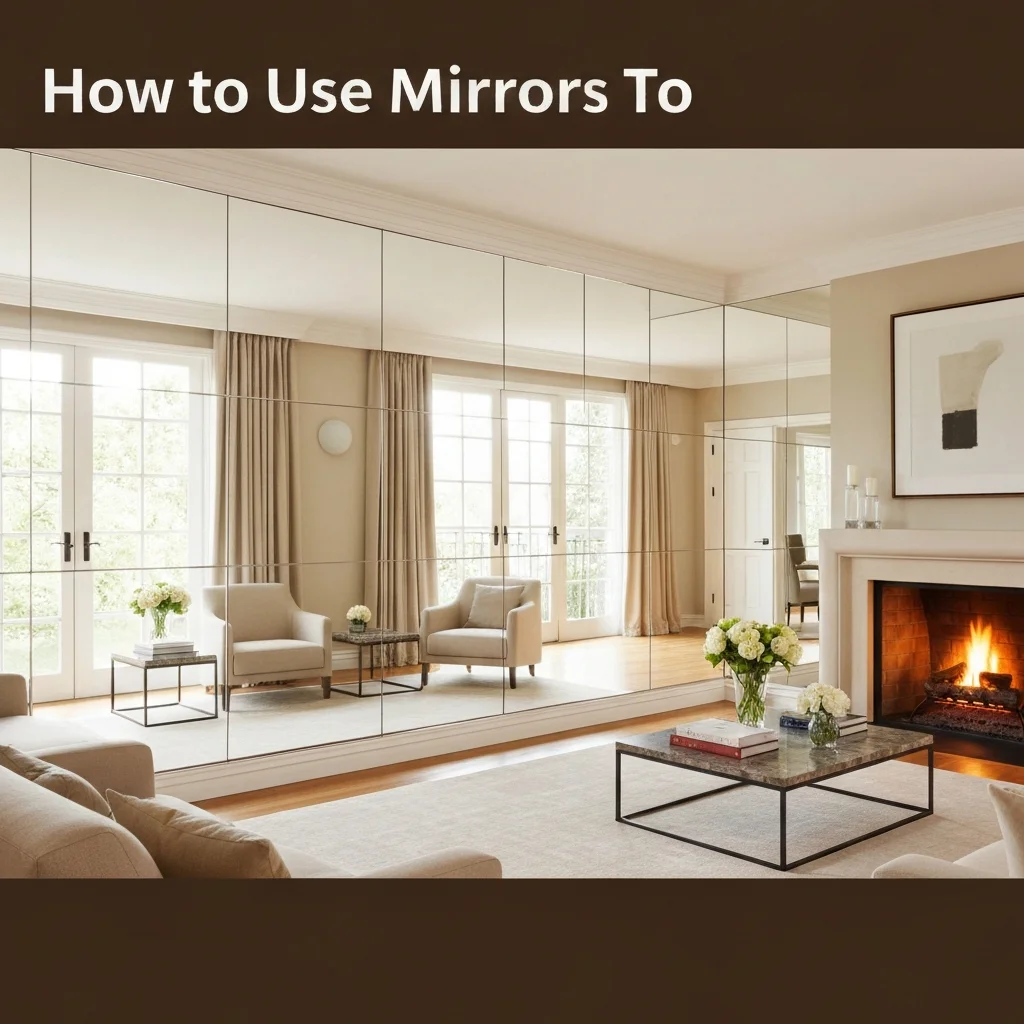
If your living room feels cramped, dark, or just a little sad, there’s one design trick that never fails: using mirrors. As an interior design writer with over 15 years in the home space industry, I’ve seen mirrors completely transform modest rooms into airy, expansive spaces. The best part? It’s one of the cheapest and fastest upgrades you can make.
The concept is simple: mirrors reflect light and create visual depth. But to truly harness mirrors to expand your living room, you need to know where to hang them, what shape to choose, and how to frame them. Let’s break down the science and art of mirror placement so your living room feels twice as big instantly.
1. The Strategic Spot: Opposite a Window
The number one rule in mirror placement is reflecting natural light. Place a large mirror directly across from your biggest window. This will bounce sunlight back into the room, doubling the brightness and making the walls appear farther away.
For example, if your window faces south, hang a floor-length mirror on the north wall. Suddenly, you have a second “window” that opens up the entire room. This is the most effective living room mirror placement for small spaces.
Avoid placing mirrors directly on the same wall as the window. That only reflects a blank wall, wasting the opportunity to amplify light and views.
2. Create a Focal Point with Oversized Mirrors
Small mirrors can make a room feel cluttered. Instead, go big. A single oversized mirror leaning against the wall or mounted above a sofa acts as a statement piece while visually doubling the room’s depth.
Think about a 4×6-foot mirror behind your couch. The reflection of the opposite wall tricks your eye into thinking the room continues beyond the mirror. It’s a favorite trick among interior stylists for small living room ideas.
Pro tip: If you have low ceilings, choose a tall vertical mirror. This draws the eye upward and makes the ceiling feel higher.
3. Mirror Groupings for a Gallery Wall
One large mirror works wonders, but a collection of smaller mirrors can also expand a room if arranged thoughtfully. Create a gallery wall using round or rectangular mirrors of varying sizes. The multiple reflections create a kaleidoscope effect, adding energy and dimension.
Stick to slim, modern frames (or no frames at all) to avoid visual heaviness. Use this technique on a narrow wall to make it appear wider. It’s an affordable way to incorporate decorative mirrors for living room without overwhelming the space.
Here’s a quick list of mirror shapes and their effects:
- Round mirrors: Soften sharp corners and add balance.
- Rectangular mirrors: Best for elongating walls and ceilings.
- Arched mirrors: Add elegance and draw the eye upward.
- Sunburst mirrors: Create a focal point and reflect light in many directions.
4. Mirror Height and Angle Adjustments
Where you place the mirror on the wall matters just as much as the size. For general expansion, the center of the mirror should be at eye level (about 55–60 inches from the floor). This standard height ensures it reflects the room’s main features, not just the ceiling.
However, if you want to highlight a specific element—like a fireplace or an art piece—angle your mirror slightly downward. This captures the warmth and glow of a candle or fire, making the room feel cozier and more expansive at night.
For a living room with a low ceiling, mount the mirror just a few inches below the crown molding. This simple trick is a proven how to make a room look bigger hack used by professional home stagers.
5. Frame Selection: Less Is More
The frame of your mirror can either help or hurt the illusion of space. Thick, dark, ornate frames tend to feel heavy. They eat up visual real estate and create boundaries that stop the eye.
Instead, choose thin frames in light tones (white, silver, or light wood). Better yet, go frameless. A frameless mirror blends into the wall, making the reflection feel like a portal to another room. This is ideal for anyone serious about using mirrors to expand your living room without adding visual clutter.
If you love a bold look, use a single statement frame on your largest mirror but keep all other mirrors minimal.
6. Mirrors Opposite Mirrors: The Infinity Effect
Here’s a high-impact trick for a dramatic effect: place two mirrors directly facing each other. This creates an infinite reflection effect, making your living room seem endless. It works best in narrow hallways or long living rooms that feel like tunnels.
Be careful not to overdo it. One pair of facing mirrors is enough—too many reflections can feel dizzying. Use this technique sparingly in a single corner or above a console table for a touch of luxury.
To help you decide the best mirror strategy for your space, here’s a simple comparison table:
| Mirror Placement | Best For | Effect |
|---|---|---|
| Opposite a window | Brightness & depth | Doubles natural light |
| Above the sofa | Focal point | Makes room feel larger |
| Gallery wall | Narrow walls | Adds visual interest |
| Facing another mirror | Long rooms | Infinite reflection effect |
| Leaning on floor | Low ceilings | Creates height illusion |
Frequently Asked Questions
1. How many mirrors should I use in a small living room?
One large mirror is usually enough. Adding a second small mirror can work, but too many mirrors can make the room feel chaotic. Stick to quality over quantity.
2. Can I use mirrors in a living room with no windows?
Yes. Place a mirror behind a lamp or sconce to reflect artificial light. This creates the illusion of a brighter, more open space even without natural light.
3. What mirror shape is best for a small living room?
Round or oval mirrors are best because they lack sharp corners that can make a room feel boxed in. They also help soften the overall look of the room.
4. Should I match the mirror frame to my furniture?
Not necessarily. The frame should complement the room’s style—modern, rustic, or traditional—but it doesn’t need to perfectly match your sofa or coffee table. Contrast can be eye-catching.
5. Do I need to nail a mirror to the wall?
Not always. Large leaning mirrors are trendy and safe. For safety, use wall anchors if mounting. Always secure heavy mirrors properly to prevent accidents.
6. Can a mirror make a living room look bigger without light?
Yes, because mirrors also reflect depth. Even in low light, a mirror creates the illusion of a second room, visually expanding the space.
7. What is the best color frame for a mirror in a small living room?
White, silver, or frameless mirrors are ideal. They reflect light rather than absorbing it. Black or dark wood frames can work but should be very thin.
8. Are antique mirrors good for expanding a room?
Antique mirrors often have tarnished or uneven glass, which can distort reflections. They work for ambiance but aren’t the best for making a room feel larger. Save them for decorative accents.
Conclusion
Mirrors are the ultimate secret weapon for any living room, especially when square footage is tight. By reflecting light, adding depth, and creating focal points, they can transform a cramped or dim space into an airy, inviting haven.
Remember the key principles: place mirrors opposite windows, go oversized when possible, and choose lighter frames. Whether you’re a renter, a homeowner, or just someone who loves a good design hack, these strategies will help you make the most of your space.
Try one of these ideas this weekend. Your living room will feel brand new—and you won’t have to knock down a single wall to do it.


