
Unexpected Places to Put a Mirror in Your Living Room
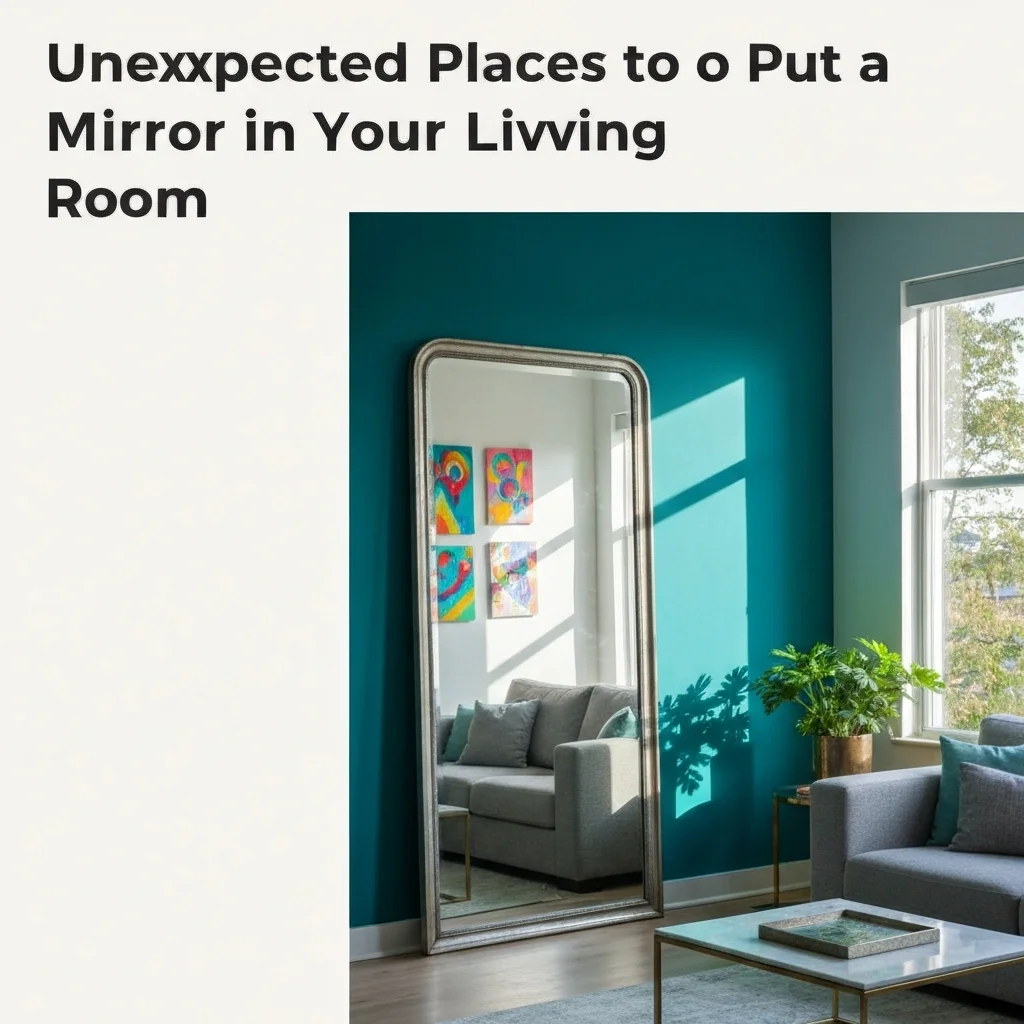
Mirrors are the unsung heroes of interior design. They bounce light, create depth, and can make even the coziest living room feel twice as spacious. Most people hang one above a fireplace or console table and call it a day. But you can do so much more.
Today, I’m showing you the unexpected places to put a mirror in your living room. These spots will catch your guests off guard—in the best way possible. Ready to rethink your layout? Let’s dive in.
1. Behind the Sofa: The Low-Lying Trick
We usually lean art or a tall mirror above the sofa, but try placing a large floor mirror right behind it at floor level. Yes, partially hidden by the back cushions. This creates a surprising sense of height when you’re seated.
It reflects the ceiling and the opposite wall, making the room feel cathedral-like. Choose a leaner mirror with a slim metal or wood frame for a casual, modern vibe. It works especially well in rooms with low ceilings or heavy drapery.
2. Inside a Bookshelf: The Hidden Gem
Instead of cramming every shelf with books and trinkets, use one full shelf as a mirror panel. Lean a rectangular mirror against the back of a cubby, or install a cut-to-size mirrored sheet on the rear wall of your built-in unit.
This trick doubles the visual depth of the bookshelf and reflects light from nearby windows. It also makes your collectibles look like they’re floating. Bonus: it’s a genius way to fill an empty nook without adding clutter.
3. Behind Houseplants: Bring the Outdoors In
Place a medium-to-large mirror behind a tall fiddle-leaf fig or a cluster of potted plants. The reflection creates a lush, doubled-up “indoor garden” effect. Your living room will suddenly feel like a sun-drenched conservatory.
Use a round mirror here for a softer look. The contrast between the organic leaves and the crisp reflective surface is pure visual magic. This is one of my favorite living room mirror placement ideas for renters who can’t install permanent fixtures.
4. Directly Across from a Window: The Light Multiplier
Yes, this is a classic—but most people hang the mirror on the same wall as the window or too far to the side. For maximum impact, place the mirror on the wall directly opposite your main window.
This captures and redirects every ray of natural light, flooding the room with brightness. Pair it with a sheer curtain treatment to soften reflections. If you have a beautiful view, the mirror will “bring” that view into the center of the room.
5. Below a Low Artwork: The Unexpected Duo
Hang a small mirror below a piece of wall art, not above it. This is a twist on the gallery wall concept. The mirror reflects the lower part of the room—a sofa arm, a side table, or the floor—creating an interesting layered composition.
Choose a mirror with a complementary frame to your artwork (e.g., black frame with a black-and-white print). This trick adds an avant-garde touch without overwhelming the wall. Perfect for narrow hallways or tight living room corners.
6. On the Ceiling (or Very High Up)
Hear me out: a small, mirrored ceiling panel or an angled mirror mounted near the crown molding can bounce light deep into the room. This is especially powerful in living rooms with sliding glass doors or skylights.
It’s also a smart trick for dark, windowless corners. You won’t “look up” and see yourself—you’ll just notice the space feels airier. Stick to lightweight acrylic mirrors for safety. This is an unexpected place to put a mirror in your living room that guarantees a “wow” from guests.
7. On the Side of Furniture (TV Stand or Console)
If your console table or media unit has open sides, attach a mirror to the interior panel. This is subtle and strategic. It reflects light from nearby lamps or windows without taking up floor or wall space.
You can also lean a small rectangular mirror against the side of a large armchair. It adds a reflective accent that feels intentional and chic. This works beautifully in modern-industrial or mid-century spaces.
Quick Comparison: Best Spots by Room Challenge
| Room Challenge | Mirror Placement | Best Mirror Shape |
|---|---|---|
| Dark corner | Behind plants or angled on ceiling | Round or arched |
| Low ceiling | Behind sofa at floor level | Tall rectangular |
| Narrow room | Full-length on a side wall | Vertical rectangle |
| Too much clutter | Inside bookshelf backsplash | Square or small rectangular |
FAQ: Unexpected Places to Put a Mirror in Your Living Room
1. Is it bad Feng Shui to put a mirror behind the sofa?
Not necessarily. In Feng Shui, a mirror behind the sofa can symbolize a lack of support—but if you place it low and it reflects light or a window, it can energize the space. Trust your instincts and test the spot for a few days.
2. Can I put a mirror directly on the floor?
Yes, especially if you have a heavy, thick frame. Lean it against a wall at a slight angle. This is one of the most popular living room mirror placement ideas for renters and boho-style homes.
3. How big should a mirror be to make a room look bigger?
Aim for at least 24 inches in width or height. The bigger the mirror, the more it expands the room visually. But a large mirror in a small space is more effective than a small mirror in a large space.
4. What shape is best for an unexpected mirror spot?
Round mirrors soften harsh lines; rectangular mirrors add structure. Oval mirrors are ideal for corners because they fit tight angles without feeling blocked.
5. Can I use a mirror to hide something (like an electrical panel)?
Absolutely. Framed mirrors are perfect for covering breaker boxes or ugly thermostats. Just make sure the mirror is hinged or easy to remove when needed.
6. Should the mirror reflect a window or a wall?
Always aim to reflect a window or a light source if possible. Reflecting a blank wall does nothing for brightness. The goal is to bring in natural light and views.
7. Does it matter if the mirror shows a messy area?
Yes—mirrors double what they reflect. If you place one across from a cluttered bookshelf, you’ll double the visual chaos. Keep the area neat, or use the mirror to reflect an open wall or pretty corner.
8. Can I hang a mirror above a radiator?
It’s best to avoid this. Heat and humidity can damage the mirror backing over time. Keep at least 6 inches of clearance between the mirror and any heat source.
Final Thoughts
Mirrors are not one-trick ponies. With a little creativity, you can use them to solve lighting problems, add dimension, and create unexpected focal points. The key is to think beyond the foyer and the bathroom.
Start with one of these unexpected places to put a mirror in your living room—behind a plant, inside a bookcase, or low behind the couch. You’ll be amazed at how much brightness and depth a single mirror can bring.
Remember to choose a frame that complements your existing style, and don’t be afraid to lean into the experimentation. Happy decorating!


