
Living Room Furniture Placement Rules You Should Break
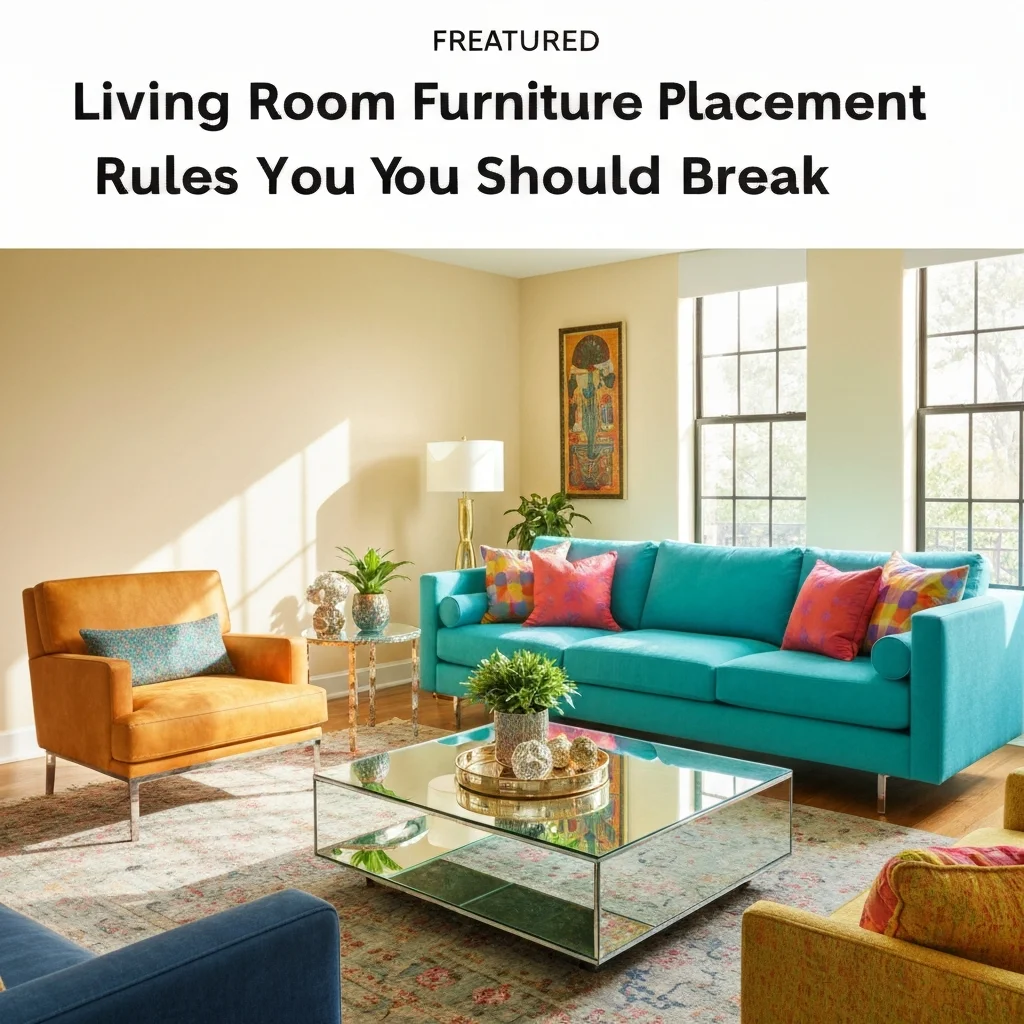
For decades, we’ve been told exactly how to arrange our living room furniture. Push the sofa against the wall. Always create a focal point with the TV. Keep everything symmetrical. But here’s the truth: those living room furniture placement rules you should break are often what’s holding your space back from feeling functional, inviting, and personal.
In this guide, we’re throwing out the old playbook. Whether you’re working with a cozy apartment or an open concept layout, these living room layout ideas will help you design a room that actually works for how you live. Ready to break some rules? Let’s dive in.
1. Stop Pushing Everything Against the Wall
The classic rule says to hug the walls with your sofa and chairs to open up the room. In reality, this often creates a vast, empty void in the center—like a dance floor nobody asked for.
Try floating your sofa a few feet away from the wall. Even in a small living room, pulling furniture inward creates intimate conversation zones and makes the room feel larger. You can place a console table behind the sofa to anchor the space.
This is one of the best furniture arrangement tips for breaking the boredom of a traditional layout. It also gives you room to add a narrow shelf or a plant in the corner you’ve left open.
2. Ditch the TV-As-Focal-Point Rule
Yes, the TV is important. But should it be the star of every seating arrangement? Not necessarily. If your living room doubles as a reading nook or a social hub, consider placing the TV on a side wall or inside a media cabinet that closes.
Instead, create a conversational seating layout with two sofas facing each other, or a sofa and armchairs angled toward a coffee table. This encourages real connection rather than everyone staring at a screen.
For open concept rooms, use a rug to define the seating area and let the fireplace, artwork, or a large window be the focal point. You can always watch TV from a secondary seating area nearby.
3. Break the Symmetry Obsession
Matching lamp pairs and identical end tables have their place—but a perfectly symmetrical room can feel stiff and showroom-like. Real homes have personality.
Mix it up. Place a tall floor lamp next to one end of the sofa and a low plant stand on the other. Use an oversized armchair on one side and a small bench on the other. Asymmetry adds visual movement and interest.
This is a particularly powerful small living room furniture placement trick. Asymmetrical arrangements feel less cluttered and make unusually shaped rooms flow better. Don’t be afraid to let one side of the room be “heavier” than the other.
4. Forget the “Coffee Table in the Center” Rule
Who decided every couch needs a coffee table dead center? For many homes, a bulky coffee table becomes a clutter magnet and a shin-banging hazard. You can absolutely break this rule.
Try using two smaller side tables or a pair of nesting tables that you can move around. In a narrow living room, place one long, narrow console table against the back of the sofa instead. Ottoman trays also work great as movable surfaces.
Here are a few alternatives to a central coffee table:
- A large pouf that doubles as extra seating
- A low bookcase or magazine rack within arm’s reach
- A vintage trunk that hides blankets and games
- A slim shelf mounted behind the sofa for drinks and books
These options give you flexibility without sacrificing function—one of the smartest furniture arrangement tips for modern living.
5. Don’t Let the Rug Dictate Your Layout
The old rule says all furniture legs must be on the rug. But in small or irregular rooms, that can force you into awkward layouts. Here’s a better approach: let the rug define a zone, not trap your furniture.
In an open concept living room, for instance, you only need the front legs of the sofa and chairs on the rug. This visually ties the seating together while leaving the back legs on the floor—making the room feel larger and less “rug-centric.”
For dining areas within the same space, use a separate rug or skip it entirely. Below is a quick comparison of rug placement strategies:
| Rule You Learned | Rule to Break | Better Alternative |
|---|---|---|
| All furniture legs on rug | Forces awkward alignments | Front legs only, or a smaller rug |
| Rug must be centered in room | Creates dead zones | Center rug under seating group, not room |
| Rug must match everything | Kills personality | Use a contrasting rug as a statement |
Breaking these rug rules often leads to the most functional open concept living room design solutions.
6. Ignore the “One Inch from the Wall” Mantra
Some designers swear by leaving exactly one inch between furniture and walls. But real life isn’t that precise. If you have a deep sofa or a chunky armchair, pulling it closer to the wall might be the only way to keep traffic flow open.
Likewise, in rooms with radiators or windows, you may need to leave more space than one inch. The goal is functionality and comfort, not a measuring tape.
Use your judgment: if the pathway feels tight, give your furniture room to breathe. This is especially relevant for small living room furniture placement where every inch counts.
7. The TV Doesn’t Have to Be at Eye Level
You’ve heard it a thousand times: “Mount the TV at eye level when seated.” But this rule ignores real-world constraints like mantels, awkward wall studs, or low ceilings.
If your TV sits slightly higher than “ideal,” it’s fine. Use tilting mount to reduce glare and angle it downward. Your neck will adapt. What matters more is that the seating feels comfortable and the TV isn’t competing with a window for attention.
Prioritize conversational seating layout over perfect TV height. Guests will appreciate a good chat more than a viewing angle debate.
FAQ: Living Room Furniture Placement Rules You Should Break
1. What is the first rule of living room furniture arrangement I should ignore?
Stop pushing everything against the wall. Floating your sofa creates a more inviting, spacious feel and opens up pathways.
2. Can I place furniture in front of a window?
Absolutely. A low console or a sofa back can work in front of a window, especially if the window is high or the view isn’t critical. Just leave enough clearance for curtains to move.
3. How do I arrange furniture in a long, narrow living room?
Break the rule of centering everything. Place seating along the longer walls, and use a narrow table or floor lamp to fill the middle. Avoid bulky sectionals that block flow.
4. Should I match my sofa and chairs exactly?
No. Mixing styles adds character. Pair a neutral sofa with a bold-patterned armchair, or mix wood and metal finishes for a layered look.
5. Is it okay to have no coffee table at all?
Yes, if you use ottomans, side tables, or a console behind the sofa. Many people prefer the open floor space for kids, pets, or yoga sessions.
6. How do I break the “TV against the main wall” rule?
Mount the TV on a swivel arm or place it on a console in a corner. Then angle your seating to face both the TV and the rest of the room.
7. What’s the biggest mistake in small living room layout?
Following rules too strictly. In a small space, prioritize flow and multipurpose furniture over traditional placement. A floating sofa and a folding tray table work wonders.
8. Can I use two different rugs in one open concept room?
Absolutely. One rug under the seating area and a second under the dining table helps define zones without breaking visual continuity.
Conclusion: Let Your Living Room Breathe
The best living room furniture placement rules you should break are the ones that don’t serve your lifestyle. Forget symmetry, ditch the wall-hugging habit, and stop letting the TV boss your layout around.
Your living room should feel like you—comfortable, functional, and a little unexpected. Use these living room layout ideas to experiment, and don’t be afraid to move things around until it clicks. Rules are just guidelines, after all. Your home, your rules.


