
Mistakes You’re Making With Your Living Room Rug
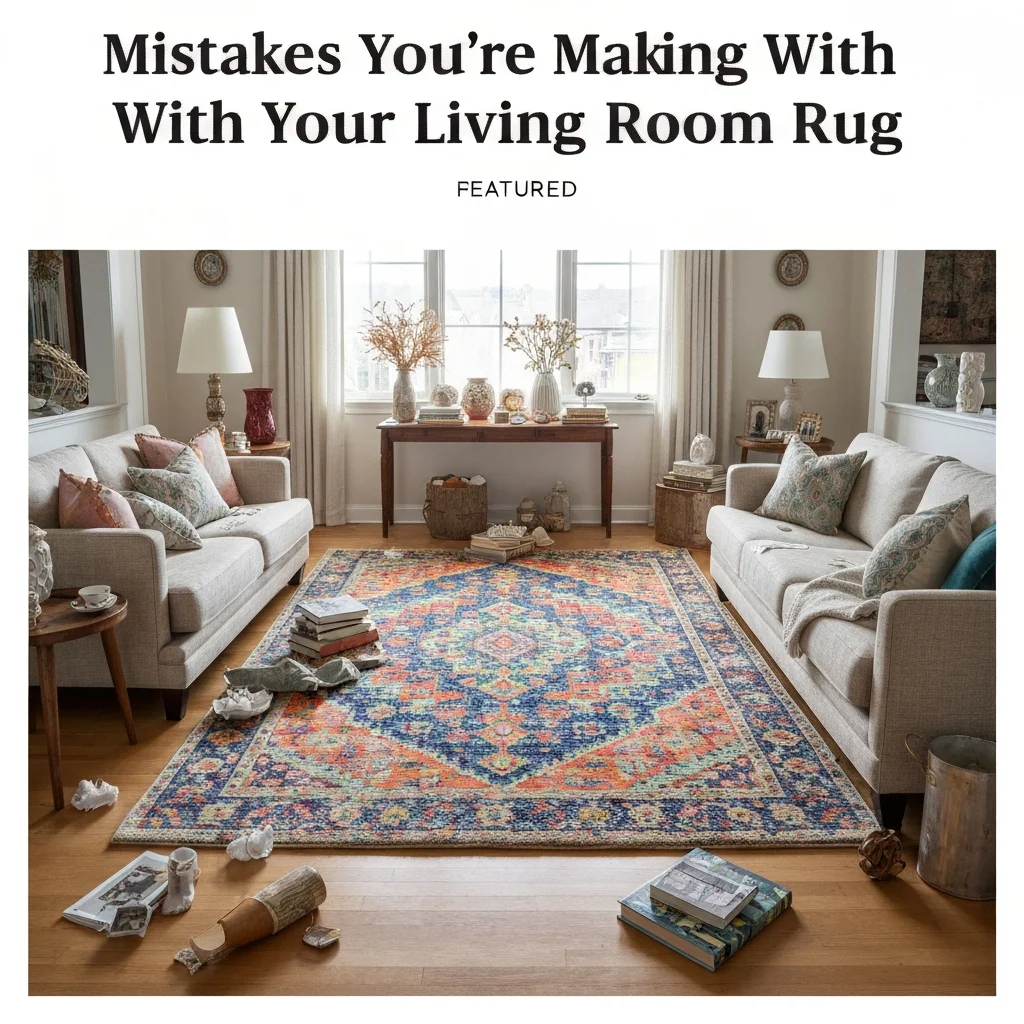
Your living room rug is arguably the most important design element in the space. It anchors your furniture, defines the conversation area, and adds warmth and texture. Yet, it’s also the item most homeowners get wrong.
After 15 years in the home spaces and design industry, I’ve seen the same living room rug mistakes repeated over and over. The good news? They’re all easy to fix. Let’s walk through the biggest blunders and how to correct them today.
Mistake #1: Choosing a Rug That’s Too Small
This is the number one offender in living room design. A tiny “postage stamp” rug that floats in the middle of the room makes the space feel disjointed and cheap. It visually shrinks the seating area instead of unifying it.
The rule of thumb is simple: your rug should be large enough that the front legs of your sofa and chairs rest comfortably on it. For a standard 8×10 or 9×12 living room, a 6×9 rug is almost always too small.
- Small living rooms (under 200 sq ft): Use at least a 5×7 or 6×9 rug.
- Medium living rooms (200–350 sq ft): A 8×10 rug is your safest bet.
- Large living rooms (350+ sq ft): Go for a 9×12 or even a 10×14 rug.
Mistake #2: Placing the Rug Incorrectly Under Furniture
Even with the right size, poor placement can ruin the effect. Many people slide the rug completely under the sofa, leaving the coffee table floating on bare floor. This creates a disconnected look.
The ideal placement depends on your furniture layout. If your sofa is against a wall, pull the rug forward so it extends about 12–18 inches past the front of the sofa. This creates a clear, anchored zone.
For sectionals, make sure the rug extends along the length of the main seating area. The coffee table should sit entirely on the rug, with at least 18 inches of rug visible on all sides of the table.
Mistake #3: Ignoring Traffic Flow and Room Balance
A rug that stops awkwardly in a high-traffic pathway becomes a tripping hazard and an eyesore. Always consider how people actually move through the room. If you have to step off the rug to walk from the sofa to the armchair, it’s too small or badly placed.
Balance is equally critical. In an open-concept space, the rug should help define the living area without crossing too far into the dining or hallway zones. Leave at least 6–8 inches of bare floor around the rug’s perimeter for a balanced, intentional look.
Mistake #4: Using the Wrong Rug Material
Material choice goes beyond looks. High-pile shag rugs feel luxurious underfoot but trap dust and are impossible to clean near a busy entryway. Low-pile wool blends offer durability and stain resistance, making them ideal for families or pet owners.
Natural fiber rugs (like jute or sisal) are trendy and affordable, but they shed and can feel rough on bare feet. They work best in low-traffic areas or when layered under a softer, flatweave rug.
Here’s a quick comparison to help you decide:
| Material | Best For | Watch Out For |
|---|---|---|
| Wool | Durability, stain resistance, softness | Higher cost, may shed initially |
| Polypropylene | Indoor/outdoor use, budget-friendly | Not as plush, can feel synthetic |
| Cotton | Easy cleaning, casual style | Wears out faster, stains easily |
| Jute/Sisal | Natural look, low cost | Rough texture, not stain-resistant |
| Shag (Synthetic) | Bold texture, cozy feel | Hard to vacuum, traps dirt |
Mistake #5: Forgetting the Rug Pad
A rug without a pad is like a painting without a frame. It slips, bunches up, and wears out twice as fast. This is one of the most overlooked living room rug mistakes that costs homeowners money in the long run.
Invest in a high-quality rug pad that matches your floor type. For hardwood or tile, choose a non-slip felt-and-rubber combo. For carpet, a thin mesh pad works fine. The pad also adds cushioning, making even a low-pile rug feel plush underfoot.
Mistake #6: Choosing a Color or Pattern That Fights Your Room
Many people buy a rug based on what’s trending, only to realize it clashes with their sofa or wall color. A rug should complement your existing palette, not compete with it. If your furniture is neutral, a bold patterned rug adds personality. If your sofa is already statement-making, go with a subtle texture or a solid tone.
Don’t make the mistake of matching everything perfectly either. A rug that picks up one accent color from your throw pillows or wall art creates a cohesive look without being matchy-matchy.
Frequently Asked Questions
Should my living room rug go under the sofa?
Yes, but not entirely. At minimum, the front legs of your sofa should sit on the rug. This anchors the seating group and makes the room feel larger.
What size rug is best for a 12×12 living room?
An 8×10 rug is ideal for a 12×12 room. It leaves a 2-foot border of bare floor on all sides and fits neatly under the front legs of your furniture.
Can I use a round rug in a living room?
Absolutely. Round rugs work beautifully in small seating areas or under a circular coffee table. Just make sure the diameter is long enough to accommodate the front legs of surrounding chairs.
How often should I clean my living room rug?
Vacuum high-traffic areas twice a week and low-traffic areas once a week. Deep clean professionally every 12–18 months, or more often if you have pets or allergies.
Do I need a rug pad for carpet?
Yes, if your rug tends to shift or curl at the edges. A thin, mesh-style pad prevents movement and extends the life of the rug.
What’s the best rug material for high-traffic living rooms?
Low-pile wool or polypropylene is your best bet. Both are durable, stain-resistant, and easy to maintain in busy households with kids and pets.
Should my rug match my curtains?
Not necessarily. They should belong to the same color family or share a common accent tone, but matching exactly feels dated. Aim for harmony, not identity.
Conclusion
Your living room rug is a foundational piece of your home’s design. Avoiding these common living room rug mistakes will save you money, reduce frustration, and instantly elevate the look and feel of your space. Whether you’re choosing your first rug or replacing an old one, remember: size, placement, material, and color are all equally important. Get those four elements right, and your living room will finally feel complete.
Take a moment to look at your current rug. Does it follow these rules? If not, you now know exactly what to change. Your living room will thank you.


