
Small Living Room Here’s How to Make It Look Huge
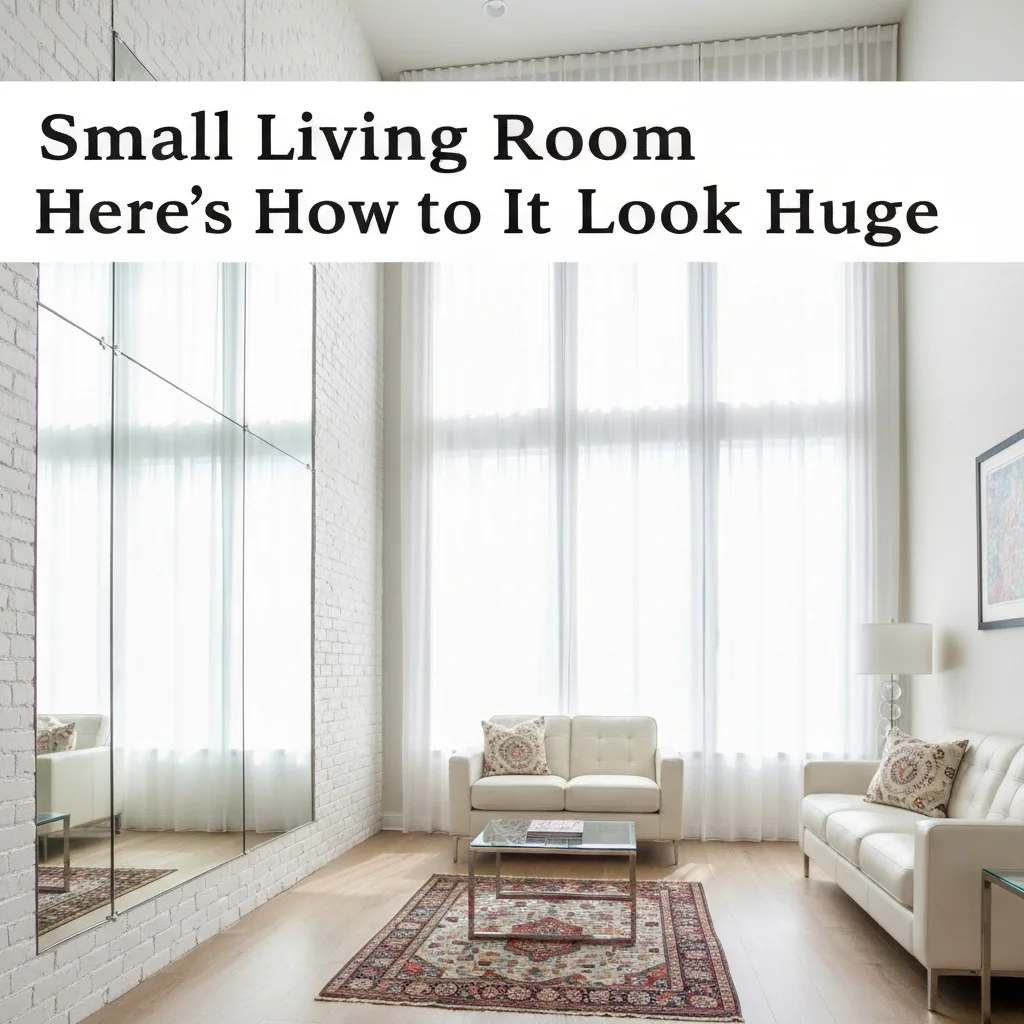
Feeling like your living room is shrinking by the day? You’re not alone. The truth is, small rooms often have more potential than we give them credit for.
With a few strategic tweaks, you can trick the eye and create a sense of spaciousness that feels genuinely huge. I’ve spent years helping homeowners turn cramped dens into airy retreats—and I’m about to share every trick I know.
These small living room ideas to make it look bigger don’t require a renovation. Just smart choices in furniture, color, lighting, and layout.
1. Master the Art of Multifunctional Furniture
Every piece in a small living room needs to earn its keep. A bulky sofa that only sits people? That’s wasted real estate. Instead, look for pieces that serve double—or triple—duty.
Consider a storage ottoman that acts as a coffee table, extra seating, and a hidden bin for blankets. Or a sleek sofa bed that transforms a den into a guest room in seconds.
My go-to list for small space decorating tips:
- Nesting tables: Pull them out when guests arrive, tuck them away when you need floor space.
- Wall-mounted desks: Fold down when you need to work, fold up to reclaim the room.
- Storage benches: Place under a window for seating and stashing shoes, books, or toys.
The key is to let each piece breathe. Avoid overcrowding—leave at least 18 inches of clearance around furniture to maintain flow.
2. Go Light and Bright on Walls and Floors
Color is your most powerful tool for making a small room look larger. Light colors reflect natural light, making walls appear to recede. Dark colors absorb light, which can make a room feel like a cave.
Paint your walls a soft white, pale gray, or warm beige. For a subtle twist, try a barely-there blue or green—these hues create depth without shrinking the space.
Here’s a quick comparison table to guide your paint choices:
| Paint Finish | Effect on Small Rooms | Best Use |
|---|---|---|
| Matte | Absorbs light, hides imperfections | Ceilings or low-traffic walls |
| Eggshell | Soft sheen, reflects modest light | Living room walls in low-light rooms |
| Satin/Semi-gloss | High reflectivity, expands visual space | Trim, moldings, accent walls |
| Glossy | Maximum light reflection | Furniture, doors, small accent panels |
And don’t stop at the walls. Light-colored flooring—think pale wood, light laminate, or soft beige carpet—further opens up the room. A continuous floor color from room to room also eliminates visual breaks that shrink a space.
3. Let the Light In—and Multiply It
Natural light is the single best way to make a living room layout for small spaces feel expansive. Start by removing heavy drapes and swapping them for floor-to-ceiling sheer curtains. They let light pour in while still offering privacy.
Place mirrors strategically to bounce that light around. A large mirror opposite a window can effectively double the daylight in the room. I’ve seen a 10×12-foot living room feel 50% bigger just from a well-placed mirror.
For evenings, use layered lighting: ceiling lights for ambient glow, floor lamps for mid-level light, and table lamps for cozy corners. Avoid a single overhead fixture that casts harsh shadows—it makes the room feel smaller and more cluttered.
4. Declutter Like a Pro
Let’s be honest: clutter is the enemy of spaciousness. Every visible cord, stack of magazines, or stray toy eats into your visual square footage. A clean, minimal aesthetic is non-negotiable for small space decorating tips.
Start by removing everything that doesn’t serve a daily purpose. That collection of decorative pillows? Keep three max. The stack of books on the floor? Find a vertical shelf.
Then, hide the rest. Use baskets, closed cabinets, and under-sofa storage bins. The goal is to have 80% of your belongings out of sight. The less your eye has to process, the bigger the room feels.
5. Scale Down Your Furniture
A common mistake in small living room ideas to make it look bigger is buying furniture that’s too large. A giant sectional might be comfortable, but it dominates the room, leaving no breathing space.
Instead, choose pieces with exposed legs—a sofa on 4-inch legs lifts the visual weight and makes the floor feel continuous under it. Opt for a slim-profile armchair instead of a chunky recliner.
Scale also applies to accessories. A single large piece of wall art can make a bigger impact than a gallery wall of tiny frames. One oversized floor lamp beats three small table lamps. Go bold with a few items, and leave the rest minimal.
6. Create Vertical Illusions
When floor space is limited, look up. Drawing the eye vertically is one of the most effective small space decorating tips I know.
Hang curtains from near the ceiling, not right above the window frame. This tricks the eye into thinking the window—and the room—is taller. The same goes for shelving: install floor-to-ceiling bookcases rather than low, wide units.
Stripes are another vertical trick. Vertical wallpaper stripes or a striped area rug can elongate the room. Just keep the stripes subtle—too bold can feel chaotic.
Frequently Asked Questions
1. What is the best color to make a small living room look bigger?
Soft whites, light grays, and pale blues are top choices. These colors reflect light and create an airy, open feel. Avoid dark browns, blacks, or navy unless used on a single accent wall.
2. Can I use a large rug in a small living room?
Absolutely. A large rug that fits under the front legs of your sofa and chairs actually makes the room feel bigger by unifying the seating area. A too-small rug can chop the space visually.
3. Should I avoid patterns in a small room?
Not at all. Small-scale patterns—like delicate floral or geometric prints—add personality without shrinking the space. Just keep the background color light and the pattern subtle.
4. How many pieces of furniture should I have?
Stick to the essentials: a sofa, a coffee table, one accent chair, and a media console if needed. In small living room layout for small spaces, less is genuinely more. Remove anything that doesn’t get used weekly.
5. Do mirrors really help make a room look bigger?
Yes, and they’re one of my favorite tricks. A large mirror placed opposite a window reflects light and creates the illusion of an extra window, instantly doubling the perceived space.
6. Is open shelving a good idea for small living rooms?
Only if you keep it beautifully styled and minimal. Open shelves can make a room feel larger by showing depth, but messy shelves will look cluttered. Use closed cabinets for everyday storage.
7. How do I arrange furniture in a narrow living room?
Float the sofa perpendicular to the long wall, and place chairs at a slight angle. Avoid pushing everything against the walls—leaving a few inches of space behind furniture creates depth and airiness.
Conclusion: Your Small Room Has Big Potential
A small living room isn’t a limitation—it’s a design puzzle. With the right mix of light colors, multi-functional furniture, smart lighting, and vertical tricks, you can transform it into a space that feels open, inviting, and genuinely huge.
Start with one change today. Paint a wall, move a mirror, or swap a bulky sofa for a sleek one. You’ll be amazed at how much your room can expand without adding a single square foot.


