
The Best Bathroom Countertop Materials
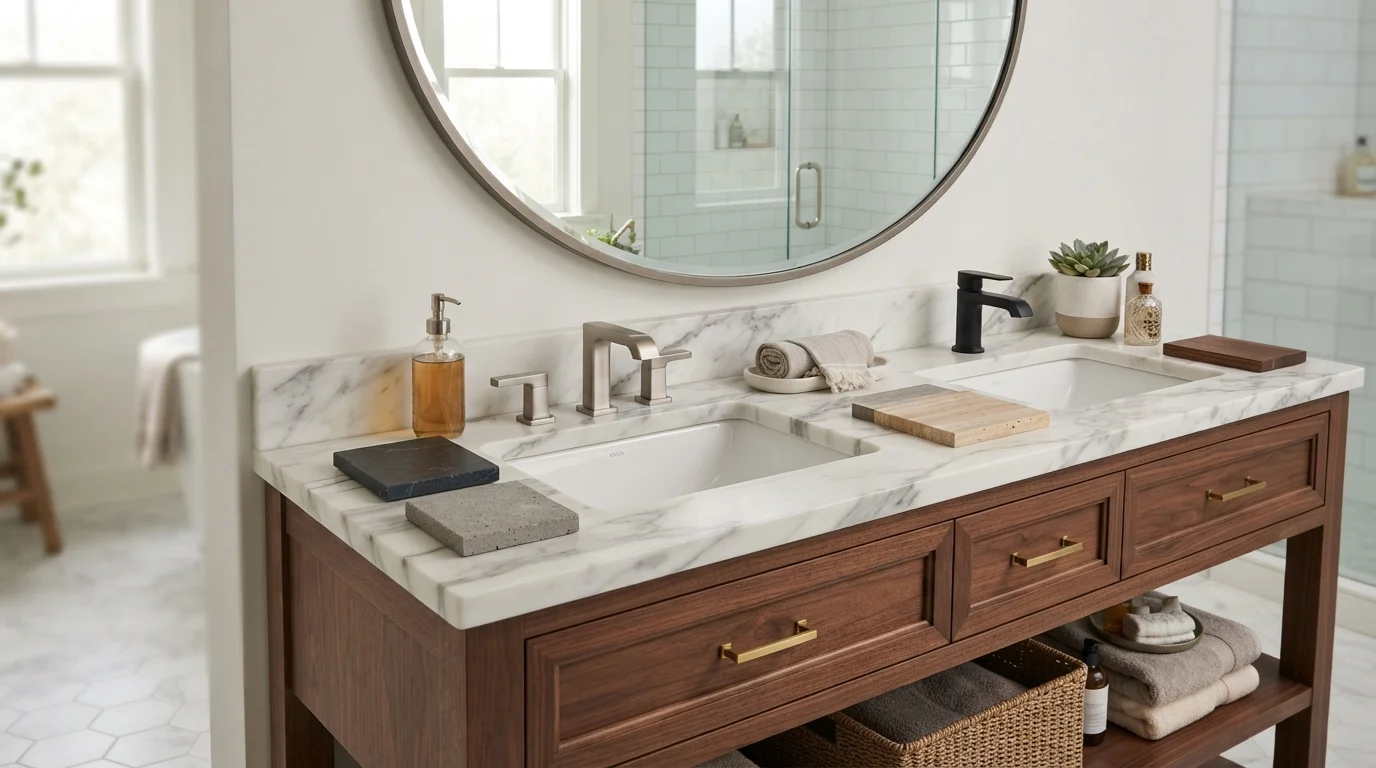
Your bathroom countertop is more than just a place to rest your toothbrush—it’s the workhorse of your daily routine. It faces heat from curling irons, splashes of toothpaste, and spilled cologne. Picking the right material can make or break your bathroom’s look and functionality.
After 15 years writing about home design, I’ve seen trends come and go. But the best bathroom countertop materials share one thing: a balance of beauty, durability, and low maintenance. Let’s break down the top contenders so you can make an informed decision.
1. Quartz: The Low-Maintenance Champion
Engineered quartz is currently the most popular bathroom vanity top option for a good reason. It’s non-porous, which means it won’t absorb water, soap scum, or hair dye. No sealing ever required.
Quartz comes in endless colors, from marble-look veining to solid matte finishes. It resists scratches and stains, making it ideal for busy family bathrooms. The only downside? Direct sunlight can yellow cheaper resins, so keep that in mind for skylit powder rooms.
2. Marble: Timeless Luxury
Nothing says elegance like Carrara or Calacatta marble. Its natural veining adds an artistic, organic touch that elevates any master bath. If you’re aiming for a spa-like aesthetic, marble is your go-to.
But marble is high-maintenance. It’s porous and can etch from acidic products like vinegar or certain cleansers. You’ll need regular sealing and careful cleaning. For a low-traffic guest bathroom, though, the effort is well worth it for the timeless patina.
3. Granite: The Durable Classic
Granite remains a solid contender among durable bathroom countertops. Each slab is unique, offering natural depth and speckles that hide water spots well. It handles heat like a champ—no burnt spots from hair tools.
Modern granite uses a resin coating to reduce porosity, but sealing is still recommended annually. It’s a rugged choice for a kids’ bathroom where spills happen daily. Just avoid abrasive cleaning pads to keep the shine intact.
4. Solid Surface Materials (Corian, Avonite)
Solid surface options are seamless, non-porous, and repairable. Scratches can be sanded out, unlike natural stone. This makes them excellent for integrated sinks, giving a sleek, modern look with no crevices for mold to grow.
The catch? They can scorch under high heat and are prone to scratching from harsh scrubbers. But for a budget-friendly bathroom remodel countertop that looks custom, solid surface is hard to beat. It’s also available in bright whites that resist yellowing over time.
5. Ceramic and Porcelain Tile
Tile countertops are making a comeback, especially with large-format porcelain slabs. You get incredible pattern freedom—think hexagonal, subway, or even wood-look planks. It’s one of the most affordable ways to achieve a designer look.
Grout lines are the main weak point. They can stain and require regular sealing if not using epoxy grout. Choose rectified tiles and a tight grout joint to minimize maintenance. Perfect for rental flips or rustic farmhouse styles.
6. Concrete: Industrial and Customizable
Concrete countertops are a favorite for modern lofts and artisan bathrooms. You can cast them in any shape, adding embedded glass, shells, or pigmented dyes for a completely bespoke look.
Concrete must be sealed properly, or it will crack and stain. It’s also heavy, requiring sturdy cabinetry. For a unique focal point, this is a top choice—but it demands a professional installer who understands bathroom humidity levels.
Quick Comparison Table
| Material | Durability | Maintenance | Cost Per Sq Ft | Best For |
|---|---|---|---|---|
| Quartz | High | Very Low | $60–$150 | Family bathrooms |
| Marble | Medium | High | $75–$250 | Master suite / luxury |
| Granite | Very High | Medium (seal yearly) | $50–$200 | High-traffic spaces |
| Solid Surface | Medium | Low | $40–$100 | Seamless modern design |
| Porcelain Tile | High | Medium (grout care) | $15–$40 | Budget / DIY projects |
What About Natural Soapstone or Travertine?
Soapstone is naturally non-porous and feels warm to the touch. It darkens with oil application (mineral oil) for a rich patina. Travertine is beautiful but soft—great for a Mediterranean powder room, but prone to scratches.
If you love the look of natural stone but want lower maintenance, soapstone is a hidden gem among the best bathroom countertop materials. Just know you can’t put hot tools directly on it without risk of cracking.
How to Choose Based on Your Lifestyle
Before you fall in love with a slab, think about your daily habits. Here’s a quick checklist:
- Family with kids? Go for quartz or solid surface—stain-proof and scratch-resistant.
- Frequent host in guest bath? Marble or granite adds instant WOW factor.
- Trying to save money? Large-format porcelain tile offers stone-like looks at a fraction of the cost.
- Have a rental property? Durable, easy-to-repair solid surface is your safest bet.
FAQ: Bathroom Countertop Materials
1. What is the most durable bathroom countertop?
Granite and quartz are the most durable. Granite resists heat and scratches; quartz is nearly indestructible against stains.
2. Is marble too high-maintenance for a bathroom?
It depends. In a master bath you use daily, expect to seal every 6–12 months and wipe up acids immediately. For a powder room, it’s perfectly fine.
3. Can I use kitchen countertop materials in the bathroom?
Yes, but some kitchen materials (like butcher block) are risky due to constant moisture. Stick to stone, solid surface, or high-quality tile.
4. What is the cheapest bathroom countertop material?
Laminate and ceramic tile are the most affordable, starting at $15 per sq ft. Laminate is easy to install but can be damaged by hair dye or heat.
5. Does quartz discolor over time in the bathroom?
High-quality quartz won’t discolor from normal use. However, prolonged exposure to strong UV rays (sunlight) may yellow cheaper polyester-based resins.
6. How often should I seal natural stone in a bathroom?
Granite and marble need sealing once a year. Soapstone doesn’t require sealing, and quartz never does.
7. Can I install a large integrated sink in solid surface?
Absolutely. Solid surface is famous for seamless, custom integrated sinks—no joints, no mold lines. A dream for minimalist bathrooms.
Conclusion
Choosing the best bathroom countertop materials comes down to your lifestyle, budget, and design taste. Quartz wins for easy living, marble for elegance, and granite for sheer toughness. Solid surface delivers custom flexibility, while tile keeps costs in check.
Remember to test samples in your bathroom’s actual lighting before committing. The right countertop should make you smile every time you brush your teeth. Happy remodeling!


