
Why Your Living Room Feels Empty And How to Fix It
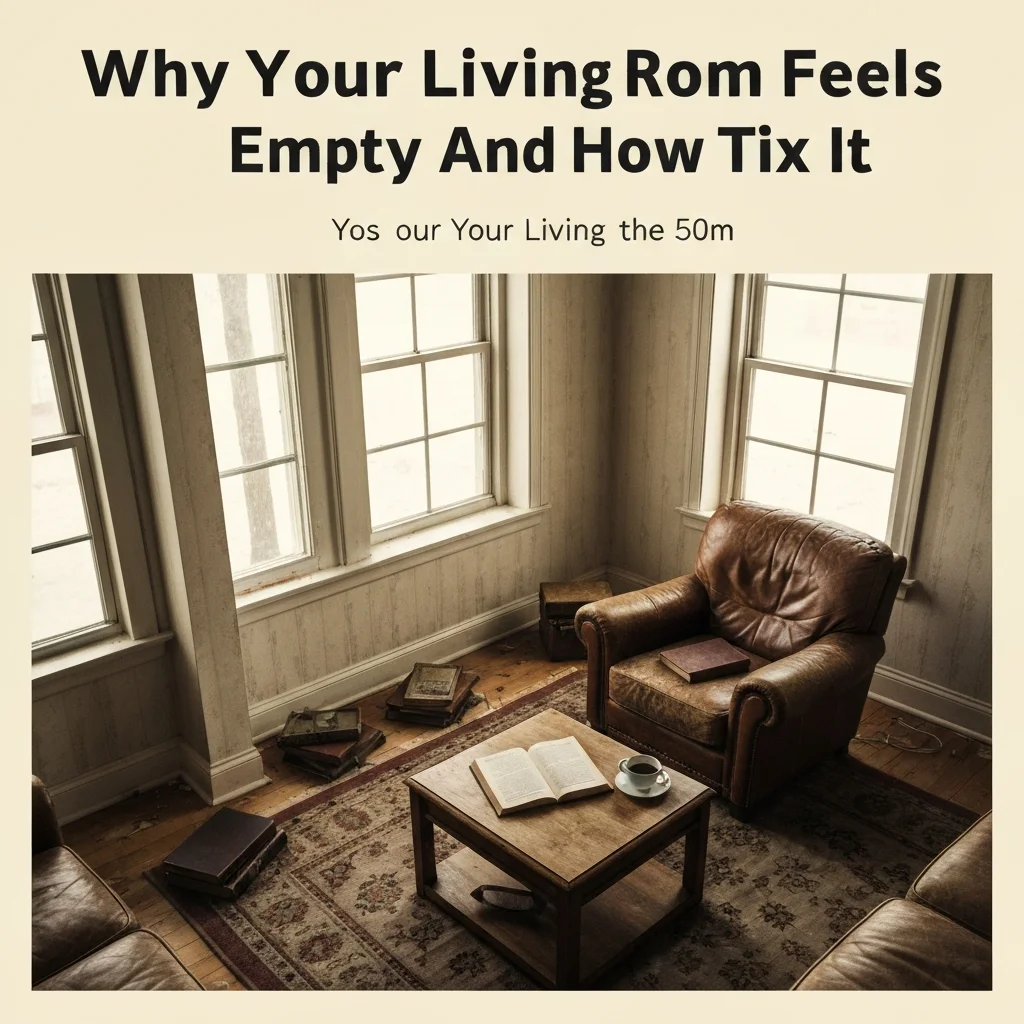
You walk into your living room, and something feels… off. It’s not messy, but it’s not inviting either. The space just feels hollow, like a stage waiting for actors to appear.
If your living room feels empty, you are not alone. This is one of the most common complaints I hear from homeowners. The good news? It’s usually an easy fix. You don’t need a full renovation or a huge budget to transform a barren box into a cozy, curated sanctuary.
Let’s break down why your space feels empty and, more importantly, how to fix it with simple, actionable living room layout tips and design tricks.
1. The Scale Problem: Furniture That Doesn’t Fit
The number one culprit behind an empty-feeling room is furniture that is too small. If you tried to save money or bought pieces that “fit” a previous apartment, they might be swimming in your current living room. A tiny loveseat against a vast wall will instantly scream “empty.”
Think of your furniture as the volume knob for the room. A large, substantial sofa anchors the space. If you have the square footage, don’t be afraid to go bigger. A sectional or a generously sized sofa with a chaise lounge fills the visual gap.
Pro tip: a common mistake is pushing all furniture against the walls. Pull your sofa away from the wall, even just 12 inches, to create a more defined zone. This alone is one of the best cozy living room ideas to start with.
2. You Forgot About the Vertical Plane
Most people decorate the floor (rugs, sofas, coffee tables) and forget about the walls. When the lower half of the room looks fine but the upper half is bare, the room feels empty and out of proportion. The eye has nowhere to rest above waist level.
The solution is to create visual weight up high. Start with significant wall art—a single large canvas is better than three tiny frames. Then, layer in floor-to-ceiling curtains. Hang the rod high, close to the ceiling, and let the fabric pool on the floor. This draws the eye upward and instantly adds volume.
Shelving also works wonders. A large bookcase or a gallery wall fills the void and gives the room a lived-in, collected feel. Vertical interest is a non-negotiable for how to style a living room that feels complete.
3. The Lighting Trap: Too Much Overhead, Not Enough Layers
A single ceiling light is the fastest way to make a room look like a rental or a doctor’s waiting room. Overhead lighting casts harsh shadows and leaves the corners of the room dark and empty. Your brain interprets those dark, empty corners as voids.
You need at least three sources of light on different levels. A floor lamp in the corner, a table lamp on an end table, and a lamp on a console table create warmth and depth. This “lighting triangle” fills the space with a soft glow.
Even better, use warm-toned bulbs (2700K-3000K). Cool white light makes the room look clinical and bigger—which is the opposite of cozy. Warm light creates intimacy and makes the room feel wrapped in a blanket of light, sweeping away that emptiness.
4. You Don’t Have Enough “Layers” or Zones
An empty living room often feels like a single bland zone. You have a sofa and a TV, and that’s it. To fix this, you need to create layers and “conversation zones.” Think of the room as a series of distinct areas.
Start with a large area rug. The rug defines the seating zone. If the rug is too small, it does nothing. It should be big enough that the front legs of your sofa and chairs sit on it. This anchors the space.
Then, add a coffee table, side tables, and poufs or ottomans. These smaller pieces break up the “big empty floor” and give the eye places to stop. A tray on the coffee table with a stack of books and a candle adds that final layer of human scale.
- Zone 1: The main seating area (sofa, rug, coffee table).
- Zone 2: A reading nook (armchair, floor lamp, small side table).
- Zone 3: A display area (console table, shelves, plants).
Creating these distinct zones is the secret to fill empty space in living room without cluttering.
5. The Power of Texture and Plants
A room can be fully furnished but still feel empty if it lacks texture. Think of a room with a leather sofa, a glass table, and hardwood floors—smooth, smooth, smooth. It feels cold and incomplete. Texture adds warmth and visual interest.
Introduce a chunky knit throw blanket. Add velvet or linen throw pillows. A sheepskin rug on the floor. A woven basket holding blankets. These tactile elements make the room feel richer and fuller.
Also, bring in a tall plant like a fiddle leaf fig or a monstera. Living greenery fills a corner perfectly, adding organic shape and height. It is the ultimate cost-effective trick for any living room feels empty scenario. A plant is the immediate filler your room craves.
6. A Quick Comparison: Empty vs. Full Room
Here is a handy cheat sheet to see where you currently stand and what to add next.
| Element | Empty Room Vibe | Full Room Fix |
|---|---|---|
| Furniture Size | Small, isolated pieces | Large, anchored sofa + chairs |
| Walls | Bare, white, cold | Large art, shelves, mirrors |
| Lighting | One harsh overhead light | Floor + table + accent lamps |
| Floor | Bare floor, tiny rug | Large rug, poufs, baskets |
| Texture | Smooth, sleek surfaces | Knits, wood, velvet, plants |
Use this table as a quick checklist the next time you walk into your space. It turns abstract “emptiness” into specific, fixable items.
Frequently Asked Questions
Why does my living room feel empty even though I have furniture?
Usually, it’s a scale and layout issue. Your furniture might be too small or pushed against the walls. Also, you may be missing vertical elements like art or shelves, and layering textures.
How can I fill empty space in my living room without buying new furniture?
Focus on styling what you have. Rearrange the layout to float the sofa away from the wall. Add a large mirror to bounce light. Use throws and pillows for texture. And get a large houseplant.
Is a rug important for making a room feel less empty?
Absolutely. A rug is the foundation of your zone. A rug that is too small makes the room look broken. A rug that is large enough (front legs of furniture on it) creates one cohesive zone.
What color should I paint the walls if my living room feels empty?
Warm, moody tones like sage green, terracotta, or warm taupe can make the room feel more enclosed and cozy. Avoid stark white if the room feels hollow, as it amplifies the emptiness.
How many plants do I need to make a room feel full?
One large statement plant (like a fiddle leaf fig) in a corner works wonders. If you have a shelf, add a couple of trailing pothos. Variety in height is more important than the number.
Can mirrors help a living room that feels empty?
Yes, but with caution. A mirror reflects light and space, which can help. However, if the room is already empty, a mirror might make it feel bigger and emptier. Use it to reflect a warm light source or a plant.
What is the fastest fix for an empty living room?
Add a floor lamp with a warm bulb and a large plant. This costs under $150 and instantly changes the perception of empty corners. It adds height, warmth, and life.
Conclusion: From Hollow to Home
An empty living room isn’t a design failure—it’s an opportunity. You don’t need a mountain of clutter to make a space feel full. You need the right proportions, vertical interest, layered lighting, and rich texture.
Start with the biggest fix: your furniture layout and scale. Then add layers upward with art and tall plants. Finish with lighting and soft textures. By following these empty living room solutions, you can turn that hollow feeling into the warm, welcoming heart of your home. Your living room deserves to feel lived-in, not just looked-at.


