
Why Your Living Room Needs More Than One Light Source
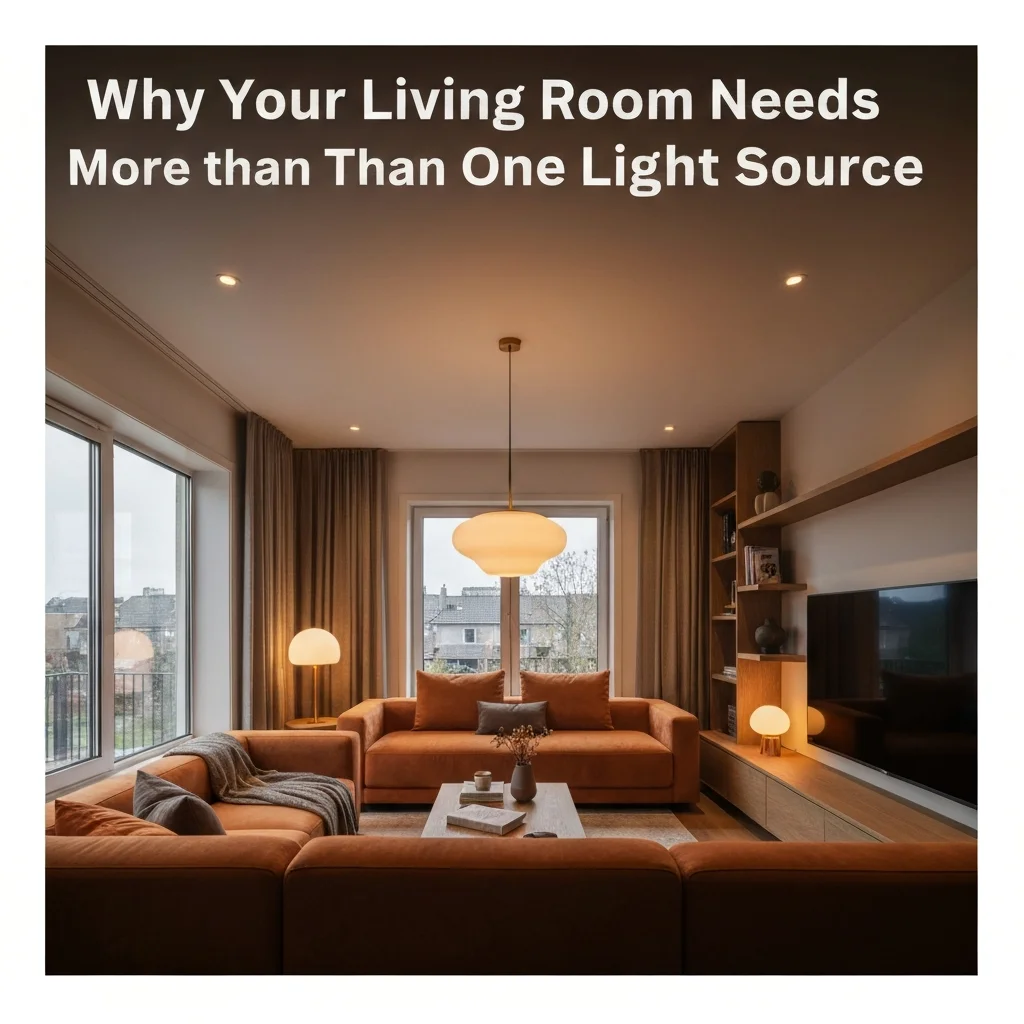
You might think that one stunning overhead fixture is enough for your living room. But if you rely on a single ceiling light, you’re missing out on the warmth and depth a well-lit space can offer.
Great lighting design is about balance. It transforms a room from flat and functional to layered and inviting. This is why your living room needs more than one light source.
Let’s break down how to use layered lighting to create a room that feels larger, cozier, and more versatile than ever.
What is Layered Lighting The Core Concept
Layered lighting is the practice of combining at least three different types of light in one space. Each type serves a specific purpose. Together, they create a flexible system that adapts to your mood and activity.
Think of it like a recipe. You don’t just need salt; you need salt, pepper, acid, and fat to build flavor. Similarly, you need ambient, task, and accent lighting to build a visually interesting room.
This approach is the foundation of modern living room design tips. It prevents harsh shadows and eliminates dark corners.
Ambient Lighting The Foundation of Your Room
Ambient lighting is your base layer. It replaces natural light and provides general illumination so you can walk around safely. Think of it as the room’s overall glow.
Common sources include recessed lights, chandeliers, or track lighting. The key is to diffuse this light so it’s soft, not glaring. Dimmers are a game changer here.
Your ambient lighting should never be the only light in the room. Alone, it creates a flat, uninviting atmosphere. It’s the canvas, not the painting.
Task Lighting Function Meets Style
Task lighting is focused, brighter light directed at where you do specific activities. This could be reading, working on a laptop, or playing a board game.
Floor lamps next to armchairs, desk lamps on side tables, or adjustable swing-arm lights over a sofa are perfect examples. Choose fixtures with shades that direct light downward.
Don’t forget, task lighting also adds visual interest. A sculptural floor lamp can be a focal point even when it’s off. It solves a problem and elevates decor at the same time.
Accent Lighting Drama and Depth
Accent lighting is the jewelry of the room. It’s purely decorative and used to highlight architectural features, artwork, or a beautiful plant. It creates contrast and shadows.
Use picture lights over a gallery wall, a small spotlight on a sculpture, or LED strips under a console table. This accent lighting adds the final polish.
A room without accent lighting can feel complete but never magical. It’s the difference between seeing a painting and experiencing it.
How to Create a Layered Lighting Plan
Start by mapping out your room. Identify where you sit, where you walk, and what you want to highlight. Then, choose one fixture for each layer.
- Step 1: Install your ambient source (ceiling fixture or recessed) on a dimmer.
- Step 2: Add 2-3 task lights near seating areas and desks.
- Step 3: Place 1-2 accent lights to showcase art or architecture.
- Step 4: Use warm-toned bulbs (2700K-3000K) for a cozy feel.
- Step 5: Test the setup at night and adjust angles as needed.
Stick to a cohesive metal finish for all visible fixtures. This unifies the space without making it look cluttered.
Comparing Common Lighting Fixtures for Your Living Room
Not every fixture works for every layer. Here’s a quick guide to help you choose:
| Fixture Type | Best Layer | Ideal Placement |
|---|---|---|
| Chandelier / Pendant | Ambient | Center of the room |
| Floor Lamp | Task | Next to seating |
| Table Lamp | Task or Accent | Sideboard or end table |
| Wall Sconce | Accent | Hallways or beside art |
| Recessed Downlight | Ambient | Ceiling grid |
| Picture Light | Accent | Above artwork |
Use this table as a cheat sheet when shopping for your next fixture. Mixing these types naturally builds your layered lighting plan.
Common Mistakes to Avoid With Living Room Lighting
The biggest mistake is relying entirely on “big light” (the overhead fixture). This creates unflattering shadows and a flat look. Another error is using bulbs that are too cool or too warm.
Don’t forget to scale fixtures to your room. A tiny lamp in a large corner will feel lost. Also, avoid placing all your light on the ceiling. Eye-level light is more flattering.
Finally, don’t skip dimmer switches. They give you total control, allowing your living room lighting layers to shift from bright and energetic to soft and romantic in seconds.
Frequently Asked Questions
Can I use just three light sources in a small living room?
Yes. Even a small room benefits from three sources. Use a ceiling light for ambient, a floor lamp for task, and a small table lamp for accent. It still creates depth.
What color temperature is best for living room lighting layers?
Stick to warm white bulbs between 2700K and 3000K. Cooler temperatures (4000K+) feel too clinical. Warm light makes skin tones look better and feels cozier.
Is LED lighting good for layered lighting?
Absolutely. LEDs are energy-efficient, last long, and come in many shapes and color temperatures. Just make sure they are dimmable if you plan to use a dimmer switch.
Should I use the same style of lamp in every layer?
No. Variety is key. Mixing materials (brass, wood, black metal) and styles adds character. Just keep the finish consistent, like all matte black or all brushed brass.
How do I light a living room without ceiling lights?
Use plug-in floor lamps and wall sconces to create ambient light. Add a lamp on a high bookshelf or a floor lamp with an uplight to bounce light off the ceiling.
Can accent lighting be too bright?
Yes. Accent lighting should be softer than task lighting. Avoid spotlights that create harsh glare. The goal is to highlight, not overwhelm.
Conclusion
A living room with only one light source feels incomplete. It works for simple tasks, but it can’t support reading, entertaining, or relaxing.
By combining ambient, task, and accent lights, you gain total control over the mood and function of your space. You also make the room feel larger and more intentional.
Start small. Add one table lamp or swap a bulb. Experiment with your living room lighting layers until it feels just right. Your room—and your eyes—will thank you.


